
Last updated November 18, 2026
 Architectural shingles
 Metal roofing
 Tile roofing
 GAF
 Owens Corning
 Flat & low-slope
Free roof inspection with deck photos before we talk money - GAF and Owens Corning certified installation
Roof Repair Maintenance Checklist for Henderson Homeowners
Here’s what surprises most people we talk to: the leading source of roof leaks in Henderson isn’t monsoon wind or a hailstorm. It’s a small rubber collar around a plumbing vent pipe, about the size of your fist, that bakes in the desert sun for a decade, cracks, and quietly lets water into the attic every time it rains. Nobody notices because it doesn’t look dramatic until the ceiling stains. This checklist is built backward from the failures we actually get called about, ranked by how often we see them, not by season. You’ll learn the five components that fail most on Henderson roofs, what you can safely check from the ground, and what to photograph and when.
Quick Answer
The most important roof maintenance tasks for a Henderson homeowner are checking pipe boot flashing, ridge caps, and drip edges every spring, clearing debris from valleys and gutters before monsoon season in July, and getting a professional inspection every two to three years. Most desert roof failures start small, are invisible from the ground, and cost far less to fix early than after water reaches the attic.
Styles & brands we work with
- Architectural shingles
- Metal roofing
- Tile roofing
- GAF
- Owens Corning
- Flat & low-slope
Table of Contents
- Why Henderson Roofs Fail Differently
- The Five Components That Fail Most Often
- A Yearly Inspection Sequence That Works
- Reading Your Gutters for Warning Signs
- The Thermal Seam Check
- Building a Dated Photo Record
- What You Can Do Safely From the Ground
- Common Mistakes to Avoid
Why Henderson Roofs Fail Differently
Henderson sits at roughly 1,800 feet in the Mojave, and that shapes roof wear in ways that a checklist written for a temperate climate never accounts for. We see summer surface temperatures on dark shingles push past 160 degrees. Then winter nights drop into the thirties. That daily expansion and contraction, repeated thousands of times, is what ages a Henderson roof. It’s a slow thermal fatigue, not a single punch.
Then there’s the wind. Henderson’s spring gusts, funneling down from the McCullough Range and across neighborhoods like Green Valley and Anthem, work on every edge and ridge. And the summer monsoon, usually arriving in July and August, tests whatever those first two forces loosened.
Add the dust. Fine desert particulates settle into gutters, valleys, and the space behind flashing, and over time they hold moisture against materials that should stay dry. In older neighborhoods near downtown Henderson and Lake Las Vegas, we often find roofs that have survived two decades of this quietly, until one small failure finally reaches the attic.
The takeaway: Henderson roofs fail from sun and heat cycling first, wind second, and rain last. The rain only reveals what the heat already broke. That changes the order of your checklist, which is why Roof Repair in Henderson so often begins with a small flashing detail.
The Five Components That Fail Most Often
Ranked by how frequently we see real repair calls, here are the failure points that matter on desert roofs.
1. Pipe Boot Flashing
The rubber collar sealing every plumbing vent is the number-one leak we find in Henderson. UV exposure cooks the rubber until it cracks, and it’s invisible from the ground. This is a small, inexpensive repair done early and a much bigger one after water reaches insulation and drywall.
2. Ridge Cap
The ridge is the line where a roof proves itself, hence our name. Ridge cap shingles take the full brunt of sun and wind. Lifted, cracked, or missing caps let wind-driven rain straight into the attic. We see this most on homes in wind-exposed spots in Anthem and near the foothills.
3. Valley Flashing
Where two roof planes meet, the valley carries the most water. Debris collects there, and metal or membrane flashing can separate from heat cycling. A valley failure sends a lot of water fast.
4. Drip Edge
The metal along the eaves directs water away from the fascia and into the gutter. When it’s loose or bent, water wicks back under the shingles and rots the fascia board behind it.
5. Attic Ventilation
Desert heat needs a way out. Blocked or inadequate vents trap hot air, which shortens shingle life and raises cooling costs. Ventilation is the failure homeowners almost never consider but the one that ages the whole roof.
If any of these are new to you, our guide to Roof Replacement & Installation in Henderson explains how each is handled during a full install.
A Yearly Inspection Sequence That Works
Do these in order, once a year, ideally in late spring before monsoon season. Working in a set sequence keeps you from skipping a component.
- Walk the perimeter from the ground. Note sagging, lifted shingles, or fascia damage. Never climb what you can read from below.
- Look at every pipe boot. From a safe vantage, check the rubber collars for cracks, curling, or missing caps.
- Scan the full ridge line. Look for missing or lifted cap shingles, especially after a windy spring.
- Check the valleys. Confirm no debris pile has built up where roof planes meet.
- Inspect the drip edge and fascia. Look for loose metal and any bubbling or rot in the fascia board.
- Photo-document each item and date the file. This becomes your record (more on that below).
This sequence takes about twenty minutes from the ground and a ladder placed safely. Anything you can’t judge from there is a job for a licensed contractor on the deck.
Reading Your Gutters for Warning Signs
Most homeowners treat gutter granules as a nuisance to sweep out. They’re actually a diagnostic tool. Those little granules are the mineral surface of your shingles, and their job is to shield the asphalt underneath from the desert sun. When they show up in your gutters in volume, the shingles are aging or being damaged.
Here’s how to read it:
- A few granules after a new roof: normal, for the first year or two.
- Steady handfuls year after year on an older roof: the surface is wearing thin, and shingles are closer to failing.
- Granule loss concentrated in one area: often a sign of hail, foot traffic, or a trapped-heat problem right there.
- Granules plus grit and dust building up: debris is holding moisture and needs clearing before it damages the valley or drip edge.
The brands matter here. Shingles from Owens Corning or IKO have a specific granule coating that sheds at different rates than a lesser product, which is one reason we install only from named manufacturers. If your gutters are shedding heavily and the roof is past 15 years old, it’s worth a professional look rather than another season of sweeping.
The Thermal Seam Check
This is the check almost nobody performs, and it’s the one best suited to Henderson’s climate. It involves examining where roof sections meet each other and where the roof meets walls, chimneys, and skylights, specifically after a summer of heat cycles.
The reason: metal flashing and sealant expand and contract at different rates than the shingles and wood around them. Summer heat pushes the sealant to expand; cool winter nights pull it back. Over years, it pulls away and opens a hairline gap that leaves wind-driven rain straight in. You won’t see this from the ground, and it doesn’t show up in obvious leaks until it has done real damage.
What a proper thermal seam check looks for:
- Pulled-back or cracked sealant where roof planes meet walls.
- Gaps at chimney, skylight, and vent flanges.
- Lifted step flashing against siding and stucco.
- Separation where an addition or sunroom roof meets the main roof.
This is a professional inspection item. It requires getting on the deck and looking closely at edges a ground view can’t resolve. Our team documents it with photos on every inspection. If your home has an addition or complex rooflines, see Specialty Roofing in Henderson for how these joins are properly sealed.
Building a Dated Photo Record
A dated photo record protects two things homeowners often forget until it’s too late: your insurance claim and your warranty.
When a monsoon storm hits, insurers ask what the roof looked like before. If you can show a dated photo from three months earlier with intact shingles, a claim is straightforward. If the only record is after the damage, the process gets harder. A manufacturer’s warranty can also hinge on documented maintenance and proper installation, so a dated file matters there too.
What to photograph and when:
- Every spring: one photo of each roof plane, the ridge line, and each pipe boot.
- Before and after any storm or repair: the same angles, with dates on the files.
- Close-ups of any flashing, valley, or seam you’re watching.
- Your written inspection report, if a contractor provided one, filed with the photos.
When a professional inspection happens, the report should come with photos taken from your actual roof, not a stock diagram. That dated record becomes the single best protection a Henderson homeowner can keep.
What You Can Do Safely From the Ground
Not everything requires a contractor, and the smart split is ground-versus-deck. Roof work involves real fall risk, and the consequences of a slip are serious. Do the ground-level tasks yourself; leave anything on the deck to a trained professional.
Safe from the ground:
- Walking the perimeter and noting obvious issues.
- Photographing the roof from a safe vantage.
- Clearing gutters and downspouts from a stable ladder at the eaves.
- Trimming tree branches that touch or overhang the roof.
- Checking attic ventilation from inside the attic, watching for moisture stains or trapped heat.
Requires a licensed contractor on the deck:
- Inspecting or replacing pipe boots, flashing, or ridge cap.
- Any thermal seam check.
- Replacing shingles or sealing valleys.
- Confirming ventilation adequacy at the roof deck level.
Henderson homeowners who split the work this way keep themselves safe and still catch problems early. The ground tasks are real value; the deck tasks are where experience pays for itself.
Common Mistakes to Avoid
- Ignoring pipe boots because they don’t look dramatic. They’re the most common Henderson leak and the cheapest to fix early. Waiting turns a small collar into a drywall repair.
- Pressure-washing the roof. High pressure strips the granules that protect the shingles from desert sun. It ages a roof years in an afternoon.
- Letting debris sit in valleys and gutters through the dry season. Dust and grit hold moisture and gnaw at flashing so the monsoon finds it weakened.
- Climbing onto the roof alone. Falls are the real danger on any roof, and Henderson’s steep pitches and heat make it worse. Stay on the ground and let a professional go up.
- Hiring a low bid from an out-of-town crew after a storm. Storm-chasers move on next spring and aren’t there to honor a warranty. Look for a company that will still be standing behind the work years from now.
- Skipping the photo record. Without dated photos, insurance claims and warranties get harder exactly when you need them.
- Assuming a 20-year shingle lasts 20 years in Henderson. Heat and sun shorten lifespan here. Maintenance is what closes the gap.
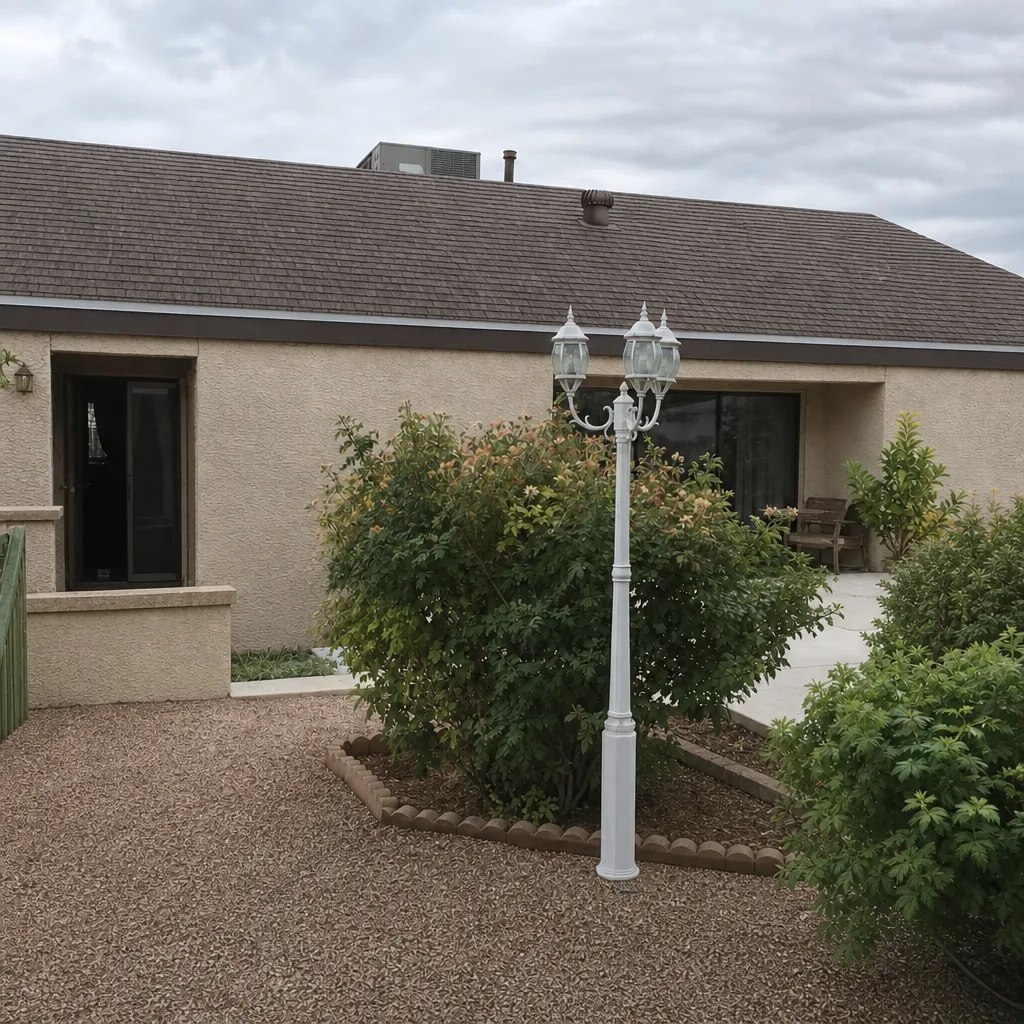
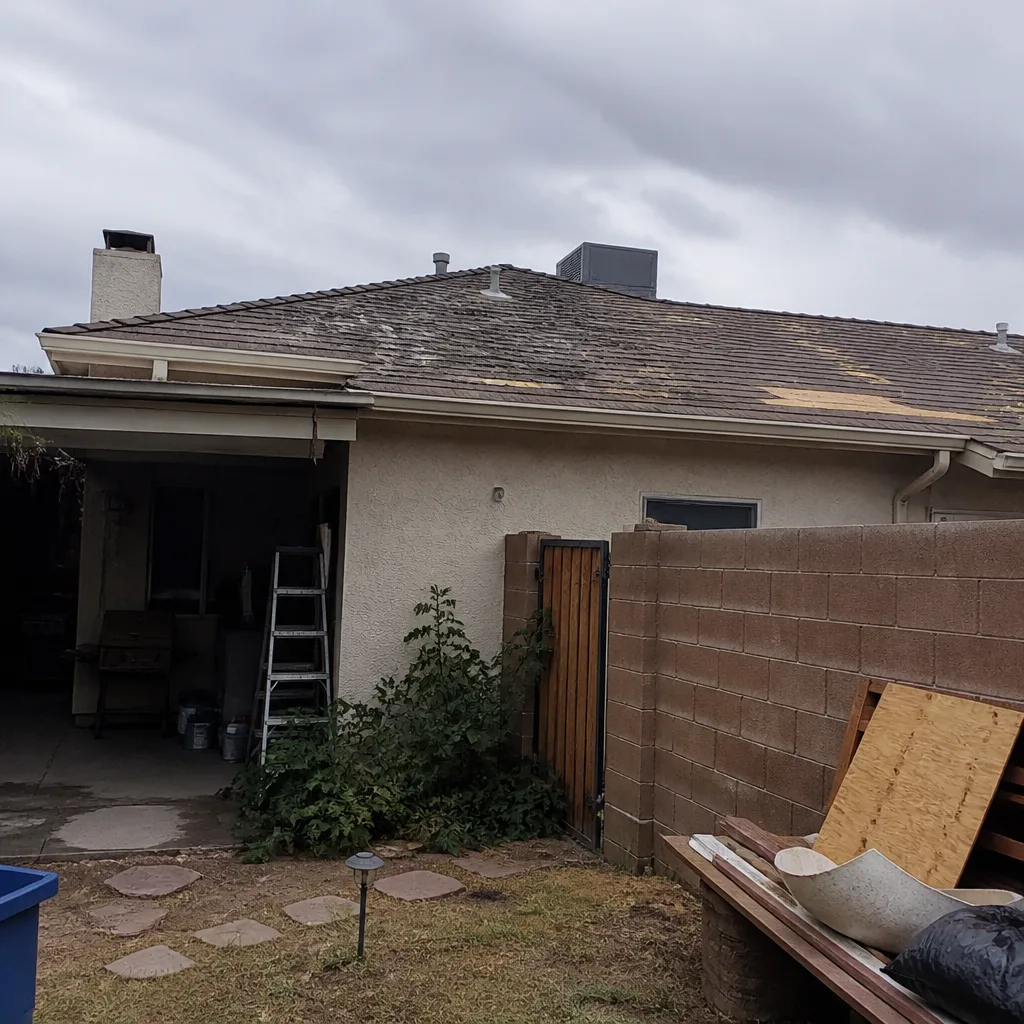
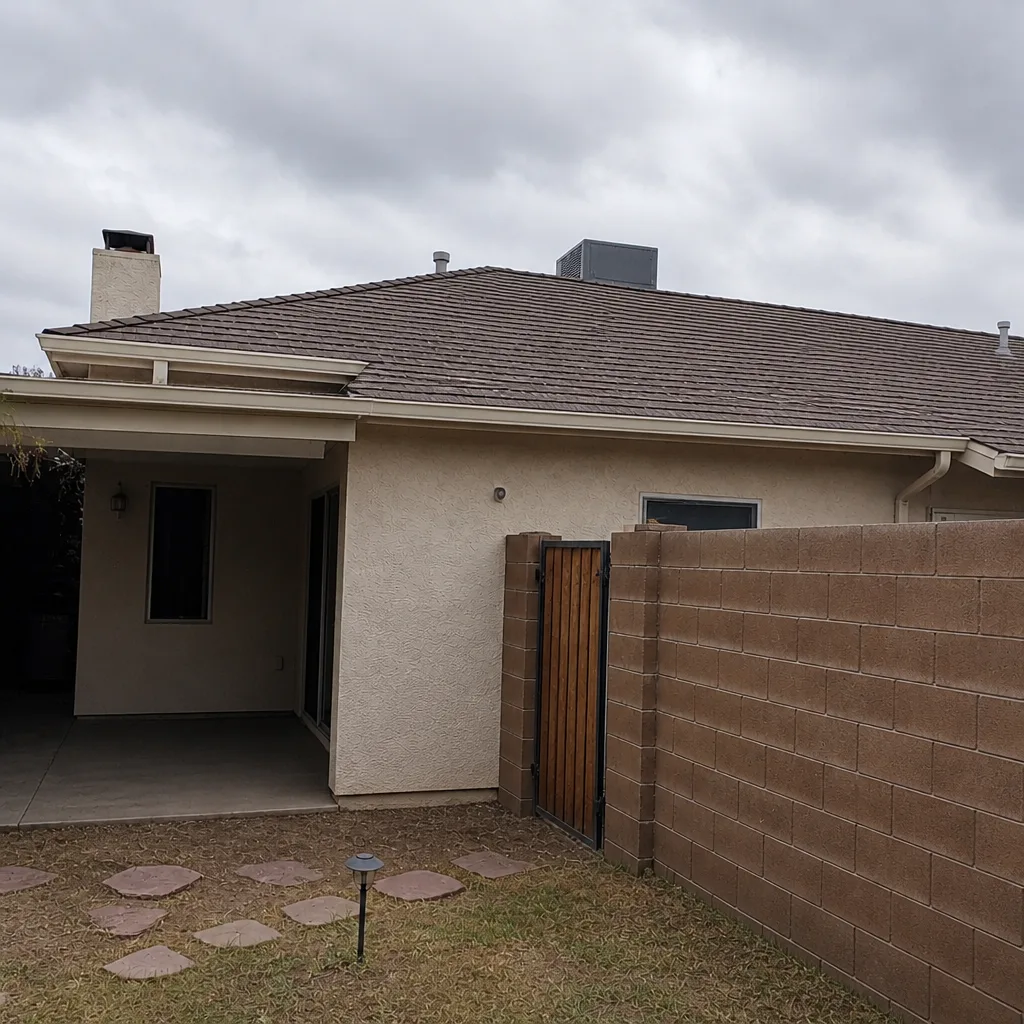
See the difference
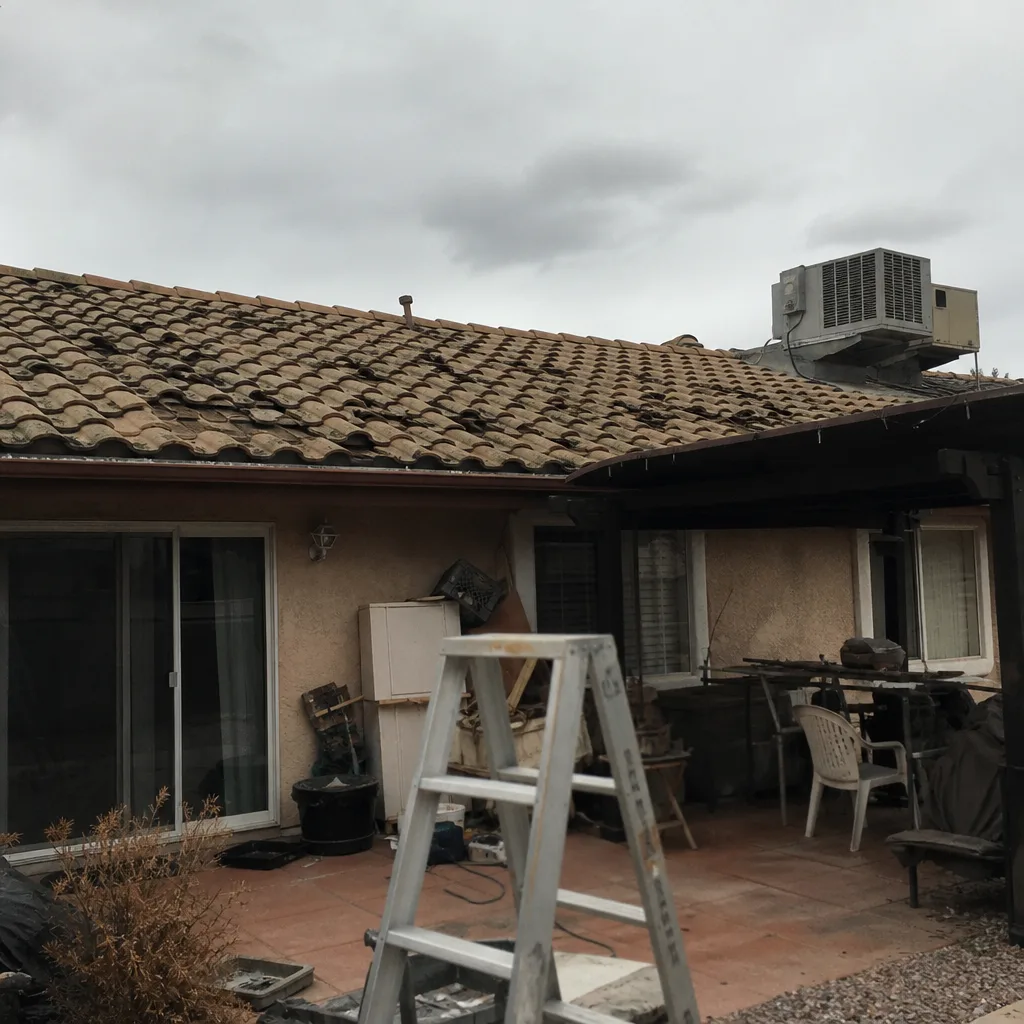 Before
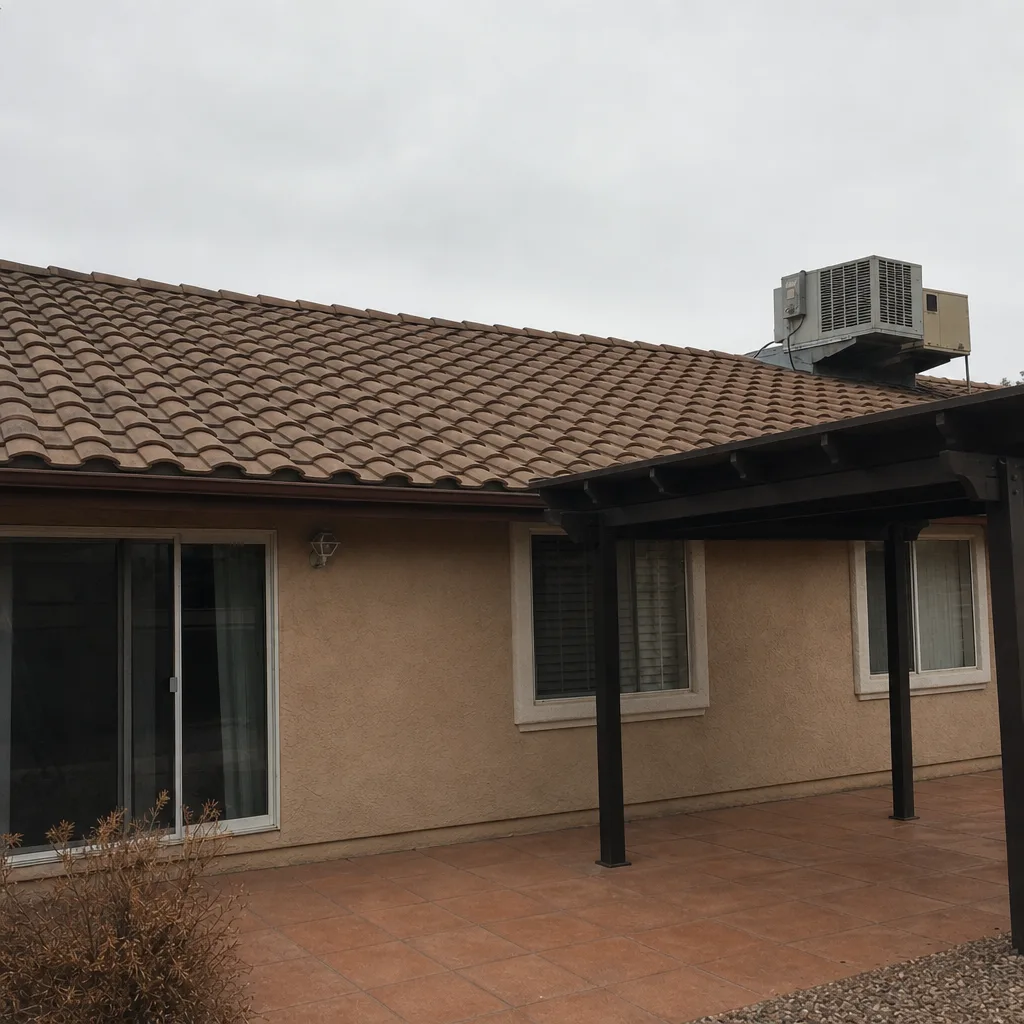 After
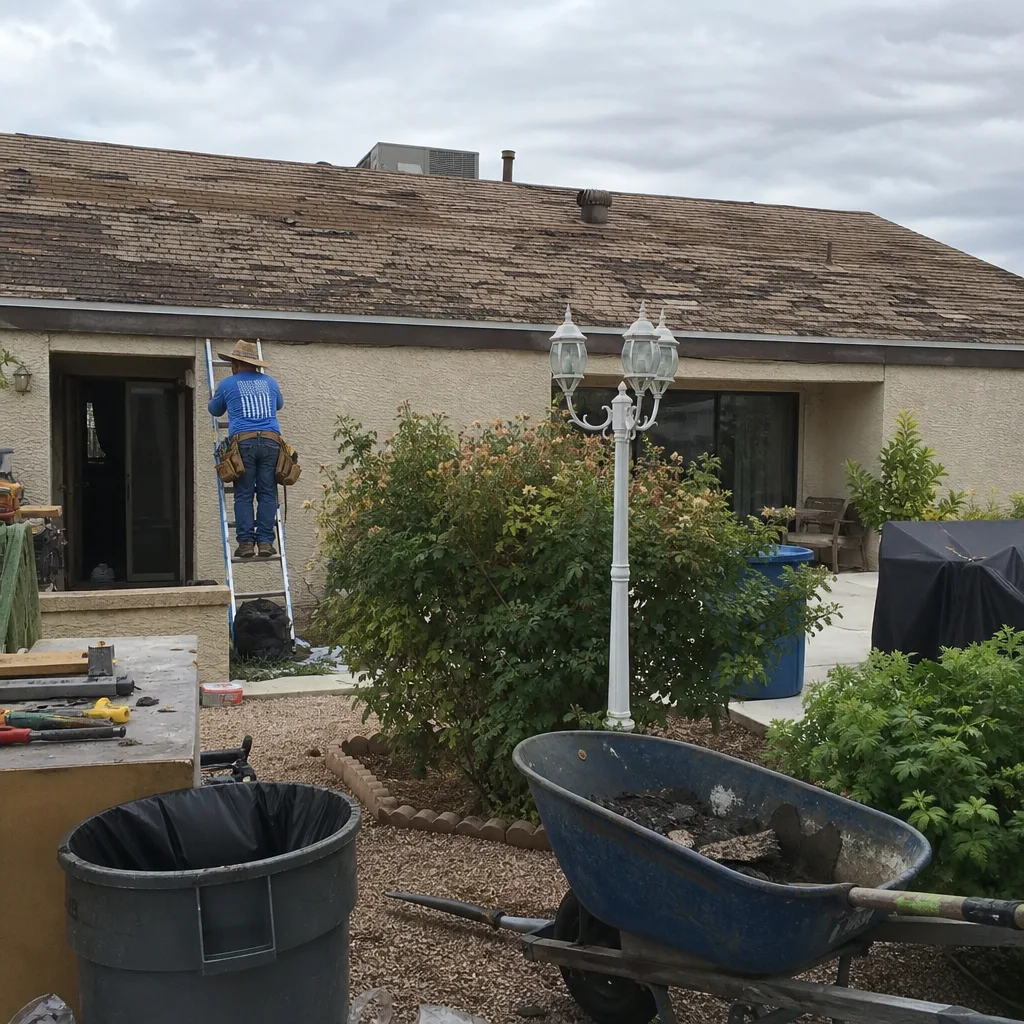 Before
 After
 Before
 After
When to Call a Professional
Some things are worth a call the moment you notice them. Call a professional if any granules are missing down to bare asphalt, if you spot cracked or missing pipe boots and ridge caps, if you see moisture stains or daytime heat build-up in the attic, if your gutters suddenly shed heavily, or if a storm has left lifted or torn shingles. Any suspected flashing or seam separation is also a call-it-in item, because it’s invisible from the ground and worsens fast.
Ridgeline Roofing Co. Henderson offers free estimates in Henderson. Our technicians arrive in uniform, are background-checked, and document every inspection with photos from your actual roof. Every job is backed by our written 90-Day Done Right Promise. Call (833) 691-6717 to schedule your free estimate.
Frequently Asked Questions
Every two to three years for a professional inspection, plus a yearly ground-level check of your own. Because Henderson’s heat cycling ages roofs faster than temperate climates, more frequent attention pays off. Call (833) 691-6717 for a free inspection estimate.
Failed pipe boot flashing, by a wide margin. The rubber collar bakes in the sun, cracks, and leaks without any obvious sign from the ground. Call (833) 691-6717 to have yours checked before a leak reaches the attic.
You can safely handle ground-level tasks like perimeter checks, gutter clearing from a stable ladder, and photographing the roof. Anything on the deck, including flashing, seams, and shingles, is a job for a licensed contractor because of the fall risk and the details involved.
The brand doesn’t change your maintenance routine, but granule loss does vary by product. Shingles from manufacturers like Owens Corning, IKO, or Atlas shed granules at known rates, and heavy loss is a signal to have the roof looked at. We install from seven named lines, and if you have a written estimate from another contractor our second opinion is free.
Yes, a dated photo record of a well-maintained roof strengthens a claim because it shows the roof’s prior condition. Insurers rely on that record. Call (833) 691-6717 and we’ll help you build a documented inspection file.
Watch for granules in the gutters, cracked pipe boots, lifted ridge cap shingles, loose drip edge, attic moisture stains, and daytime heat build-up. Any of these means it’s time for a professional look. Call (833) 691-6717 for a free estimate.
The Bottom Line
Most Henderson roof failures start small and invisible to a ground view, which is why the right order makes all the difference. Rank the desert roof by its real failure points: pipe boots first, then ridge cap, valleys, drip edge, and attic ventilation. Do a ground-level check each spring, read your gutters, and keep dated photos that protect your claims and warranty. Leave the deck to a licensed professional, and don’t ignore the thermal seam check. A roof done once and cared for right is a roof you’ll never have to revisit. Ridgeline Roofing Co. Henderson is here when you’re ready. Start with Ridgeline Roofing Co. Henderson home for our full services, or call (833) 691-6717 for a free estimate. If you’re handling storm damage rather than routine upkeep, we also respond to emergency calls around the clock.
Written by the team at Ridgeline Roofing Co. Henderson.