
Last updated November 18, 2026
 Architectural shingles
 Metal roofing
 Tile roofing
 GAF
 Owens Corning
 Flat & low-slope
Free roof inspection with deck photos before we talk money - GAF and Owens Corning certified installation
Roof Repair Warning Signs Every Homeowner Should Know
By the time a water stain shows up on your ceiling, the breach above it has usually been open for two to six weeks. That is the part most homeowners never hear. The stain is not the first sign of trouble; it is the last one, the moment a small, cheap repair becomes a staining, dripping, drywall-replacing problem. The quiet signals come first, and they are easy to read once you know what you are looking at. This guide walks through the early warning signs we look for on Henderson roofs, the ones routinely missed, and how to tell which need a call now and which can wait for a scheduled inspection.
Quick Answer
The most reliable early signs you need roof repair are attic humidity that stays above 55 percent, daylight showing through ridge or soffit vents, lifted or crumbling ridge cap mortar, rust streaks at wall-to-roof transitions, and hairline cracks at the nose of tile. One warning sign demands immediate action: an active interior leak or sagging roofline. Everything else on this list is monitor-worthy until a professional inspection confirms it.
Styles & brands we work with
- Architectural shingles
- Metal roofing
- Tile roofing
- GAF
- Owens Corning
- Flat & low-slope
Table of Contents
- Interior warning signs most homeowners miss
- Exterior signs specific to Henderson tile roofs
- Why granules in the gutter are a lagging indicator
- How to spot flashing failure from the ground
- Urgent versus monitor-worthy: sorting the signals
- How Henderson’s climate speeds up roof wear
- A simple seasonal check for Henderson homeowners
- Common mistakes to avoid
Interior Warning Signs Most Homeowners Miss
Ceiling stains get all the attention, but the useful clues are in the attic, months before anything reaches the drywall. When we inspect a roof in Henderson, the attic usually tells us more in five minutes than the exterior does in twenty. Here is what to look for.
- Attic humidity that spikes and stays high. A $15 hygrometer from any hardware store will read relative humidity. Healthy attic air in Henderson runs roughly 35 to 50 percent. When it climbs above 55 percent and stays there through dry weeks, moisture is entering somewhere and not escaping. That trapped humidity softens sheathing and feeds mold long before a stain appears.
- Daylight through ridge vents or soffits. On a bright afternoon, stand in the attic with the lights off. Pinholes or streaks of light at the ridge or along the soffit mean the venting system has gaps. A gap that lets light in also lets wind-driven rain in during the monsoon season.
- Insulation compressed in a single zone. If one patch of attic insulation is flattened or darker than the rest, moisture has been soaking it. Insulation does not compress on its own; something above it is leaking.
- Musty smell after a rain. A smell that appears after storms and fades over the following days is a strong sign that water is getting in and slowly drying.
None of these are emergencies on their own. Together, they point to a roof that is losing its seal, which is exactly the stage where a targeted repair costs far less than a replacement. Catching them here is the whole point of paying attention to the attic, not just the ceiling.
Exterior Signs Specific to Henderson Tile Roofs
Most homes in Henderson are built with concrete or clay tile, and tile roofs fail differently than asphalt shingles. The tile itself is remarkably durable; it is the mortar, underlayment, and fasteners beneath it that give out first. In our experience, the visible signs of tile roof aging in Henderson are consistent and readable from the ground or a ladder.
- Lifted or crumbling ridge cap mortar. The ridge cap is the row of tiles along the peak of the roof, held down with mortar. Henderson’s summer heat cycles that mortar through expansion and contraction every day for years. When the mortar at the ridge starts cracking, lifting, or falling away, water gets under the cap and into the ridge. This is one of the earliest and most fixable signs of tile roof failure.
- Efflorescence streaks on concrete tile. Those white, chalky streaks are mineral salts carried to the surface by moisture moving through the tile. Some efflorescence is normal after a rain. Streaks that persist through dry weeks mean water is migrating through the tile body or the underlayment is saturated.
- Hairline cracks at the nose of field tiles. Look at the bottom edge of the tiles (the nose). Small hairline cracks there, often running lengthwise, are a sign of thermal stress. A few cracked tiles are a repair. Cracking across many field tiles suggests the whole assembly is nearing the end of its life.
- Slipped tiles or exposed underlayment. Anywhere you can see the black felt or membrane beneath the tiles, a tile has shifted or broken off. That spot is unprotected and will let water in with the next storm.
Tile roofs are a specialty, and not every roofer in Henderson handles them well. If your home has tile, the inspection needs to be done by someone who understands how the mortar, underlayment, and fasteners work together. Our Specialty Roofing in Henderson page covers the details of tile and other specialty systems.
Why Granules in the Gutter Are a Lagging Indicator
Homeowners often point to a gutter full of dark granules as proof the roof is failing. It is a sign, but it is a late one. Granules are the protective coating baked onto asphalt shingles. When they wash into the gutter, the shingle that lost them did so over three or more seasons, not overnight. By the time the gutter is visibly full, the shingles above have already been thinning for years.
What that means practically: a gutter full of granules is not a call-now emergency, but it is a clear signal to schedule a real inspection. The shingles that lost those granules are now brittle and less reflective, which matters more in Henderson than in most places. A roof that has shed its granules absorbs far more of the summer sun, and the attic beneath it gets hotter. That heat drives up cooling costs and shortens the life of everything under the roof.
If you see granules collecting at the base of downspouts or settled at the bottom of the gutter run, treat it as a countdown, not a verdict. An inspection told us recently that the homeowner had two good seasons left before replacement; the granules had been washing down for four. Knowing that number let them plan and budget instead of getting surprised. Roofs from Owens Corning and CertainTeed are built to specified granule loads, which is why proper materials and no substitutions matter when the time comes for a replacement, a subject covered in our Roof Replacement & Installation in Henderson guide.
How to Spot Flashing Failure From the Ground
Flashing is the metal that seals the seams where the roof meets walls, chimneys, and dormers. It is the most common source of leaks we find in Henderson, and most of it can be assessed without climbing anything. Stand back with a pair of binoculars on a clear day and look at these areas.
- Rust streaks running down from wall-to-roof transitions. Where a side wall meets a roof slope, there is a piece of flashing that should shed water away. When it starts to rust, water is sitting against it instead of running off. Those orange streaks on the stucco below are pointing straight at a failing seam.
- Lifted step flashing edges at chimneys and dormers. Step flashing is the series of small metal pieces that step up alongside a chimney or dormer. If the edges look lifted, bent, or separated from the wall, water gets behind them. This is one of the most common causes of leaks we repair.
- Caulk instead of metal. A thick bead of caulk smeared along a seam is often a sign that a previous repair skipped the proper fix. Caulk cracks in Henderson’s sun within a couple of seasons. Flashing that was properly replaced with metal does not need repeated caulking.
- Dark staining or moss in a straight line. Staining that runs in a straight vertical line down a slope is a good indicator that water is tracking under the flashing and running down the underlayment.
When any of these show up, it is worth a call. Flashing repairs are among the most affordable fixes on a roof, and leaving one unaddressed is how small leaks become rotted sheathing. Our Roof Repair in Henderson service is built around finding and sealing exactly these transition points.
Urgent Versus Monitor-Worthy: Sorting the Signals
The key skill is knowing which signals demand a call today and which can wait for a scheduled inspection. Getting this wrong in either direction is costly: you either panic over a cosmetic issue or you let a real problem soak into your house.
The one sign that requires immediate action: any active interior leak, a ceiling that is sagging or bulging, or water visibly dripping during a rain. Those are not watch-and-see situations. Get a professional on the roof right away.
Signs that can wait for a scheduled inspection:
- Granules in the gutter
- Ridge cap mortar that is cracking but not yet missing
- Efflorescence streaks that appear only after rain
- A handful of cracked tile noses
- Rust streaks at flashing seams with no interior sign of water
- Attic humidity running high but no visible moisture
None of these get better on their own, and all of them get more expensive if you wait too long. But they are not calls at midnight. The right move is to book an inspection and get a written assessment. Ridgeline Roofing Co. has answered Henderson phones around the clock since 1984, which means if a monitor-worthy sign turns into an active leak, you are not stuck with a voicemail box after a storm.
One caution on the “urgent” list: do not climb up there yourself to check. Roofs, especially tile roofs, are dangerous to walk on when you are not trained and condition-assessed. We recommend letting a trained technician do it, and we say that as a company with technicians who have up to 10 years of experience on these roofs.
How Henderson’s Climate Speeds Up Roof Wear
A roof in Henderson lives a harder life than the same roof in most other parts of the country. The sun does most of the damage. Summer surface temperatures on a dark shingle or tile roof can push past 150 degrees, then drop 40 or more degrees overnight, every day, for years. That daily expansion and contraction is what cracks ridge cap mortar and works fasteners loose.
Monsoon season adds a second stress. The storms that roll through in July and August arrive fast, with wind-driven rain that attacks exactly the places most prone to failure: the flashings, the ridge, and any lifted tile. A roof that never leaked through the dry months can let water in during the first real monsoon because the wind finds gaps that ordinary rain never touched.
Our dry air also hides leaks. Water evaporates quickly here, so a small breach can stay invisible for weeks between storms. That is why the interior signs in this guide matter so much in Henderson: the house itself tells you what the dry air hides. When you do get a written inspection, ask for photos taken from the actual roof. A photo-documented inspection shows you the condition of the ridge, the flashing, and the underlayment, not just a description read from the driveway.
A Simple Seasonal Check for Henderson Homeowners
You do not need to get on the roof. A 20-minute walkaround twice a year, after the spring dry season and after the fall monsoon, catches most of these signs early. Here is the routine:
- Walk the perimeter and look up. Note the ridge line, the flashing around the chimney and dormers, and any wall-to-roof transitions. Look for lifted edges, rust streaks, and missing pieces.
- Check the gutters and downspouts. Look for granule buildup and any water staining at the base of the downspouts.
- Stand inside the attic with the lights off. On a sunny afternoon, look for daylight at the ridge and soffit vents.
- Read the hygrometer. Note the humidity; anything above 55 percent on a dry week is worth a call.
- Look at the tile noses. With binoculars, scan for cracked noses and slipped tiles.
- Walk the interior ceilings. Check for new stains, sagging, or paint that looks different from the rest.
Write down what you see and when. A dated record makes the eventual inspection quicker and helps you and the technician decide repair versus replacement with real information. That is the kind of quiet, steady maintenance that keeps a roof in service for its full life. It is also a fair description of the outlook behind Ridgeline Roofing Co. Henderson home, where we have been standing behind local roofs since 1984, not chasing storms.
Common Mistakes to Avoid
- Waiting for a stain before calling. The stain is the last sign, not the first. By the time it appears, the repair has often grown into a job involving drywall and insulation.
- Caulking over flashing instead of replacing it. A thick bead of caulk buys a season at most in Henderson’s sun. Real flashing is metal, and metal lasts.
- Walking on a tile roof to inspect it. Tile cracks under a misstep, and a broken tile can create the very leak you are trying to prevent. Let a trained technician with the right equipment do it.
- Reading granules in the gutter as a first warning. Those granules washed off over three or more seasons. They tell you the failure is already well underway, so act promptly.
- Taking the first bid from the truck that shows up after a storm. Storm-chasers move on and are not around when the repair fails. Pick a contractor who will still be here next spring.
- Accepting an inspection that never gets on the roof. A real inspection involves photos from the actual roof, not a scary speech delivered from the driveway.
- Ignoring attic humidity. A $15 hygrometer is the cheapest early warning tool a Henderson homeowner can own. Use it.
See the difference
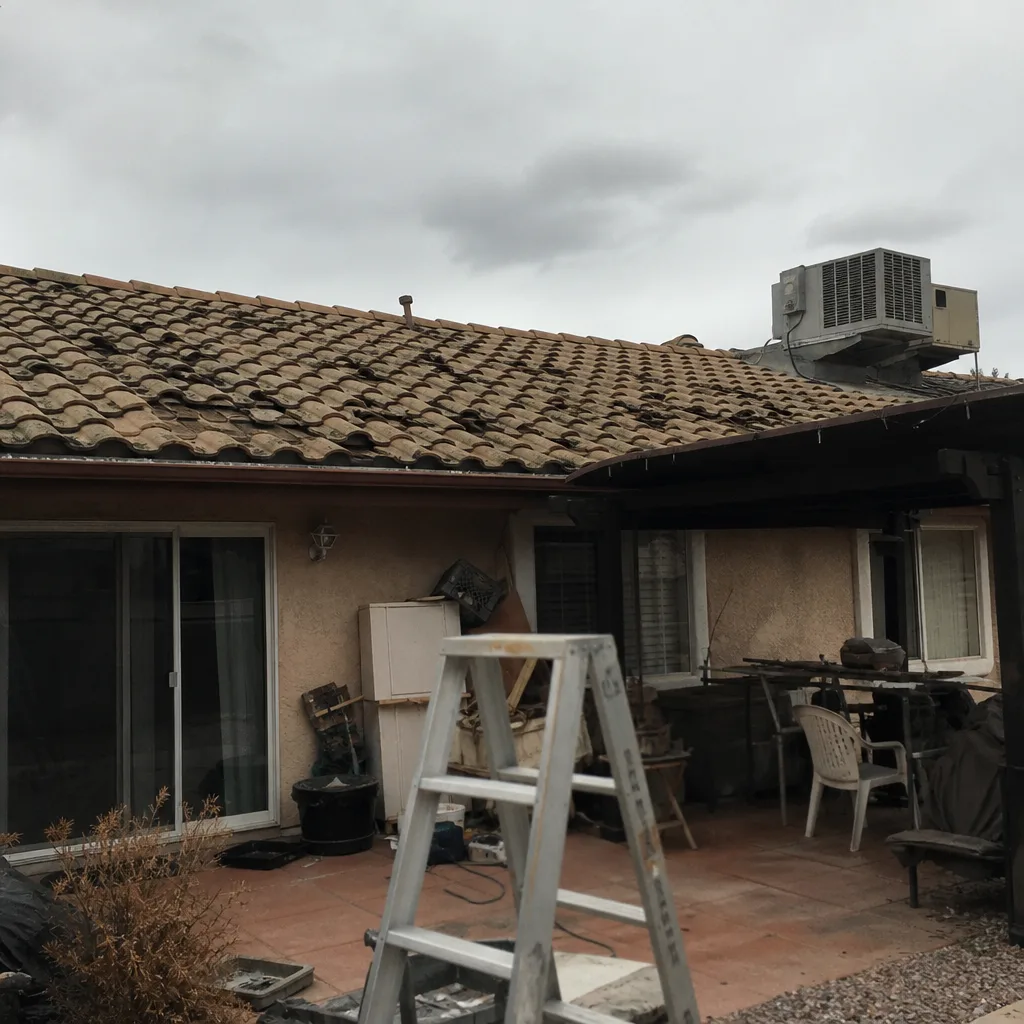 Before
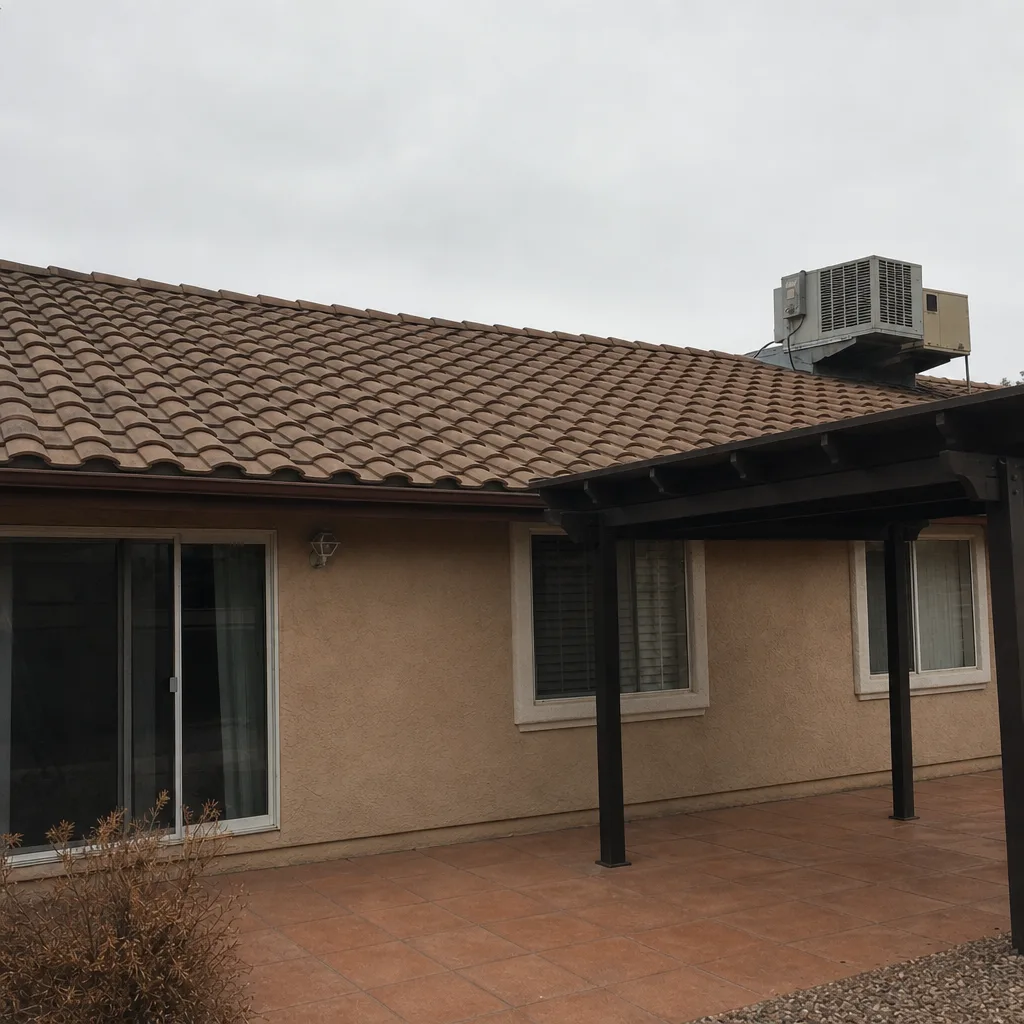 After
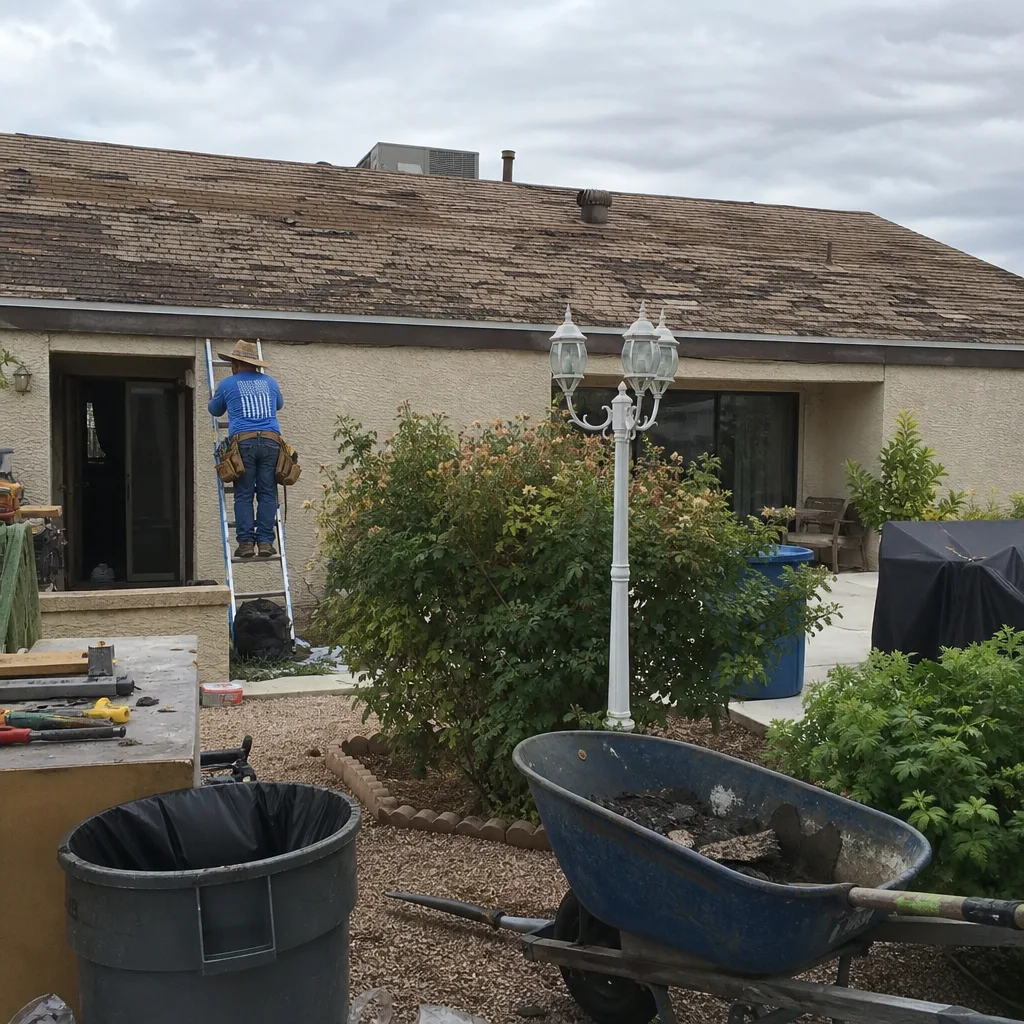 Before
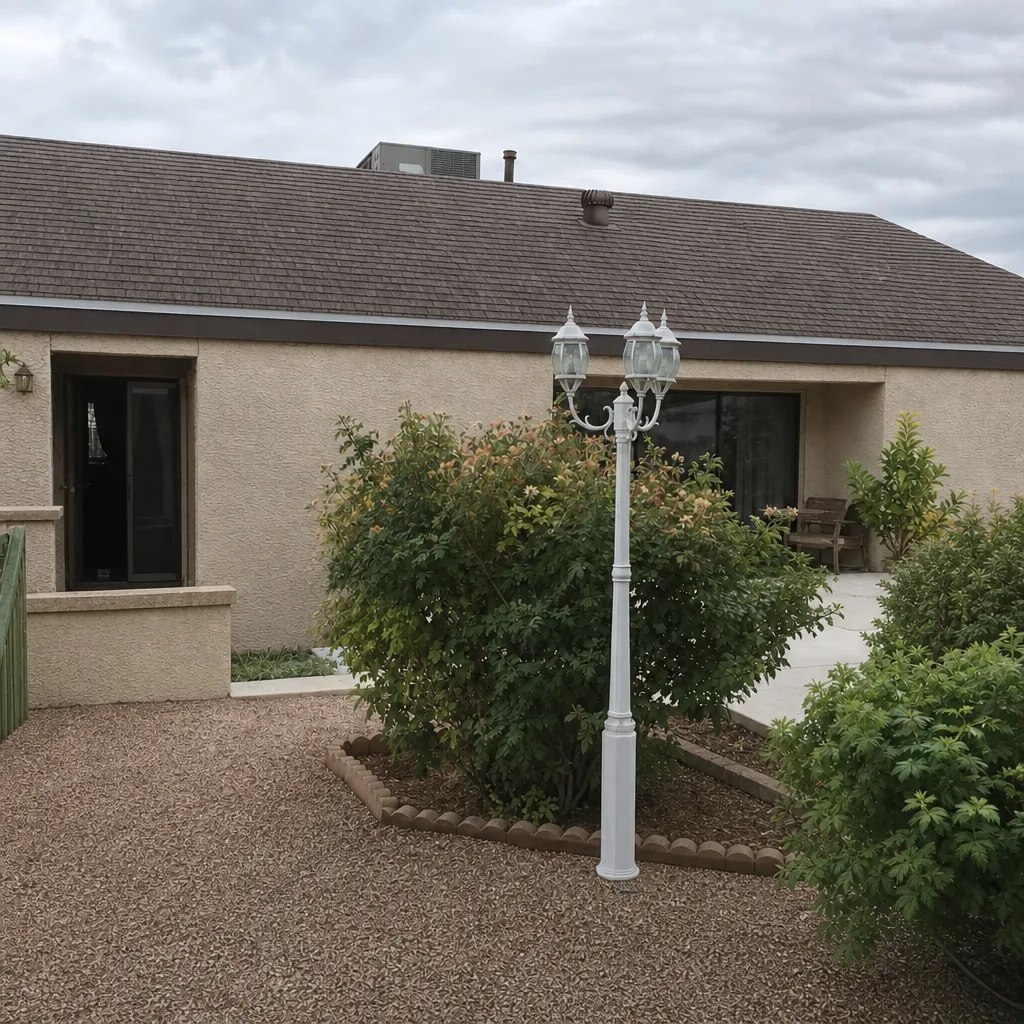 After
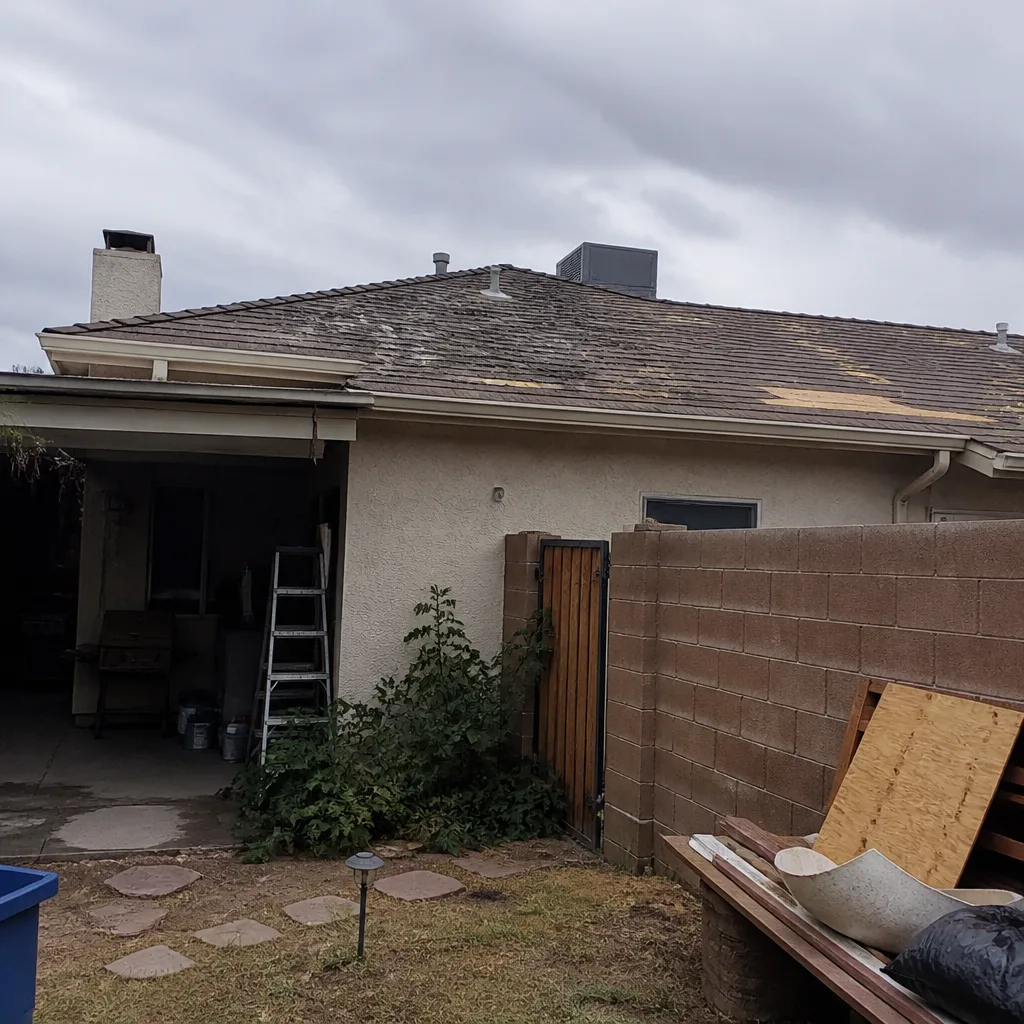 Before
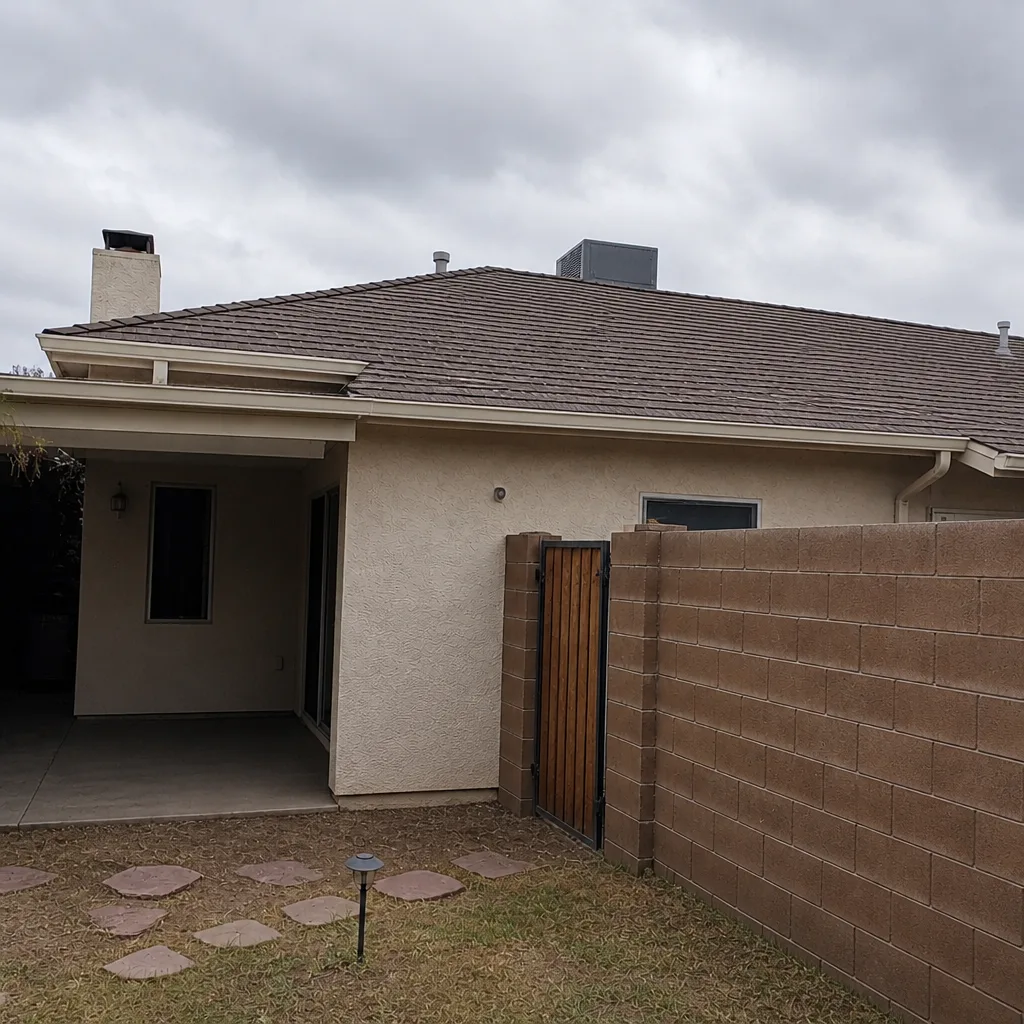 After
When to Call a Professional
Call a professional now if you have an active leak, a sagging ceiling, water dripping during a rain, or daylight coming through the roof deck itself. Call for a scheduled inspection if you are seeing any of the early signals in this guide: high attic humidity, granule buildup, cracked ridge cap mortar, rust streaks at flashing, or a handful of cracked tile. In Henderson, it pays to book ahead of monsoon season rather than wait for the storm to find the weak spot. If you are unsure which category your situation falls into, that uncertainty is itself a good reason to call. Ridgeline Roofing Co. Henderson offers free estimates in Henderson, and our phones are answered by a live person every hour of the day. Call (833) 691-6717 to schedule yours.
Frequently Asked Questions
The first warning sign is usually in the attic, not on the ceiling: relative humidity that stays above 55 percent on dry weeks, or daylight showing through the ridge or soffit vents. These signs appear before any interior stain, and catching them early keeps a small repair from becoming a replacement.
Usually two to six weeks from the moment of the breach to a visible stain, and often longer in Henderson’s dry air because water evaporates quickly between storms. That lag is why the early interior and exterior signs matter more than the stain itself. Call (833) 691-6717 if you suspect a leak and want it checked.
A few hairline cracks at the nose of field tiles can often be repaired, but widespread cracking suggests the whole tile assembly is nearing the end of its life. Efflorescence streaks that persist through dry weeks are a related warning that moisture is moving through the tile. An inspection with photos from the roof tells you which category you are in; estimates are free.
You can spot most early warning signs from the ground, the attic, and with a pair of binoculars, without ever climbing up. Walking a tile roof is dangerous and can cause breakage, so we recommend leaving the up-close inspection to a trained technician with the right equipment.
Monsoon storms bring wind-driven rain that attacks the exact places most prone to failure: lifted tile, exposed flashing, and crevices at the ridge. Ordinary rain does not reach those gaps, but a wind-driven monsoon does. If you get leaks only during storms, that pattern points very specifically at flashing or ridge issues worth an inspection.
It depends on how much of the warning-sign list your roof is showing. One or two signs, or an isolated leak, is usually a repair. Granule loss across the whole roof, widespread tile cracking, or repeated leaks in different spots often point to replacement. A written inspection gives you the answer. Call (833) 691-6717 to schedule an assessment, and we will tell you honestly which one it is.
The Bottom Line
Roof failures leave a sequence of quiet signals long before a stain appears, and the homeowners who learn those signals catch problems at the repair stage instead of the replacement stage. Watch the attic for humidity and daylight, the exterior for lifted ridge cap mortar, efflorescence, cracked tile noses, and rust streaks at flashing, and remember that granules in the gutter are late news from seasons past. Separate the urgent from the monitor-worthy: an active leak or a sagging ceiling is a call now, and the rest is a scheduled inspection. In Henderson, a 20-minute check twice a year, plus a written photo-documented inspection once a year, is the steadiest way to keep a roof in service. Ridgeline Roofing Co. is here to help with any of it.
Roof problems are easier and cheaper to handle when they are still small, and the best time to get an expert’s eyes on your roof is before you see a stain. Call (833) 691-6717 for a free estimate. Ridgeline Roofing Co. Henderson has served local homeowners since 1984, answers every call with a live person, and backs the work with the written 90-Day Done Right Promise. If it is not right, we make it right.
Written by the team at Ridgeline Roofing Co. Henderson.