
Last updated November 18, 2026
 Metal roofing
 Architectural shingles
 Tile roofing
 GAF
 Owens Corning
 Flat & low-slope
Free roof inspection with deck photos before we talk money - GAF and Owens Corning certified installation
Specialty Roofing Warning Signs Every Homeowner Should Know
The craze-cracking on a foam roof that most homeowners dismiss as cosmetic is the first measurable step toward moisture intrusion. In Henderson’s sun, that step is shorter than in almost any other climate in the country. Foam coatings here bake at surface temperatures well past 150°F through July and August, and a hairline crack that would sit quietly for a decade in a cooler market can open into a wet path within two summers. We’ve walked Henderson roofs where the difference between a $600 recoat and a $6,000 tear-off was one season of watching. This guide covers the three failure patterns we see most – UV degradation, thermal-cycle fatigue, and improper installation – and the visual markers that appear years before a leak. You will learn which signs mean monitor and which mean call.
Quick Answer
Specialty roofing warning signs fall into three families: surface markers (craze-cracking, granule loss, chalking, rust bloom), seam and flashing markers (lifted laps, failed sealant, pulled fasteners), and interior markers (attic heat spikes, HVAC overwork, ceiling stains that return). In Henderson, any sign that involves exposed substrate, lifted metal, or a crack you can catch a fingernail in warrants a contractor call. Surface-only chalking or light granule shedding usually warrants a monitoring interval with photos every six months.
Styles & brands we work with
- Architectural shingles
- Metal roofing
- Tile roofing
- GAF
- Owens Corning
- Flat & low-slope
Table of Contents
- The Three Failure Patterns of Specialty Roofs
- Foam Roof Warning Signs: Craze-Cracking and What It Really Means
- Tile Roof Warning Signs: Reading Granule Loss and Broken Field
- Metal Roof Warning Signs: Chalking, Rust Bloom, and Fastener Back-Out
- Interior Signs Unique to Henderson’s Climate
- The Flashing and Penetration Check
- Monitor or Call? A Decision Framework
- Common Mistakes to Avoid
The Three Failure Patterns of Specialty Roofs
Almost every specialty roof failure we inspect in Henderson traces back to one of three causes. Naming the pattern matters because the response differs completely from one to the next.
UV degradation is the sun breaking down the protective chemistry on the surface. On foam, that is the elastomeric coating. On metal, it is the paint or coating layer. On tile, it is the color glaze. UV damage is slow, even, and predictable. It shows as chalking, fading, or a powdery film that comes off on your hand.
Thermal-cycle fatigue is the daily expansion and contraction of the roof surface as it heats and cools. Henderson roofs swing from cool dawn temperatures to blistering afternoon surface heat and back again, every day, for years. That cycling works fasteners loose, opens seams, and cracks rigid materials at their stress points.
Improper installation is failure that was baked in from day one. Wrong fastener spacing, skipped underlayment, sealant used where flashing belongs, or a coating applied too thin to perform. These problems appear early and in clusters, not evenly across the roof.
Here is the part most guides skip: UV damage and installation failure look similar from the ground and require opposite responses. UV damage is a maintenance question. Installation failure is a warranty question. Misreading one for the other costs Henderson homeowners real money, either in unnecessary replacement or in a repair that fails again within a year.
Foam Roof Warning Signs: Craze-Cracking and What It Really Means
Spray polyurethane foam roofs are common on Henderson commercial buildings and show up on plenty of residential flat sections too. The foam itself does not fail from sun exposure. The coating over it does. Once the coating is breached, UV light attacks the foam directly, and foam deteriorates quickly when that happens.
Craze-cracking is the map of that breach. It looks like a spiderweb of fine lines across the coating surface. When the cracks are hairline and stay closed when you press them, the coating is at the end of its service life but still doing its job. When the cracks open under light finger pressure, or when you can see a darker line beneath the surface, moisture is already moving.
Look for these foam markers, in order of urgency:
- Uniform fine cracking across the whole surface: UV degradation. Plan a recoat within a season.
- Cracks concentrated around penetrations, drains, and parapet edges: installation or detailing failure. These need repair, not just a recoat.
- Soft or spongy spots underfoot: moisture has entered the foam. This is a call-today symptom.
- Blistering or bubbles in the coating: trapped moisture or a coating applied over a damp surface. Blisters should be opened and inspected.
- Ponding water that lingers 48 hours after rain: drainage failure, which accelerates everything else.
For homeowners weighing whether a foam section needs repair or full replacement, our Roof Repair in Henderson page covers how we scope both paths. The short version: a foam roof with intact foam and worn coating is a recoat job. Foam that has gone soft is not.
Tile Roof Warning Signs: Reading Granule Loss and Broken Field
Tile is the most forgiving specialty roof in Henderson’s climate, and that is exactly why warning signs get ignored. Tile does not fail dramatically. It fails slowly and then all at once.
Granule loss on tile is different from granule loss on asphalt shingles. On tile, the granules are part of the fired color glaze. When you find grit in your gutters after a windy week, that is glaze shedding. Light shedding is normal aging. Heavy, consistent shedding, where the tile surface feels rough like sandpaper and the color looks chalky, tells you the tile has lost its weather skin and is absorbing water. Absorbed water plus a Henderson freeze night (they happen, more than people expect in the valley’s outlying areas) can spall the tile face.
Broken and slipped tile get dismissed as cosmetic. They are not, for a structural reason: every missing tile exposes the underlayment beneath it, and underlayment is what actually keeps water out of your house. On a tile roof, the tile is the sun shield and the underlayment is the waterproof layer. A single slipped tile on a south-facing slope in Henderson means one patch of underlayment taking full UV exposure, and underlayment fails fast when that happens.
Watch for these tile markers:
- Tiles that sound hollow or shift under light foot pressure
- Visible underlayment or battens through gaps in the field
- Ridge and hip tiles with cracked mortar or lifted caps
- Color that has faded unevenly, which usually maps to a repair or a replaced section
- Debris piles behind tile courses, which hold moisture against the underlayment
If you are unsure whether a tile issue is a repair or a bigger job, our team can photograph the actual condition. Ridgeline Roofing Co. installs Boral and IKO tile systems, so we know what these roofs should look like when they are sound.
Metal Roof Warning Signs: Chalking, Rust Bloom, and Fastener Back-Out
Metal roofing is excellent in Henderson’s heat, which is why it has grown common on both new builds and retrofits. The failure patterns are specific and readable if you know the sequence.
Chalking on a painted metal roof is early UV degradation. Rub the surface with a dark cloth. A light white residue means the paint is breaking down but still protecting the metal. A heavy, persistent chalk that leaves streaks down the panels means the coating is nearing the end of its protective life. That is your timeline marker. On a metal roof, chalking tells you how many good years the coating has left.
Rust bloom is the next stage. Small orange-brown spots, usually starting at cut edges, scratches, or around fasteners, mean moisture is reaching bare steel. Surface bloom can be treated. Bloom that has pitted the metal cannot.
Fastener back-out is thermal cycling at work. On exposed-fastener metal roofs, the screws that hold panels down walk out of their holes a fraction at a time as the panels expand and contract daily. A lifted screw head with a visible washer shadow, or a screw you can turn with your fingers, is a leak start. On standing-seam metal, the equivalent sign is a lifted seam or a clip that has let go, often visible as a wavy panel line.
Check these on your annual walkthrough: fastener heads on the south and west slopes, cut edges at gables and valleys, and any panel edges where wind has worked the metal. Tamko and Atlas both make metal systems Ridgeline Roofing Co. is authorized to install, and we inspect existing metal roofs of any brand.
Interior Signs Unique to Henderson’s Climate
Some of the clearest specialty roof warnings in Henderson show up inside the house, not on it. Our summer heat makes the attic a diagnostic tool.
Attic temperature spikes are the biggest one. A sound roof and ventilation system should keep attic temperatures within a reasonable margin above outdoor air. If your attic is running much hotter than it used to, or your upstairs rooms have become noticeably harder to cool in the afternoon, the roof may have lost reflectivity or the ventilation may have been compromised by a repair. Both point to specialty roof performance issues.
HVAC overwork follows from that. If your system is running longer, cycling more often, or your electric bill has climbed over a couple of summers without a rate change, suspect the roof before you blame the air conditioner. Attic heat load drives cooling cost directly.
Ceiling stains that come back are the classic interior sign, but in Henderson the pattern matters. Stains that appear after a rain and fade between storms usually mean an active leak path. Stains that grow during dry spells usually mean condensation from a failed vapor path or an attic ventilation problem. Different problem, different fix.
These are the interior markers we ask Henderson homeowners about first:
- Attic noticeably hotter than in past summers
- Electric bills climbing without a rate change
- Ceiling or wall stains that return after drying
- Musty smell in the attic or upper hallway
- Daylight visible through the roof deck from inside the attic
If any of these are present, a photo-documented inspection will tell you more in an hour than a season of guessing.
The Flashing and Penetration Check
Flashing is where most leaks start, and it is the thing homeowners skip because it is not obvious from the ground. It belongs on every annual walkthrough, along with penetrations. This is the check we do first on any Henderson roof, because flashing failures are common in a climate with intense sun and occasional wind-driven rain.
Walk the perimeter and look at these locations:
- Chimney flashing: the step flashing and counter-flashing at the chimney. Look for lifted or missing counter-flashing, failed sealant in the step channels, or mortar gaps between flashing and chimney brick.
- Skylight curbs: the seal where the curb meets the roof surface, and the glazing seal around the glass. Curb flashing fails before the skylight itself does.
- Pipe boots: the rubber or lead boot around vent pipes. Sun cooks rubber boots in Henderson, and a cracked boot is a leak path straight into the attic.
- Valleys: the open valleys and closed valleys where two roof planes meet. Look for lifted metal, debris collection, and failed sealant at the valley termination.
- Wall and headwall flashing: where the roof meets a vertical wall. The top edge of flashing, not the bottom, is where water gets behind.
- Fastener and sealant condition at every penetration, not just the flashy ones.
If you have specialty roofing and want a proper baseline, our Specialty Roofing in Henderson page explains how we document these locations with photos taken from your actual roof.
Monitor or Call? A Decision Framework
Homeowners ask us constantly whether a given sign is worth a call. Here is the framework we use. It sorts by material type and symptom severity, so you can apply it yourself.
Monitor (photograph every six months, no urgency):
- Even, light chalking across metal or foam coating
- Fine craze-cracking that stays closed under finger pressure
- Grit in gutters after a windy week without surface roughness
- Minor color fade on south and west slopes
Schedule a contractor visit within the month:
- Any crack that opens under light pressure
- Visible underlayment, battens, or bare substrate through the roof field
- Lifted or slipped fasteners, or wavy standing-seam panels
- Rust bloom at cut edges or around fasteners
- Recurring ceiling stains after rain
Call immediately:
- Soft or spongy spots underfoot on any roof surface
- Blistering, bubbling, or obvious water entry beneath a coating
- Storm damage on top of any of the above
- Active leak with water reaching interior finishes
The rule of thumb: if the symptom is surface-only and even, monitor. If it is localized, deep, or moving, call. Sorting your sign into the correct column takes ten minutes and saves whole seasons of guessing.
Common Mistakes to Avoid
- Treating craze-cracking as a cosmetic stain. On a Henderson foam roof, cracking is the first measurable step toward intrusion. Cosmetic is a paint problem, not a waterproofing problem.
- Recoating over active moisture. A fresh coating applied over a soft foam section traps moisture and blisters within a season. The softness has to be addressed first.
- Assuming tile breakage is harmless. Every missing tile exposes the underlayment, and underlayment is the real roof. That is a repair worth doing before the next monsoon.
- Blaming the air conditioner for a roof problem. Attic heat spikes and climbing electric bills in Henderson usually start at the roof, not the AC. Investigate before replacing equipment.
- Skipping the flashing check. Most specialty roof leaks we see start at a chimney, skylight curb, or pipe boot, not in the middle of the field. Flashing belongs on the annual list.
- Hiring on price alone from a storm-week knock. The crew that appears after a windstorm and is gone by fall will not be around when a warning sign turns into a leak next summer.
- Waiting for a leak to “prove” the problem. On specialty roofs, the markers appear years before the drip. Waiting for the drip means paying for interior repair on top of roof repair.
See the difference
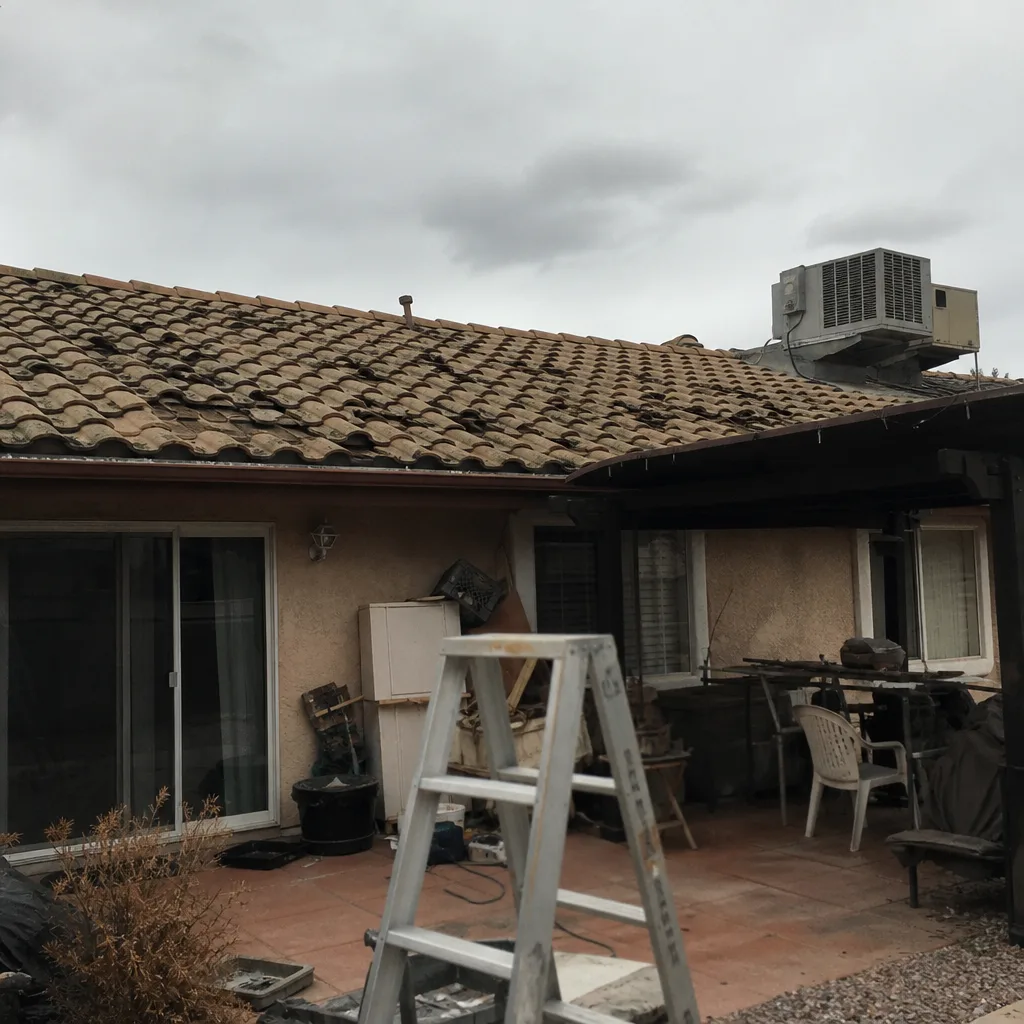 Before
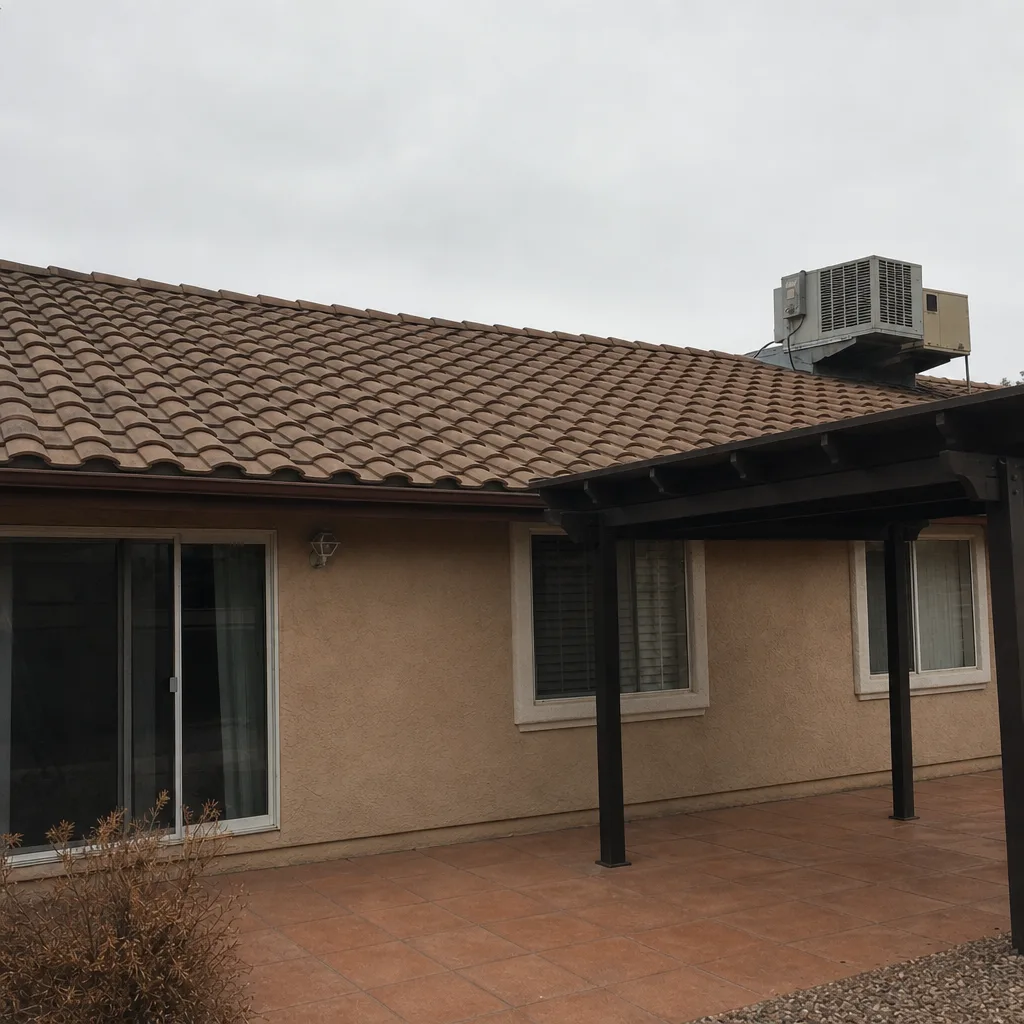 After
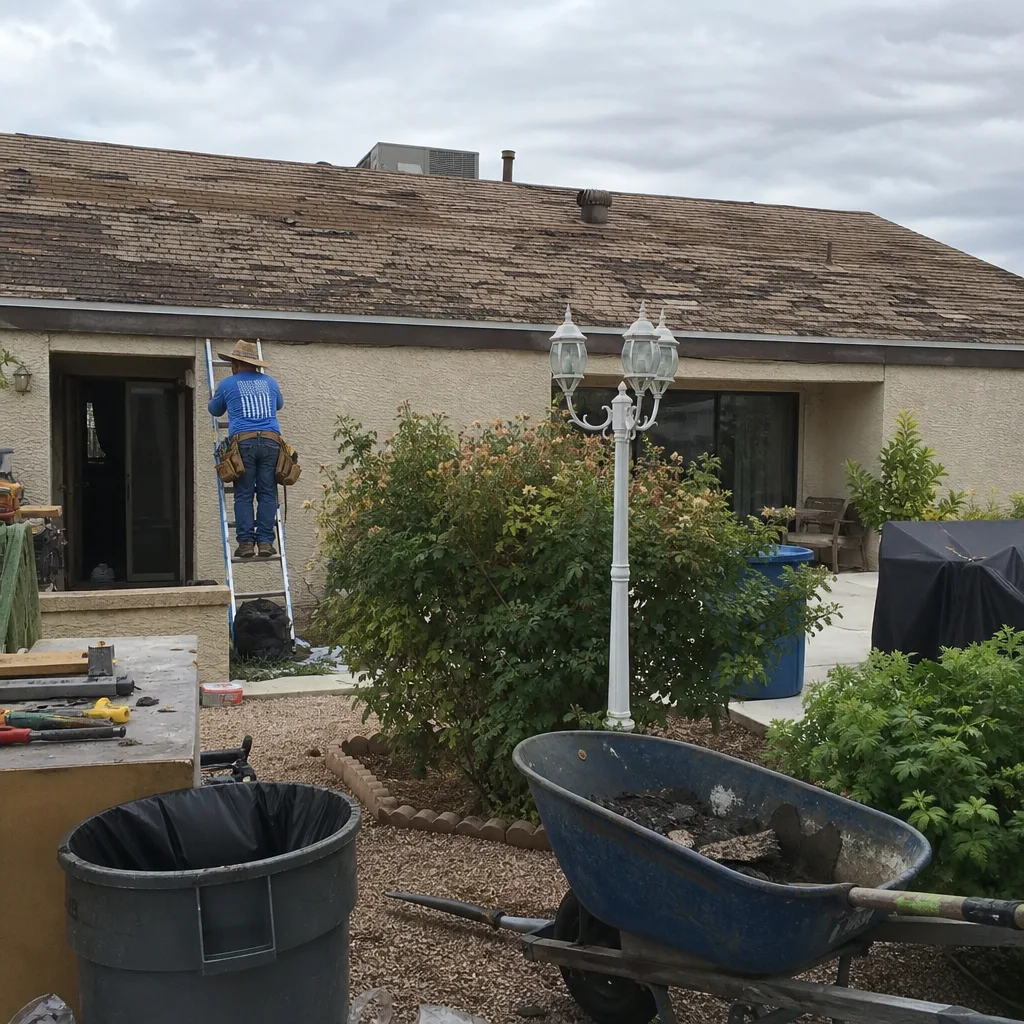 Before
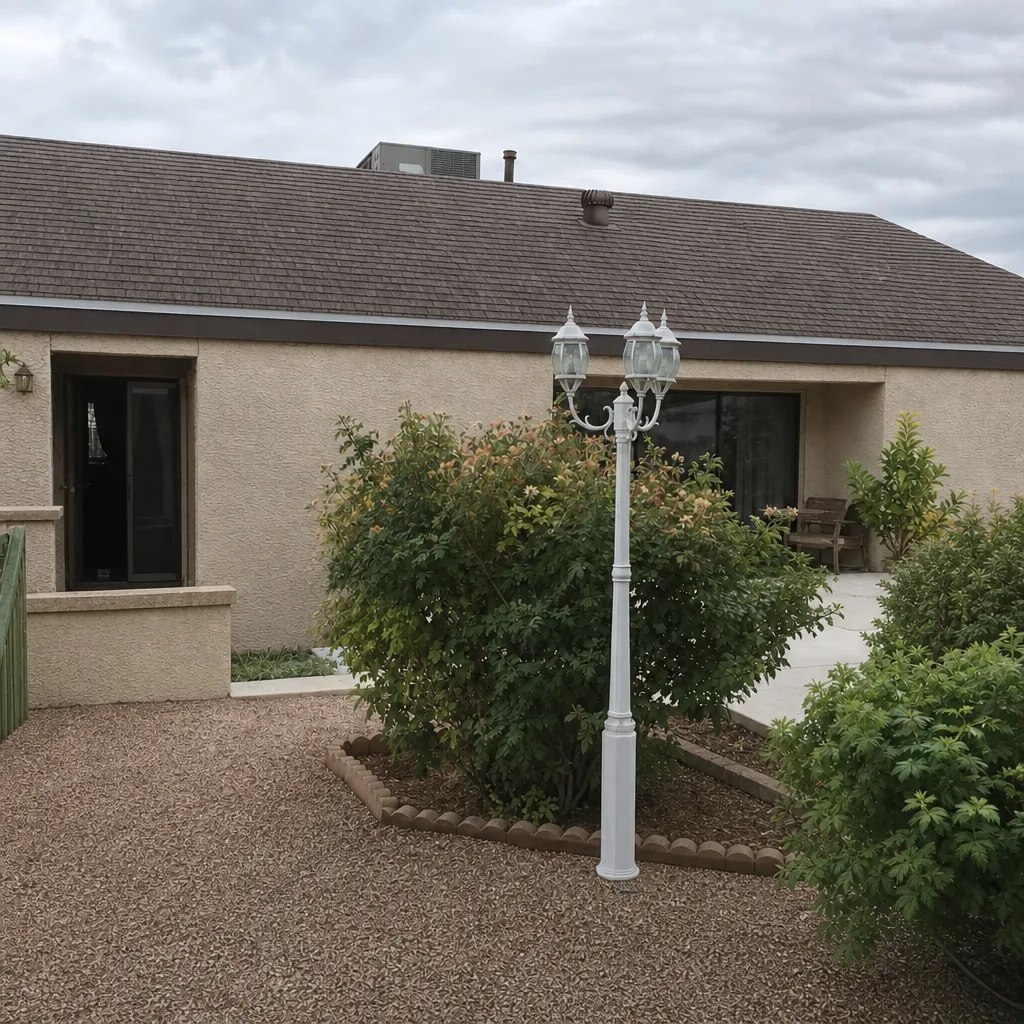 After
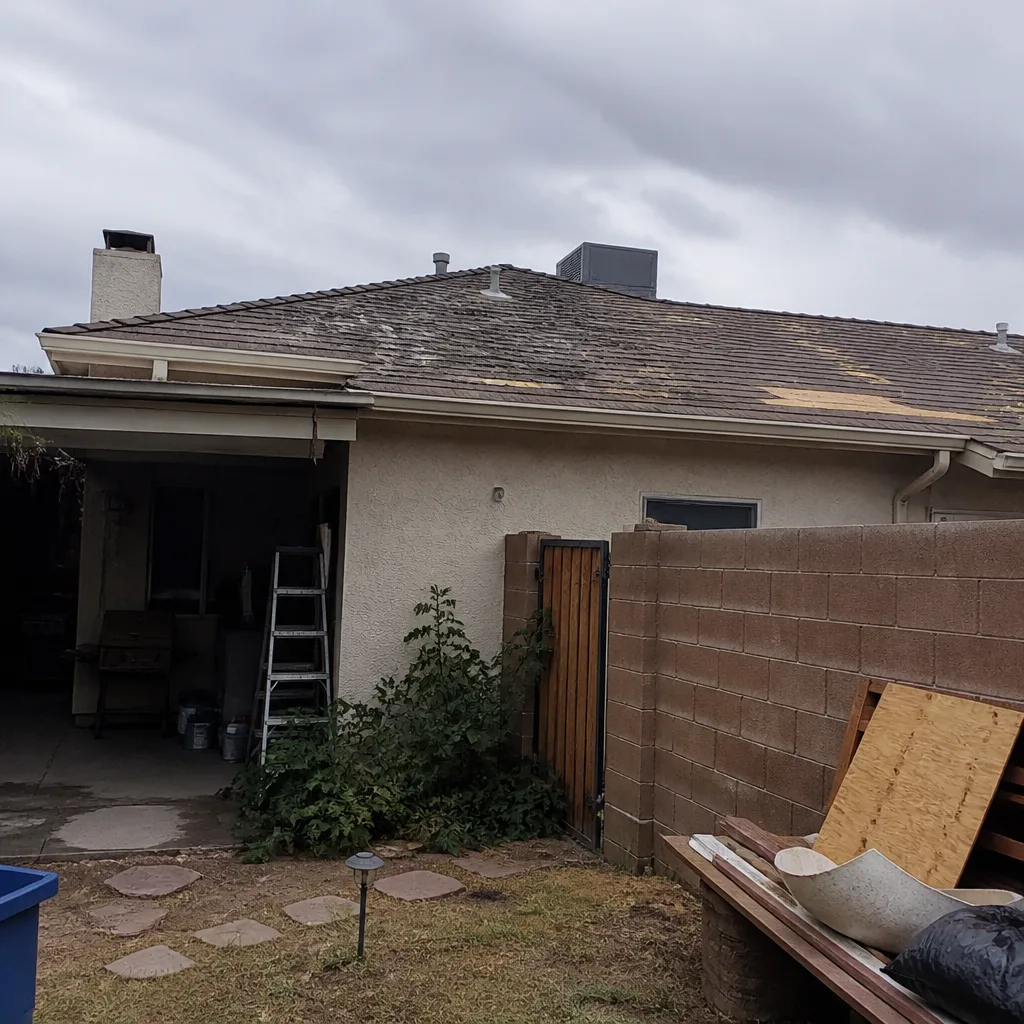 Before
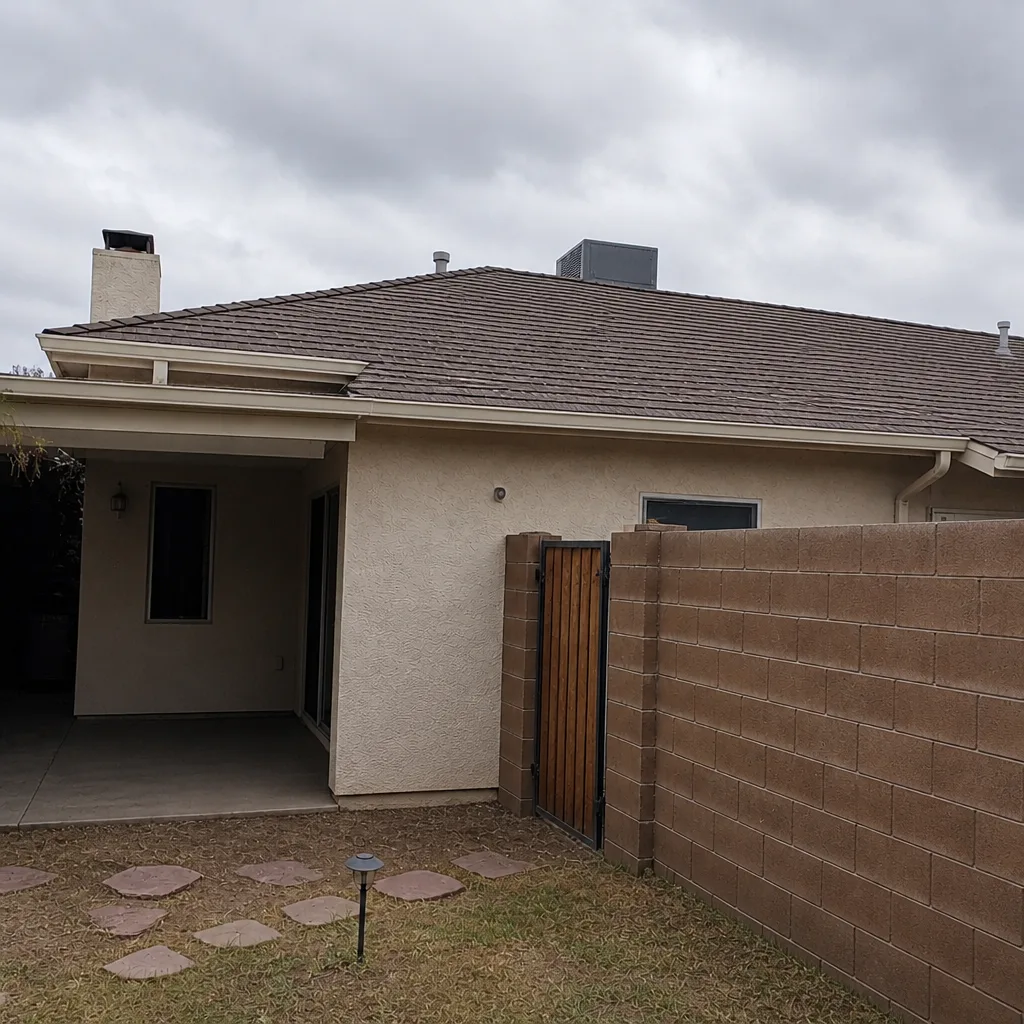 After
When to Call a Professional
Call when the symptom moves, when it is localized rather than even, or when you are not sure. Specific triggers: any soft spot underfoot on a foam roof, any lifted or backed-out fastener on metal, visible underlayment through tile, a ceiling stain that returns after rain, or an attic that runs hotter than it used to. Also call after any storm that brings wind or hail, even if you see nothing from the ground, because specialty roof damage often shows itself in the flashing and fasteners first. Ridgeline Roofing Co. Henderson offers free estimates in Henderson and photo-documented inspections from your actual roof. Call (833) 691-6717 to schedule yours. We will tell you plainly whether you are looking at a monitor situation or a repair.
Frequently Asked Questions
UV damage is even and widespread, showing as uniform chalking, fading, or fine surface cracking across the whole roof. Installation failure is clustered, showing up around penetrations, seams, and edges where the work was detailed, and appearing early in the roof’s life. If the symptoms are spread evenly, it is UV. If they group in one area, it is installation.
No, but it is always a timeline marker. Fine cracking that stays closed under finger pressure means the coating is aging and a recoat should be planned within a season. Cracking that opens under pressure, or hides a darker line beneath, means moisture is already moving and a contractor should see it.
Life span varies by material and maintenance. Foam coating typically needs a recoat every several years in Henderson’s UV load. Tile roofs last decades, but the underlayment beneath the tile has its own shorter life and does the real waterproofing. Metal depends almost entirely on coating condition. The consistent rule: in Henderson, special
ty roof life is a coating maintenance question more than a material question.
Usually because the roof has lost reflectivity or the ventilation has been compromised, and occasionally because a repair has blocked a vent path. In Henderson, a hotter attic is one of the earliest interior signs of specialty roof performance decline. It is worth a photo inspection before it becomes a cooling-cost problem.
We work on foam, tile, and metal specialty roofs and install products from seven manufacturer lines, including Boral, IKO, Atlas, and Tamko. For existing roofs of any brand, we inspect, document, and recommend repair or maintenance based on what we actually find. You can see our full scope on the specialty roofing page.
It is a written workmanship guarantee on our work. If something we did is not right within the promise window, we come back and make it right, with no arguing and no runaround. It applies to repairs, replacements, and installations, and you get it in writing before work starts.
The Bottom Line
Specialty roofing warning signs in Henderson follow three patterns: UV degradation, thermal-cycle fatigue, and improper installation. Each one leaves markers you can read years before a leak. Surface symptoms that are even and light usually mean monitor with photos every six months. Symptoms that are deep, localized, or moving mean call. Craze-cracking on foam, granule loss on tile, chalking or rust bloom on metal, attic heat spikes, and flashing failures at chimneys and skylights are the signs to watch. Reading them correctly saves a roof. Ignoring them turns a recoat into a tear-off. If you want a straight answer on what your roof is telling you, our team at Ridgeline Roofing Co. Henderson home will photograph it and tell you plainly. For a full roof that needs replacing rather than repairing, our Roof Replacement & Installation in Henderson page covers the process. Call (833) 691-6717 for a free estimate.
Written by the team at Ridgeline Roofing Co. Henderson.