
Last updated November 18, 2026
 Metal roofing
 Architectural shingles
 Tile roofing
 GAF
 Owens Corning
 Flat & low-slope
Free roof inspection with deck photos before we talk money - GAF and Owens Corning certified installation
Specialty Roofing Maintenance Schedule: What to Do and When
Foam roofing manufacturers recommend recoating every five to ten years. In Henderson, the real interval is closer to five to seven, and most homeowners find out too late. Our UV index ranks among the highest in the continental United States, and that sun doesn’t just fade a roof – it cooks the elastomeric coating off a foam system, dries out the sealant on tile underlayment, and works the fasteners loose on a metal panel. Every specialty material here runs on its own maintenance clock. Miss one interval and the repair that follows often costs ten times what the skipped service would have. This guide lays out a month-by-month schedule built around Henderson’s actual weather, not a generic national checklist.
Quick Answer
In Henderson, specialty roofs need at least two inspections a year – a pre-monsoon check in June and a post-monsoon debris check in October – plus a winter walk in January for tile and metal systems. Foam roofs need recoating every five to seven years given our UV load, tile roofs need underlayment checks tied to manufacturer warranty intervals, and metal roofs need fastener and sealant service every three to five years. The single most skipped task is clearing debris from the drip edge, and it’s the one that causes the most fascia rot.
Styles & brands we work with
- Architectural shingles
- Metal roofing
- Tile roofing
- GAF
- Owens Corning
- Flat & low-slope
Table of Contents
- Why Specialty Roofing in Henderson Runs on a Different Clock
- The Month-by-Month Henderson Maintenance Calendar
- Foam Roof Maintenance: Coating Intervals That Actually Work Here
- Tile Roof Maintenance and the Warranty Traps
- Metal Roof Maintenance: Fasteners, Sealant, and Monsoon Wind
- What a Real Photo-Documented Inspection Looks Like
- The Task Everyone Skips: Drip-Edge Debris and Fascia Rot
- Building a Maintenance Log That Protects an Insurance Claim
Why Specialty Roofing in Henderson Runs on a Different Clock
A roof in Henderson lives a harder life than the same roof in most of the country. We get roughly 300 days of sun a year, summer surface temperatures on dark roofing that push well past 150 degrees, and a monsoon season that drops a year’s worth of punishment in a handful of August storms. Add the spring and fall wind events that funnel through the valley and you have a climate that attacks a roof from three directions: ultraviolet, thermal cycling, and wind-driven rain.
That combination changes the maintenance math. A tile roof in a mild coastal climate might go years between real inspections. Here, the daily expansion and contraction – cool nights, brutal afternoons – works on every sealant joint and every piece of flashing. The underlayment beneath tile, which is what actually keeps water out, bakes and turns brittle faster than most homeowners expect.
This is why we tell Henderson homeowners to think in terms of material-specific schedules rather than a single annual visit. Asphalt shingles are forgiving and roughly uniform. Specialty systems – foam, clay and concrete tile, standing-seam metal – each have their own failure points and their own warranty language. Some of those warranties are voided by skipped maintenance, and the fine print is specific. That’s the part we’ll cover in detail below.
The Month-by-Month Henderson Maintenance Calendar
Here’s the schedule we recommend for any specialty roof in the Henderson valley. It’s built around our weather, and it assumes a homeowner who intends to stay in the house. Adjust the frequency upward if your roof is more than fifteen years old or sits on an exposed ridge with no windbreak.
- January – winter tile and metal walk. Cool weather is the safest time to walk a tile or metal roof and the best time to spot cracked tiles and loose fasteners before spring winds arrive. Check flashing at the chimney and any skylights.
- February – gutter and downspout check. Winter debris from the surrounding desert and any mature trees needs clearing before spring. Confirm downspouts discharge away from the foundation.
- March – spring wind inspection. Wind events this month lift tile corners and work metal fasteners loose. A quick visual from the ground and a close look at ridge caps catches most of it.
- April – coating assessment for foam. If your foam roof is nearing its recoat window, spring is the time to schedule. Coating applied before the heat sets in cures evenly and holds up far better.
- May – pre-monsoon full inspection. This is the critical one. Sealant, flashing, and drainage all get checked before the first storm.
- June – pre-monsoon inspection and clearing. Clear every scupper, valley, and drain. Any loose tile or lifted metal gets secured now, not after the first downpour.
- July and August – storm-season watch. After any significant monsoon event, look for displaced material and water staining on ceilings. Don’t wait for the fall check.
- September – post-monsoon drainage sweep. Monsoon debris – sand, gravel, palm fronds – piles up in valleys and behind parapets. Clear it.
- October – post-monsoon debris check. A full inspection now catches what the storms loosened, while the weather is still mild enough for repairs.
- November – drip-edge and fascia check. This is the task most homeowners skip. See the dedicated section below.
- December – maintenance log review. Update your records, note any work done, and file inspection photos where you can find them.
If you only do two of these, make them June and October. Everything else is real, but those two are the load-bearing visits for a Henderson roof.
Foam Roof Maintenance: Coating Intervals That Actually Work Here
Spray polyurethane foam is a smart choice for Henderson’s flat and low-slope roofs. It insulates, it seals, and it takes the desert heat better than most flat-roof systems when it’s properly coated. The coating is the whole ballgame. The foam underneath degrades quickly once ultraviolet light reaches it, so the coating is what buys you time.
Manufacturers often publish a five-to-ten-year recoat window. In our experience, Henderson’s UV index pulls that toward the short end. Most foam roofs here need recoating somewhere between five and seven years, and a roof on a fully exposed southern slope may need it closer to five. If you wait for visible chalking or the foam starting to show through, you’ve already lost a season of protection.
What a foam maintenance visit should cover:
- Washing the surface to remove dust and pollen so the new coating bonds properly.
- Checking for blisters, soft spots, and any ponding that signals a drainage problem.
- Re-sealing penetrations, vents, and any seams.
- Applying a fresh elastomeric coating at the manufacturer’s specified thickness.
- Documenting the recoat with photos and the product used, for warranty records.
Skip the recoat and you don’t just lose the coating – you can lose the warranty. Many foam warranties require documented maintenance at specified intervals, and a claim filed on a roof that was never recoated is likely to be denied. This is one of the clearest cases where skipping a service costs far more than doing it.
Tile Roof Maintenance and the Warranty Traps
Clay and concrete tile roofs are common across Henderson, and they’re beautiful and long-lived – but the tile isn’t what keeps water out. The underlayment beneath it is. Tile is a rain screen; the underlayment does the real waterproofing, and it ages in our heat faster than the tile above it.
Most tile underlayment carries a warranty of roughly twenty years under good conditions, and Henderson’s thermal cycling can shorten that. The tile itself, especially a quality Boral or certain concrete product, can last far longer. That mismatch is where homeowners get surprised: the roof looks fine from the street while the underlayment is failing underneath.
What voids a tile warranty, in general terms:
- Skipped underlayment inspections at the intervals the manufacturer specifies. Ignoring them can void a coverage claim.
- Walking the tile improperly. Tiles crack when they’re stepped on wrong. A legitimate inspection uses proper technique and documents any pre-existing cracks.
- Improper repairs – mixing incompatible underlayments or fasteners, or using a substitute material without the manufacturer’s approval.
- Poor drainage maintenance that lets water back up under the tiles.
Our recommendation for a Henderson tile roof: a visual inspection every spring and fall, a close underlayment check when the roof reaches the manufacturer’s mid-warranty point, and any cracked tile replaced promptly so water doesn’t get a path to the underlayment. If your tile roof is more than fifteen years old and you’ve never had the underlayment assessed, that’s the conversation to have before the next monsoon season.
Metal Roof Maintenance: Fasteners, Sealant, and Monsoon Wind
Standing-seam and exposed-fastener metal roofs handle Henderson’s sun well, but they have two enemies here: thermal expansion and monsoon wind. Metal expands and contracts with every hot day and cool night, and over years that movement works on fasteners and sealant joints.
Every three to five years, a metal roof in our climate should get:
- A fastener check, with any backed-out or corroded screws replaced with the correct type.
- Re-sealing of any exposed fasteners, laps, and penetrations with the sealant the manufacturer specifies.
- Inspection of all flashing and terminations, which are where most metal leaks begin.
- Cleaning of valleys and gutters so debris doesn’t trap moisture against the panels.
Sealant is the maintenance item most often deferred on a metal roof, and it’s the one the warranty language cares about. Manufacturers typically require the specified sealant, applied correctly, on their schedule. A homeowner who lets a handyman slather on the wrong caulk can void a warranty claim without knowing it. If you’re not sure what product your roof calls for, check the original installation paperwork, or have us look. We install GAF, CertainTeed, Owens Corning, IKO, Atlas, Tamko, and Boral systems, and we know which sealant each manufacturer requires.
What a Real Photo-Documented Inspection Looks Like
Not every “free roof inspection” is an inspection. Some are a walk-and-wave: someone glances up from the driveway, tells you the roof is fine or tells you it’s a disaster, and drives off. Neither version tells you anything useful.
A legitimate inspection of a specialty roof has a few recognizable markers:
- Someone actually gets on the roof (or uses a safe method to assess it if it can’t be walked). A tile or metal roof inspected from the ground is not inspected.
- Photos from your actual roof – the flashing, the valleys, the penetrations, any damage – not stock images. You should see exactly what they saw.
- A written summary of what was found, what’s fine, what needs attention, and what can wait.
- Honest triage. A real inspector tells you when there’s no urgent work. A storm-chaser tells you the whole roof needs replacing.
- Background-checked, uniformed technicians who document everything. This is the standard we hold ourselves to on every Henderson inspection.
If a contractor won’t show you photos from your own roof, or won’t put findings in writing, that’s not a maintenance inspection – it’s a sales pitch. Get a second opinion before you sign anything.
The Task Everyone Skips: Drip-Edge Debris and Fascia Rot
If we had to name the single most skipped task on a Henderson specialty roof, it’s clearing debris from the drip edge. The drip edge is the metal strip along the roof’s perimeter that directs water off the roof and away from the fascia. When leaves, sand, palm debris, and monsoon grit build up behind it, water backs up and sits against the fascia board underneath.
Fascia is wood. In Henderson, where the sun beats on the exposed edge of the roof all day and monsoon water finds every gap, a wet fascia board rots faster than most homeowners would believe. Once it’s soft, you’re looking at fascia replacement, then possibly soffit work, and sometimes the rot has crept up toward the roof deck. What would have been a ten-minute clearing job turns into carpentry.
The fix is simple: at least twice a year – November is a natural time, and again in spring – clear every bit of debris from behind the drip edge. Check the fascia for soft spots while you’re at it. Press on it with a screwdriver or your thumb. If it gives, that’s rot, and it needs attention before the next storm. If you’re not comfortable on a ladder, especially on a second-story edge, have it done as part of your regular inspection. Clearing the drip edge is one of the least glamorous maintenance jobs we do, and one of the most valuable.
Building a Maintenance Log That Protects an Insurance Claim
A maintenance log is a simple thing that pays off when you need it most. If your roof ever suffers storm damage, an insurance claim goes more smoothly when you can show the roof was well-maintained. Adjusters are understandably skeptical of a roof with no maintenance history – they can’t tell the difference between a neglected roof and a well-kept one that happened to be hit by a storm.
What to keep in your log:
- Dates of every inspection, and who performed it.
- Photos of the roof before and after any repair, filed where you can find them.
- Receipts and service records for any recoating, tile replacement, or metal fastener service.
- Manufacturer documentation for your specific tile, metal, or foam product.
- Warranty documents, so you know what’s covered and what maintenance is required.
We document every inspection with photos from your actual roof, and we’ll give you those photos. Keep them. If you ever need to file a claim – or if you ever sell the house – a well-kept log speaks for itself. It shows a homeowner who did the work. That record is worth a great deal, and it costs nothing to maintain.
Common Mistakes to Avoid
- Skipping the June inspection. Pre-monsoon is the one window in Henderson when you can catch a small problem before it becomes a monsoon-season leak. Wait until August and you’re calling an emergency line.
- Waiting for visible foam cracking before recoating. Once UV has reached the foam underneath, the repair is bigger and the warranty claim is at risk. Recoat on schedule, not on symptoms.
- Letting a stranger walk your tile roof. Improper foot traffic cracks tiles, and a walk-and-wave inspector who doesn’t document pre-existing cracks leaves you holding the bill.
- Using the wrong sealant on a metal roof. Manufacturers specify sealant types, and the wrong product can void a warranty. Check before someone reaches for a tube of general-purpose caulk.
- Clearing gutters but ignoring the drip edge. Debris behind the drip edge is what rots the fascia. It’s the task everyone skips, and it’s the one that costs the most.
- Hiring a storm-chaser after a monsoon. The truck that arrives the week after a storm and won’t be in Henderson next spring leaves you with a warranty you can’t collect on. Choose a local contractor who stands behind the work.
- Keeping no maintenance records. An insurance adjuster needs evidence. A log with dates, photos, and receipts is your best protection if you ever file a claim.
See the difference
 Before
 After
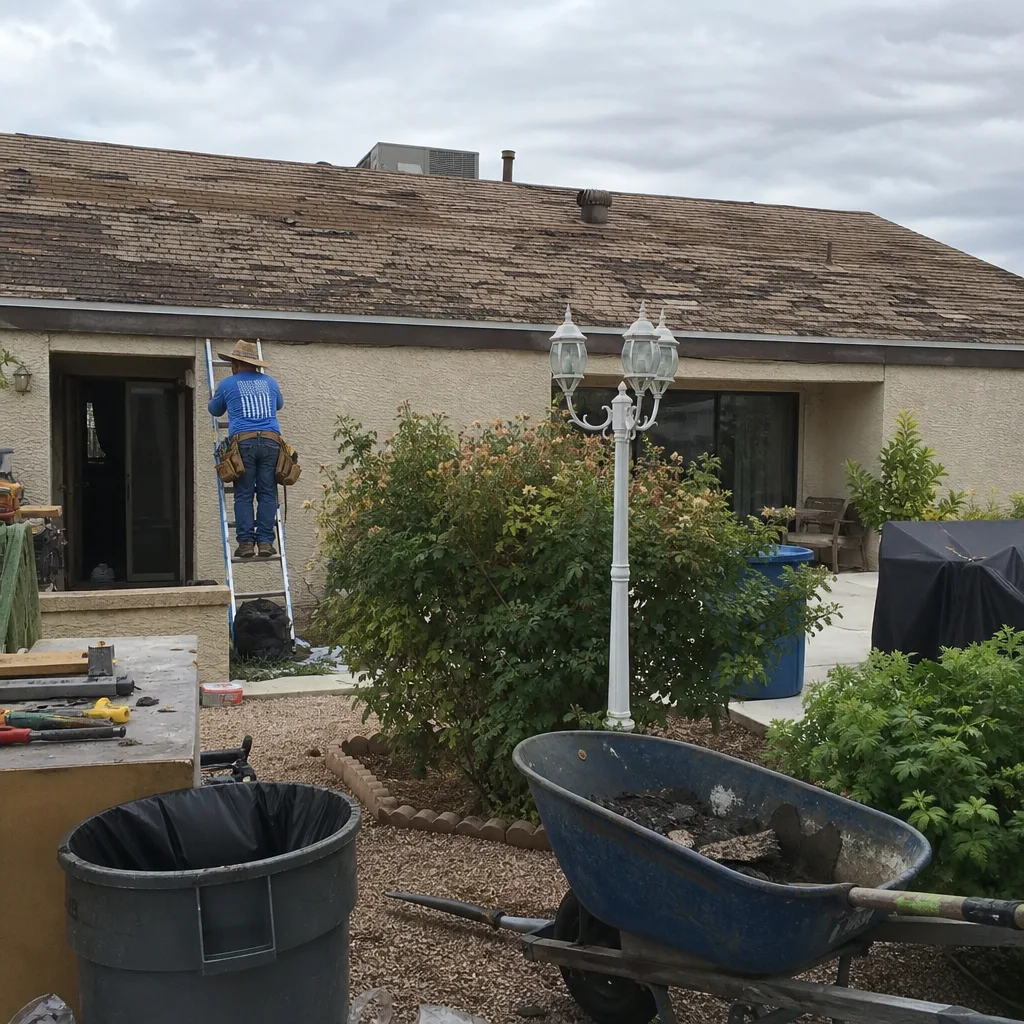 Before
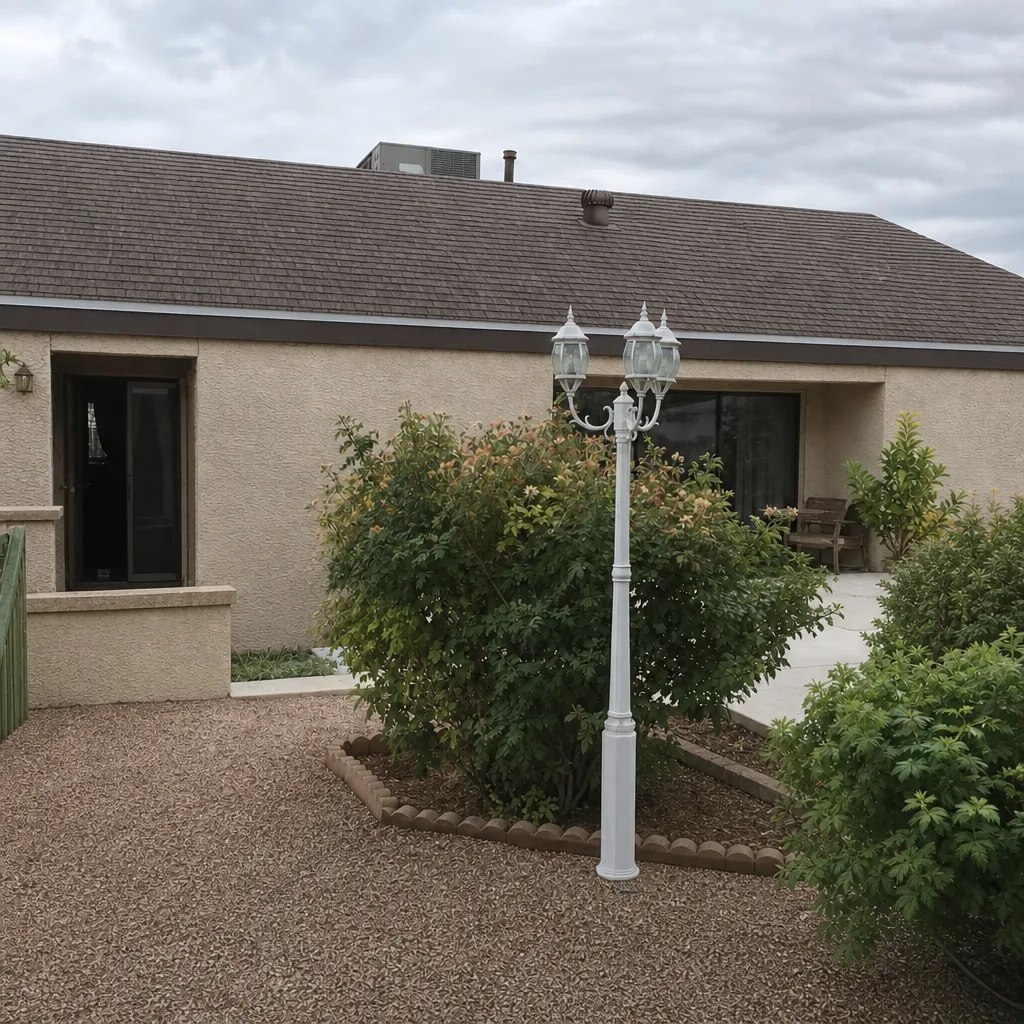 After
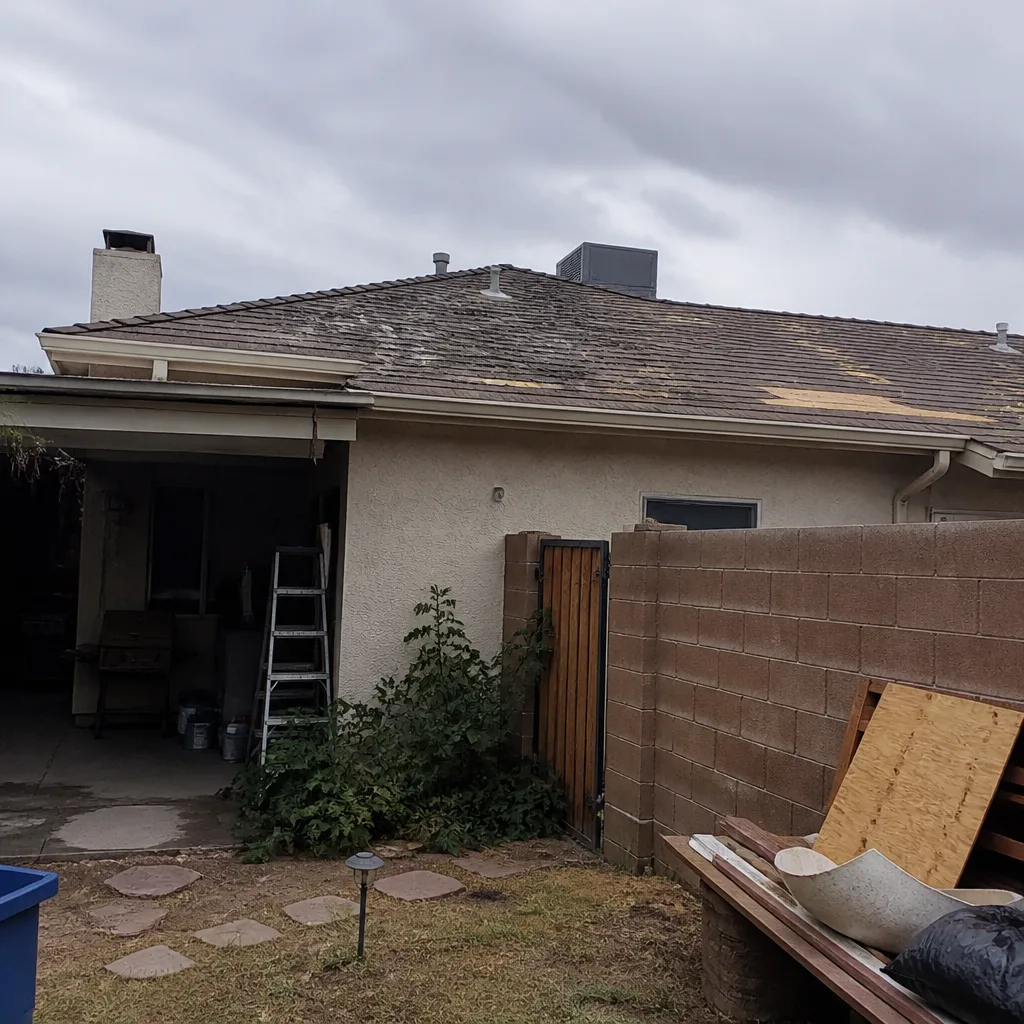 Before
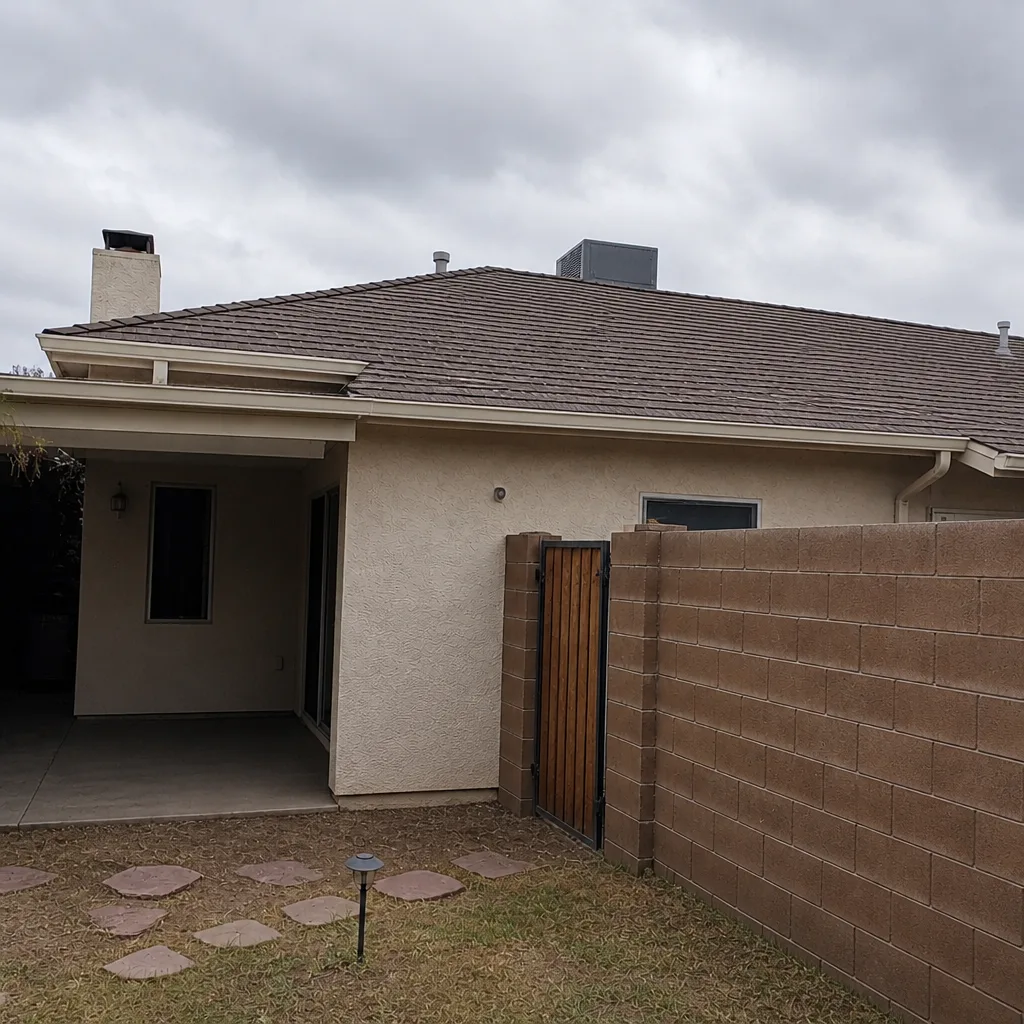 After
When to Call a Professional
Some maintenance you can do yourself: clearing the drip edge, cleaning gutters, checking for water stains on ceilings. Some you really shouldn’t. Foam recoating requires the right coating, applied at the right thickness, with documentation for the warranty. Tile underlayment assessment means lifting tiles carefully. Metal fastener and sealant work requires manufacturer-specific products. And anything on a steep pitch or a high second-story edge should be done by someone with the right equipment and training. If your roof is more than fifteen years old and has never had a documented inspection, if a monsoon storm has displaced materials, or if you’ve noticed water staining indoors, it’s time for a professional look. Our technicians have up to 10 years of experience, they’re background-checked and uniformed, and every inspection is documented with photos from your actual roof. The follow-up work is backed by our 90-Day Done Right Promise – if it’s not right, we make it right, no paperwork, no arguing. Ridgeline Roofing Co. Henderson offers free estimates in Henderson – call (833) 691-6717. A live person answers, day or night, including during a storm.
Frequently Asked Questions
At least twice a year – a pre-monsoon inspection in June and a post-monsoon check in October – plus a mid-winter walk in January for tile and metal roofs. Henderson’s UV load and monsoon season make a twice-a-year schedule the minimum for specialty materials, with more frequent checks if the roof is over fifteen years old or fully exposed.
Most foam roofs in Henderson need recoating every five to seven years, on the shorter end of the manufacturer’s five-to-ten-year range, because of our UV index. A fully exposed southern slope may need it closer to five. Waiting for visible chalking or exposed foam means the coating has already failed, and it can put the warranty at risk. Call (833) 691-6717 for a free assessment of where your foam roof stands.
It can. Tile, foam, and metal manufacturers typically specify maintenance intervals and required materials – underlayment inspections, recoating schedules, and specific sealants – and skipping them can void a coverage claim. The manufacturer’s paperwork on your roof is the authority. If you don’t have it, we can help you find out what your roof calls for.
A real inspection means someone gets on the roof, photographs the flashing, valleys, penetrations, and any damage from your actual roof, and gives you a written summary of what was found and what can wait. If a contractor won’t show you photos from your own roof or put findings in writing, it isn’t an inspection.
Spring and fall are the best windows – May or June before the monsoon, and September or October after it. Coating work schedules best in spring, when temperatures are moderate and the coating cures evenly. Winter is the safest time to walk a tile or metal roof. If you need work done during monsoon season, we handle storm damage as it comes, but planned maintenance belongs in the shoulders of the year.
Some tasks you can – clearing the drip edge, cleaning gutters, checking for ceiling stains. Coating work, tile underlayment checks, metal fastener and sealant service, and anything on a steep or high pitch should be done by a trained professional. The materials are specific and the warranty language is unforgiving. Call (833) 691-6717 and we’ll tell you honestly what you can handle and what you shouldn’t.
The Bottom Line
Every specialty roofing material in Henderson runs on its own maintenance clock, and the schedule has to match our climate: UV that punishes foam coatings, monsoon storms that test every flashing and sealant joint, thermal cycling that works on tile underlayment and metal fasteners, and a drip edge that nobody clears. The core schedule is simple – June and October inspections, a January tile and metal walk, foam recoating every five to seven years, metal fastener and sealant service every three to five, and that drip edge cleared twice a year. Keep a maintenance log with dates and photos. These are the things that keep a specialty roof doing its job for the long haul, and they are why we stand behind the work with a 90-Day Done Right Promise. Need help with the schedule, or a photo-documented inspection to start your log? Call (833) 691-6717 for a free estimate. We’ll be there when we say.
Written by the team at Ridgeline Roofing Co. Henderson.