
Last updated November 18, 2026
 Metal roofing
 Architectural shingles
 Tile roofing
 GAF
 Owens Corning
 Flat & low-slope
Free roof inspection with deck photos before we talk money - GAF and Owens Corning certified installation
Roofing Warning Signs: A Henderson Homeowner’s Reference Guide
Blistering on asphalt shingles looks like cosmetic bubbling, but in Henderson’s UV environment it’s the first sign that the asphalt matrix is separating from the mat – and it typically precedes granule loss by one to two summers. Most warning-sign guides describe damage that’s already catastrophic: a sagging deck, a ceiling stain spreading by the hour. This one is different. What follows is a reference for the early-stage signals that give a Henderson homeowner a 12-to-24-month repair window before a minor issue turns structural. We’ll cover what each sign actually looks like from the ground, how to tell normal desert weathering from active failure, and how to document it so a contractor can read progression instead of a snapshot.
Quick Answer
The earliest reliable roofing warning signs for a Henderson home are shingle blistering, sand-like granule color changes in gutters, interior attic staining, and efflorescence or paint bubbling at stucco roof-wall junctions. Caught in the first one to two summers, most of these mean a targeted repair. Missed, they tend to mean premature replacement. Photograph and date each sign so a professional can judge how fast it’s progressing, not just how it looks today.
Styles & brands we work with
- Architectural shingles
- Metal roofing
- Tile roofing
- GAF
- Owens Corning
- Flat & low-slope
Table of Contents
- Shingle Blistering vs. Normal Weathering
- Reading Granules in Your Gutters
- Attic Warning Signs: Stains, Daylight, Compression
- Flashing Signals on Stucco-Exterior Homes
- How Henderson’s Sun Ages a Roof Differently
- How to Document and Date What You Find
- The 12-to-24-Month Window
- Frequently Asked Questions
Shingle Blistering vs. Normal Weathering
Every asphalt shingle in Henderson weathers. On a south-facing plane, two summers of full sun will dull the surface and turn a new shingle from charcoal to a lighter, grayer shade. That’s normal, and it happens to every roof here. Blistering is a different animal.
From the ground, normal weathering reads as an even fade across the whole plane. Blistering reads as localized raised bumps, most often on the hottest exposure – the south and west slopes that take Las Vegas Valley sun from mid-morning until it drops behind the McCullough Range. Those bumps are the asphalt separating from the fiberglass mat underneath. The blisters pop, the granules under them let go, and the exposed mat begins taking UV directly.
What each looks like from the ground
- Normal weathering: uniform color fade, granules still firmly bonded, no raised texture visible from the driveway.
- Active blistering: a patchy, pimpled texture visible with binoculars or a zoomed phone photo, usually clustered on the sunniest slope. Pressure-washing accelerates sand blisters, so scope which areas were ever washed. Some membranes, among them IKO and Atlas lines, are engineered for desert UV, which is why material selection matters as much as installation.
The reason this matters for timing: blistering is the leading edge. Granule loss follows one to two summers later, and granule loss is where water starts finding the mat. If you can see blisters this season, you’re inside the repair window.
Reading Granules in Your Gutters
A few granules in the gutter after a windstorm is routine. The diagnostic question is not whether granules are shedding but what color the granules are and how long they’ve been collecting.
New shingles shed some surface granules as they weather in. Those granules look large, mottled, and mixed – the color from the top layer, fresh off the surface. That’s normal seasonal shedding. When you start seeing a fine, uniform, sandy accumulation that matches the darker base color of the shingle, you’re looking at the granules that were protecting the mat. That’s the diagnostic difference: mixed and coarse means the top wearing in; fine and uniform means the mat is exposed.
Sweep or scoop a sample and photograph it on a plain background next to a coin for scale. Save it in a dated folder. A Tamko or Boral shingle still in its granule-protected years should not be leaving sandy deposits by the cupful after an ordinary spring wind. If it is, that gutter is telling you the roof plane above it is further along than the calendar suggests.
Attic Warning Signs: Stains, Daylight, Compression
The attic is where a failing roof tells the truth before your ceiling does. In our experience, the ceiling stain is the last sign – the attic gives you earlier notice. Look for three things, in this order.
- Staining patterns. A single ring is a past event. A ring with a fresh center, a trailing streak down a rafter, or a stain whose width has grown since last monsoon season is active. Note the color: brown means water carrying dirt or tannins from the deck, white or chalky means efflorescence from moisture moving through masonry or drywall.
- Daylight gaps. On a clear morning, turn off the attic light and look for pinpricks or slivers of daylight at the deck, at penetrations, or along the ridge. A daylight gap is an open path for both water and desert wind-blown dust – and dust plus occasional monsoon moisture is how decking rots.
- Insulation compression. Batting that’s been pushed down, sagging between joists, or stained in a footprint pattern indicates water sitting against the deck above it. Compression also kills your cooling efficiency, which Henderson summers will remind you about on your power bill.
Insulation that’s flattened along a straight line almost always traces to a deck that has taken on moisture and lost some of its structure. That’s a deck problem, not an insulation problem, and it’s the point where a repair visit should happen before the next wet season.
Flashing Signals on Stucco-Exterior Homes
Henderson has a lot of stucco, and stucco hides water well – sometimes too well. Flashing at the roof-wall junction, at chimneys, and around the stucco-to-roof transition is where these homes fail first, and the signs show up on the wall, not the roof.
Two signals are worth learning on sight.
- Efflorescence streaks. White, powder stains running down the stucco below a roof-wall junction are minerals left behind as moisture evaporates. Efflorescence itself is not a leak. A streak that returns after you wash it is moisture finding a path, and the source is usually the flashing above it.
- Paint bubbling at roof-wall junctions. When paint lifts in a line just above or below the transition, it’s moisture trapped between stucco and the interior. In Henderson’s dry air, paint doesn’t bubble for humidity reasons; it bubbles when water is wicking in behind it and getting trapped. This is an early sign and one of the strongest we see on stucco homes here.
Both flags point to the same fix: flashing that’s failed, improperly lapped, or never integrated with the stucco weep system. That’s a Roof Repair in Henderson visit, and it’s better made while the wall is still cosmetic rather than after the sheathing behind the stucco has softened.
How Henderson’s Sun Ages a Roof Differently
A roof built in a coastal climate ages on the clock. A Henderson roof ages on the calendar of extreme swings. Our winters routinely drop near freezing overnight and hit the high sixties by afternoon. Our summers push the shingle surface well past ambient air temperature. That daily thermal cycle works the sealant strips and the fasteners, and it happens 365 days a year.
Three results follow that a generic warning-sign guide won’t tell you:
- Adhesive tabs let go earlier. Lifted or curled tabs show up first on the south and west slopes and near the ridge, because those planes see the widest swing. Once tabs lift, wind gets under and the next monsoon gust can peel an entire course loose.
- Fasteners back out sooner. A nail that backs out of a Henderson deck leaves a small gap that becomes a water path and a condensation point.
- Neighborhoods age differently. Roofs closer to Green Valley and the foothills catch more reflected heat off hardscaping. Homes near the Las Vegas Wash side of town face different moisture patterns after a wet monsoon. A Ridgeline Roofing Co. Henderson home inspection is scoped to the specific exposure in front of us.
Age is a number. Sun, wind, and thermal cycling decide when the roof actually needs attention.
How to Document and Date What You Find
Progression is what a good contractor needs to see. A single photo tells us a sign exists; a dated series tells us how fast it’s moving and whether the 12-to-24-month window is intact. Here’s a method any homeowner can run from the ground and attic hatch, safely, without climbing.
- Shoot from the ground, same spot, same time of day. Pick four standing points around the house. Photograph the roof planes with a zoomed phone or binoculars to catch texture. Note the date in the file name.
- Capture the attic. Photograph any stain with a ruler or coin for scale. Photograph the daylight you see at the deck with the attic light off.
- Collect a granule sample. Scoop from each downspout after a wind event and keep it in a labeled bag with the date.
- Photograph the wall. Frame the whole junction, then zoom on the efflorescence or bubbling so the pattern is on record.
- Log it all in one place. A dated folder or a spiral notebook is enough. Note when you first saw each sign and whether it grew since the last check.
When a technician comes out, the series lets them read progression instead of guessing. They’ll shoot their own reference photos from the actual roof so the history stays complete.
If a technician asks to see updates on the roof itself, that’s a real inspection. Our field team is background-checked and uniformed, and they’ll document what they find in photographs rather than a speech at the driveway. That standard, plus a written guarantee and pricing that doesn’t move from estimate to invoice, is what we mean by the Roof Replacement & Installation in Henderson process done right.
The 12-to-24-Month Window
Here’s the practical version of the window. A blistering slope gives you roughly one to two summers before granule loss sets in, then another season or two before water reaches the deck. Stucco flashing efflorescence matters more once it recurs, but the fix is still a repair until the sheathing shows moisture. A daylight gap in the attic should get attention before the next wet season, not after. Deck stains give you the shortest leash.
Each sign moves at its own pace. What they share is that a homeowner who documents early has a repair decision, not a crisis decision. That’s the whole reason to read the roof from the ground this spring – not to panic, but to get ahead of the calendar.
Common Mistakes to Avoid
- Judging from a single photo. One photo shows a sign exists; only a dated series shows whether it’s active. A blister that hasn’t changed in a year is a different story than one that doubled since last summer.
- Pressure-washing a slope with blisters. It strips the loose granules and speeds the failure. If you’re already seeing blisters, washing will make the timeline shorter, not cleaner.
- Waiting for the ceiling stain. By the time water reaches an interior ceiling in a Henderson attic, the deck has usually been wet for a season. Read the attic, not the living room.
- Treating efflorescence as cosmetic. A returning white streak means moisture has a path. Ignore it and the fix grows past the flashing.
- Calling the newest truck in the neighborhood after a storm. Storm-chasers sell roofs and leave; the paperwork and the warranty often go with them. A local business that plans to still be here in thirty years will price the same job and stand behind it in writing.
- Climbing to investigate yourself. A desert roof is a genuine hazard – hot surfaces, brittle materials, fall exposure. Photograph from the ground and the attic hatch; leave the slope work to the professionals.
- Accepting a verbal scope. Without a written line-item estimate you can’t compare bids or count on a fixed price. Ask for it in writing, every time.
See the difference
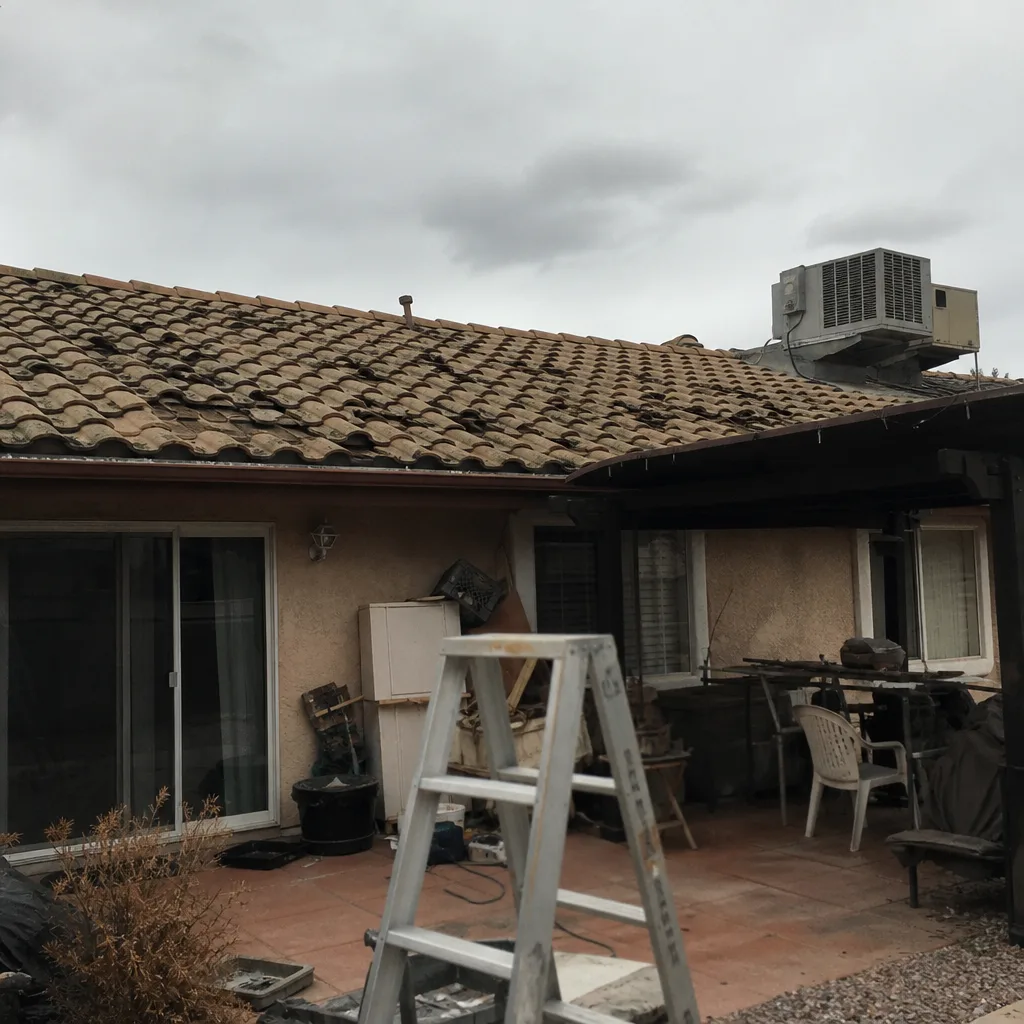 Before
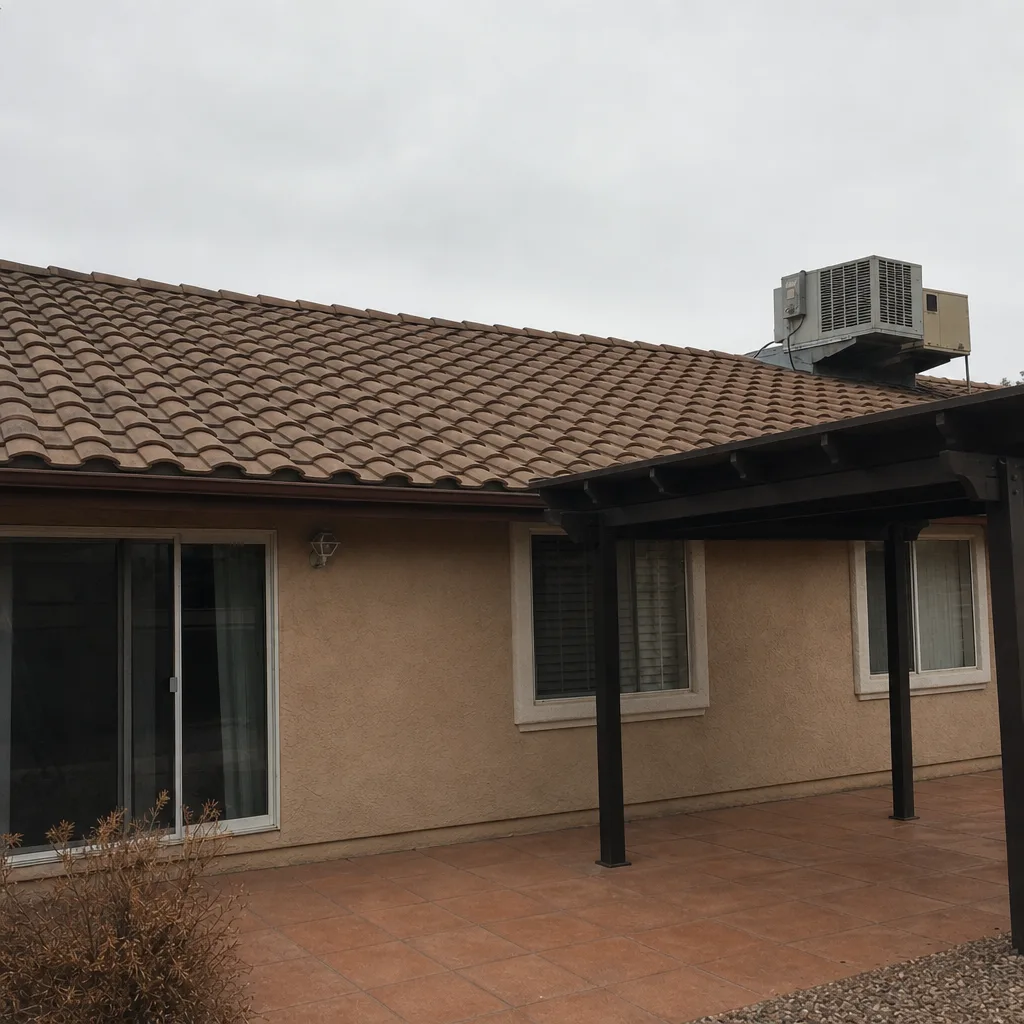 After
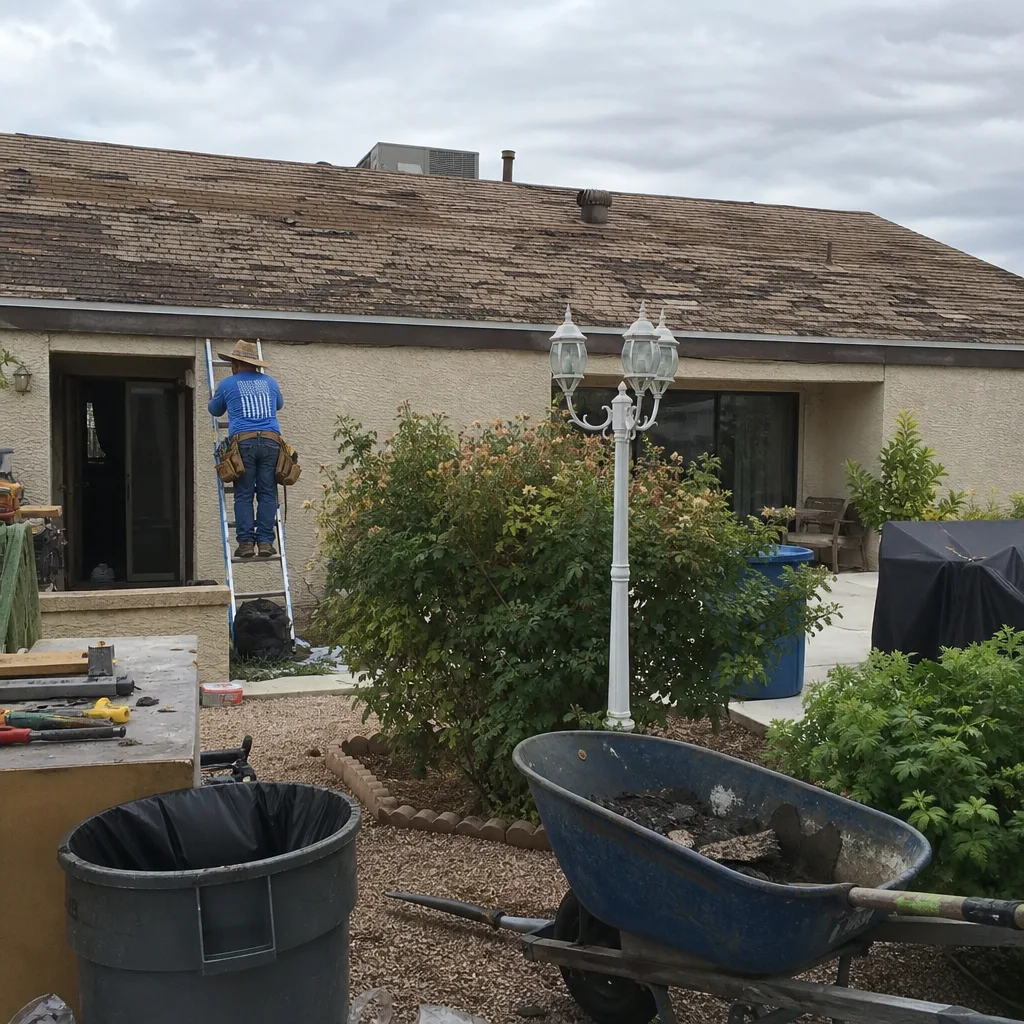 Before
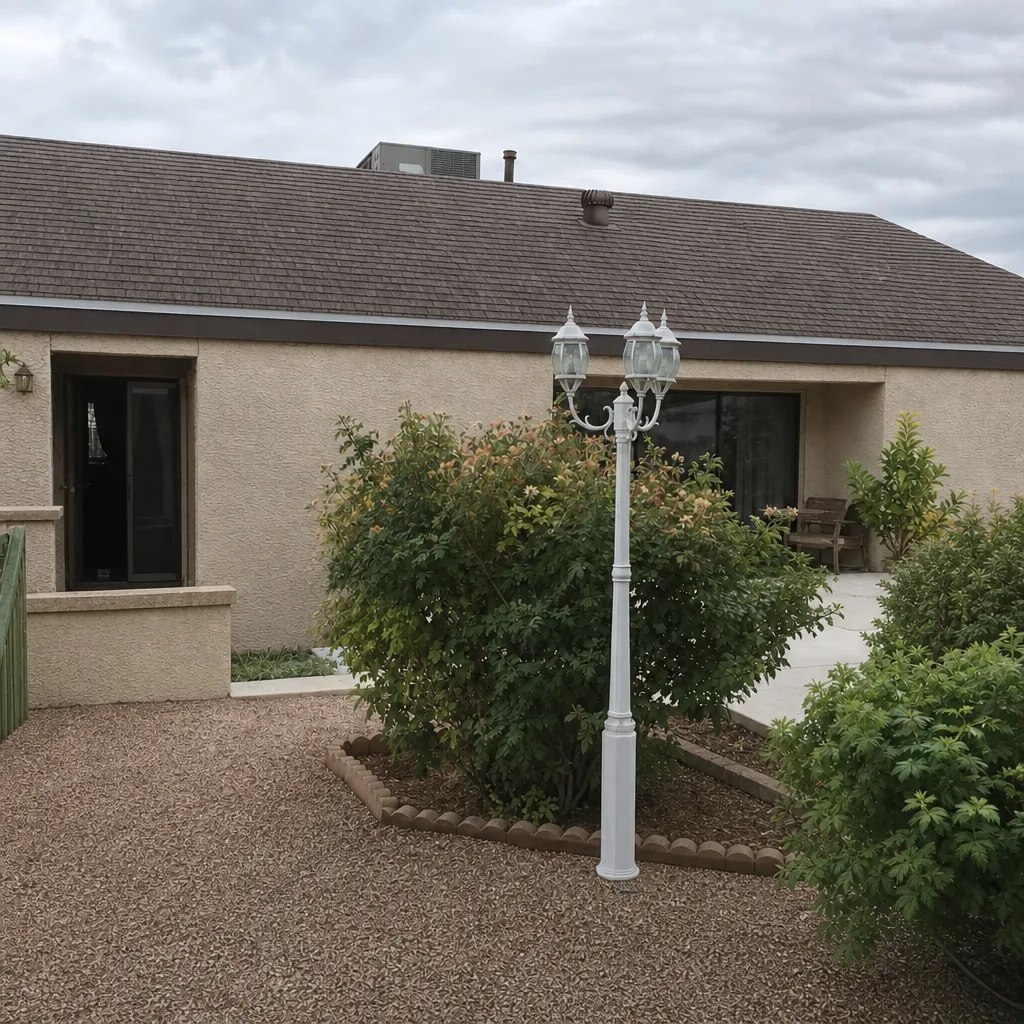 After
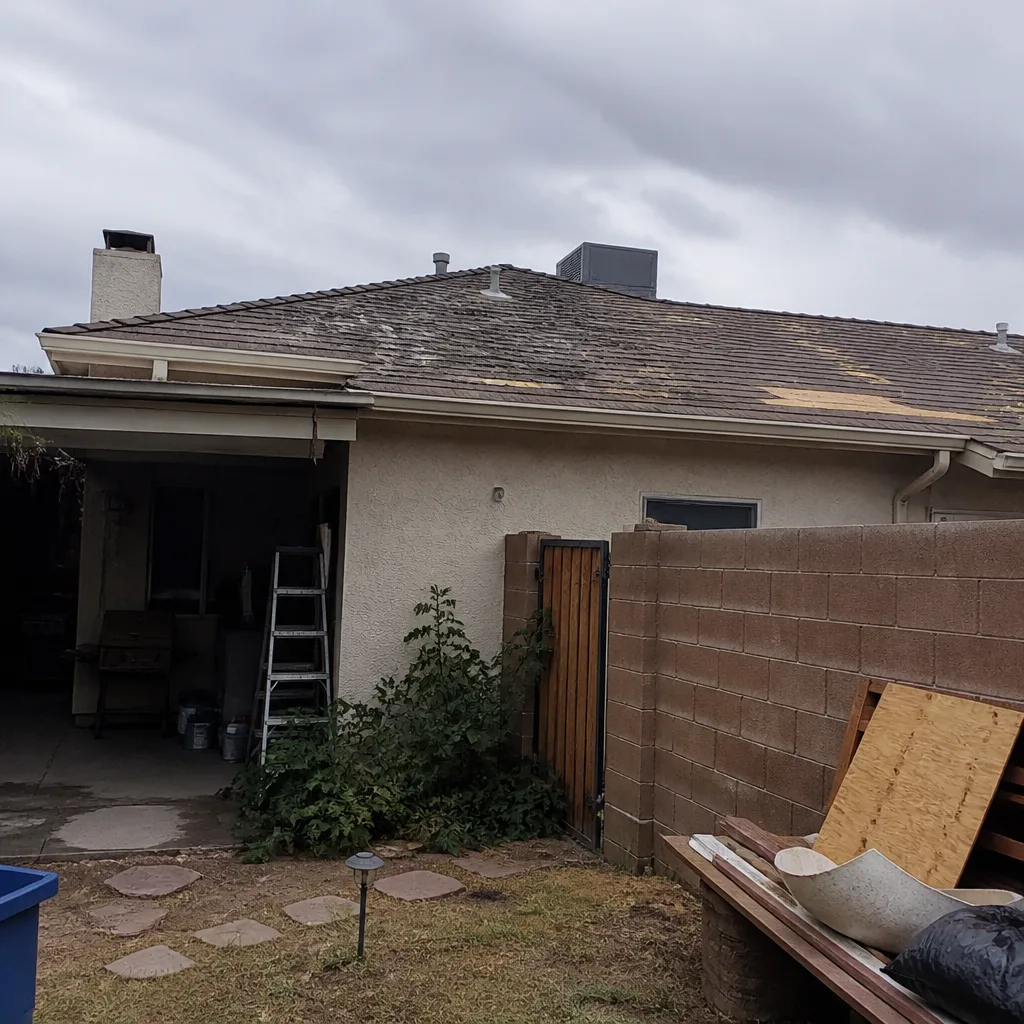 Before
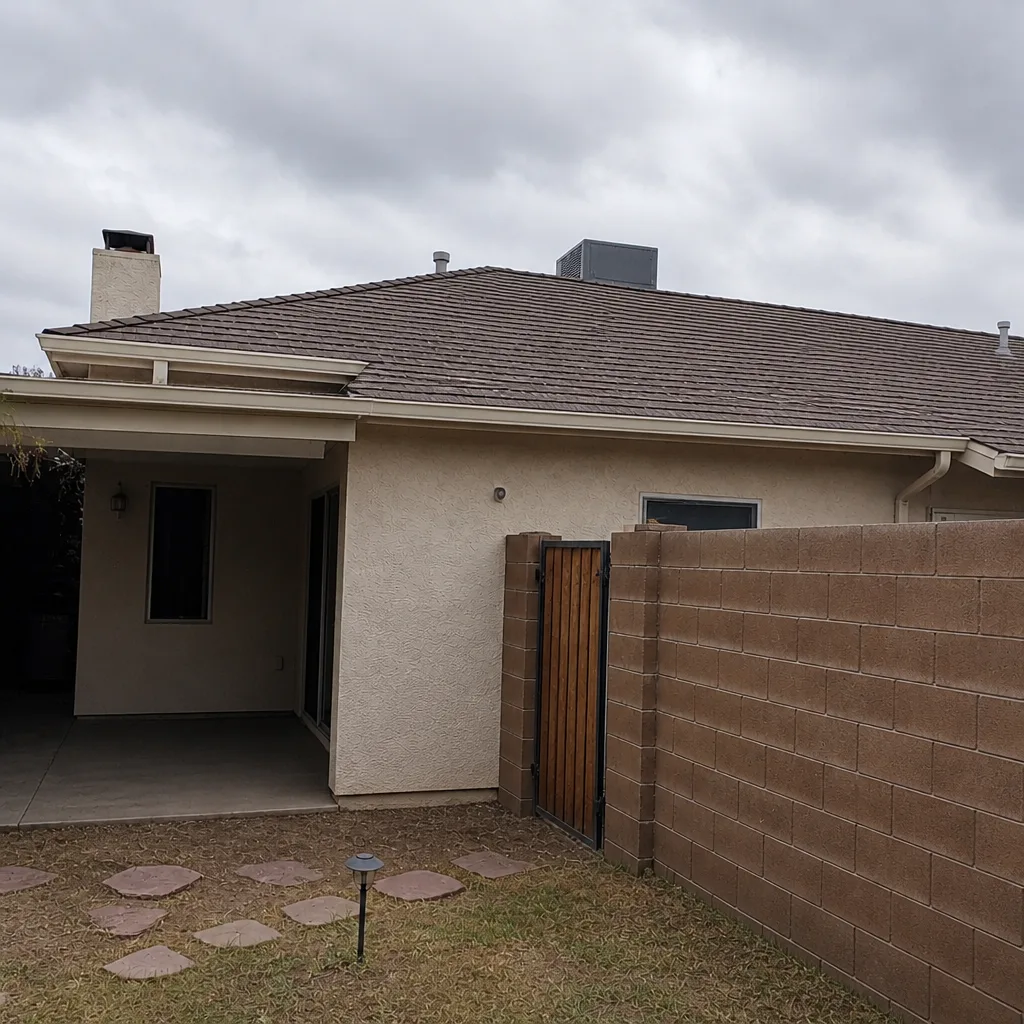 After
When to Call a Professional
Call us when a sign keeps showing up across three or more seasons of checks, when a stain’s center looks fresh or its edges are moving, when you find daylight through the deck, or when efflorescence returns after washing. Call sooner if you’ve just come through a storm with missing or lifted shingles. And call before you’re ready to buy – the ask is for the estimate, not the job. Ridgeline Roofing Co. Henderson offers free estimates in Henderson and can give you a second opinion on any written estimate you already have. Our phones are staffed by a live person around the clock, including nights and weekends. Call (833) 691-6717.
Frequently Asked Questions
Shingle blistering is usually the earliest visible sign, showing up as a patchy, pimpled texture on the sunniest slope, and it typically precedes granule loss by one to two summers. Caught this early, it’s a repair-window signal rather than a replacement signal. Call (833) 691-6717 for a free estimate if you spot it.
Normal shedding is mixed, coarse, and short-lived; a real problem is fine, uniform, sandy granules collecting in cups rather than grains, usually matching the shingle’s darker base color. If you’re collecting samples after every wind event, that’s a sign to have it looked at. Estimates are free.
A single white streak can be harmless, but efflorescence that returns after washing is moisture finding a path, and on stucco homes in Henderson the source is usually flashing above it. Left alone, the fix grows past the flashing and into the wall. Call for a free inspection of the junction.
Yes, from the ground and the attic hatch, with photos and dates. Leave the actual slope work to the professionals – desert roof surfaces are a real fall and burn hazard. Our technicians are background-checked and uniformed, and they document every inspection with photos taken from your roof.
Not with us. The number on the written estimate is the number on the invoice, and every job is backed by our 90-Day Done Right Promise: if it isn’t right, we come back and make it right, no paperwork and no arguing. Call (833) 691-6717 for an exact quote.
The answer usually turns on how far the failure has progressed across the roof, not on age alone. Blistering on one plane is often a repair; widespread granule loss and deck stains across multiple slopes point toward replacement. A free inspection of your roof and attic, with photos, will tell you which.
The Bottom Line
Early warning signs matter because they arrive before the failure does. Blistering, uniform granule color changes, attic stains and daylight, and stucco flashing efflorescence are the signs that give a Henderson homeowner a 12-to-24-month repair window instead of a storm-week emergency. The method is simple: photograph from the ground and attic, date what you find, and watch for movement. A local business with 42 years of standing behind Henderson roofs, a written 90-Day Done Right Promise, and live people answering the phone is built for the homeowner who wants the job done once. Call (833) 691-6717 for a free estimate.
Written by the team at Ridgeline Roofing Co. Henderson.