
Last updated November 18, 2026
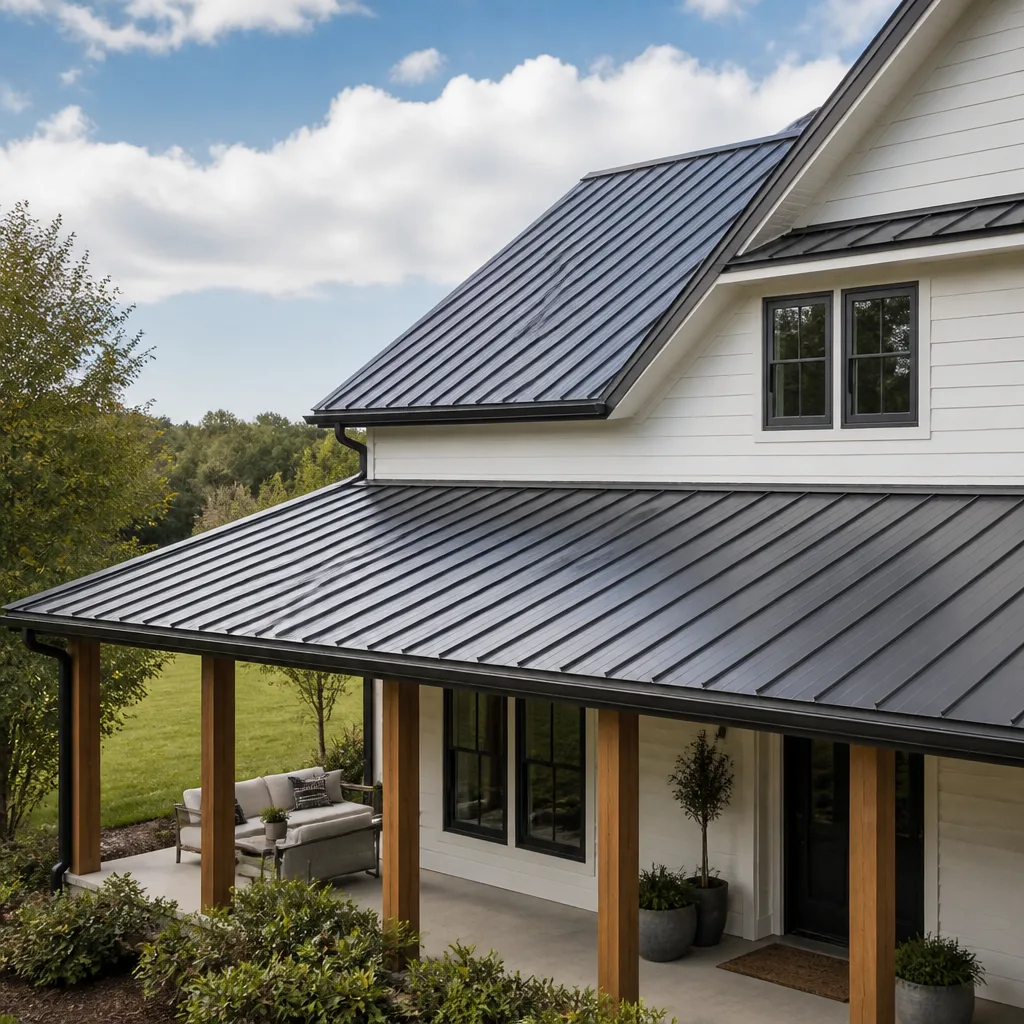 Metal roofing
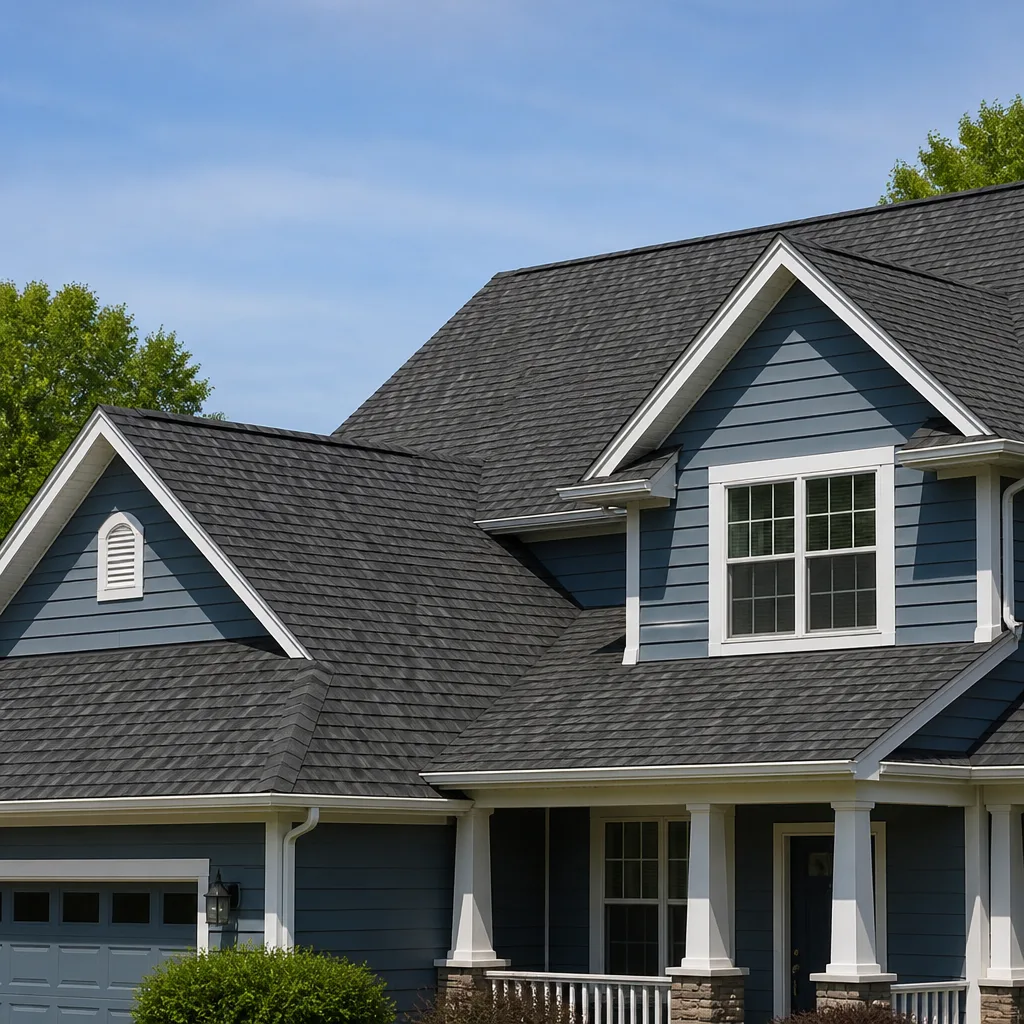 Architectural shingles
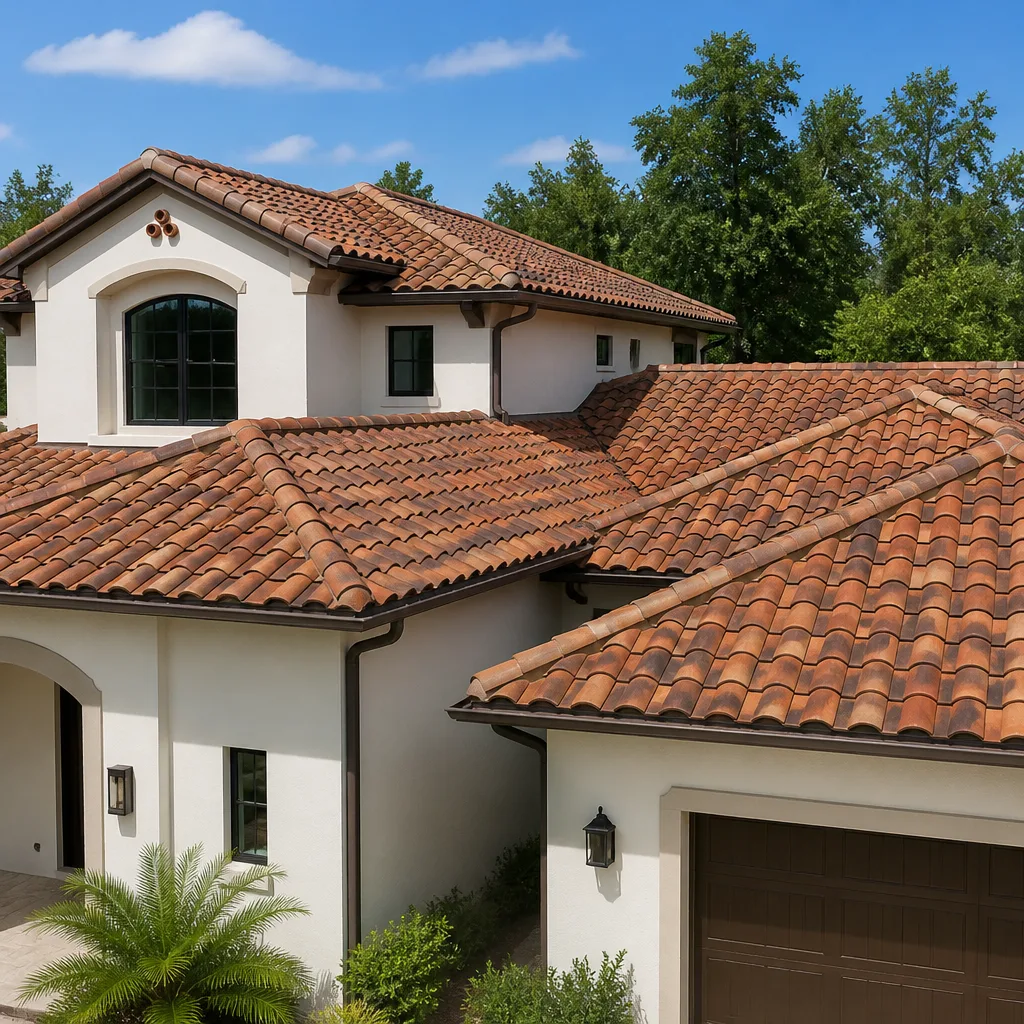 Tile roofing
 GAF
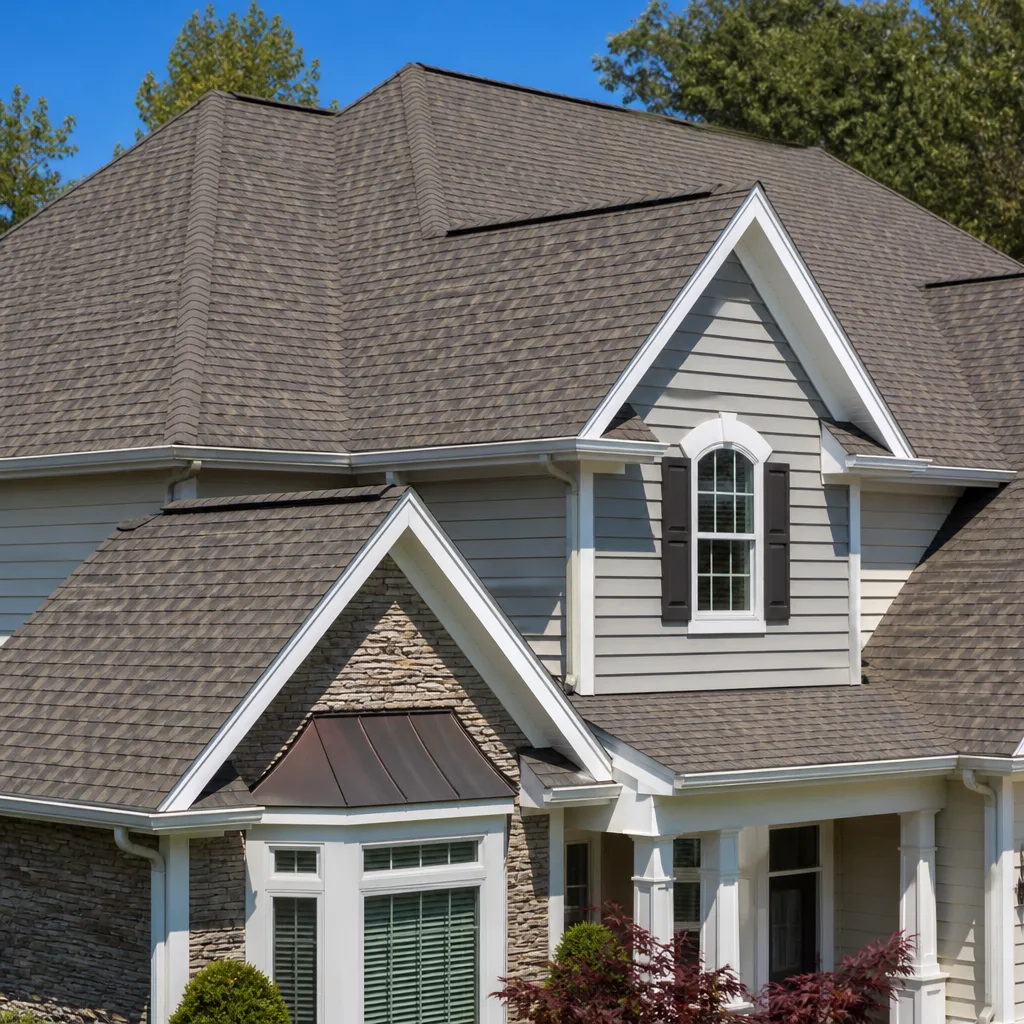 Owens Corning
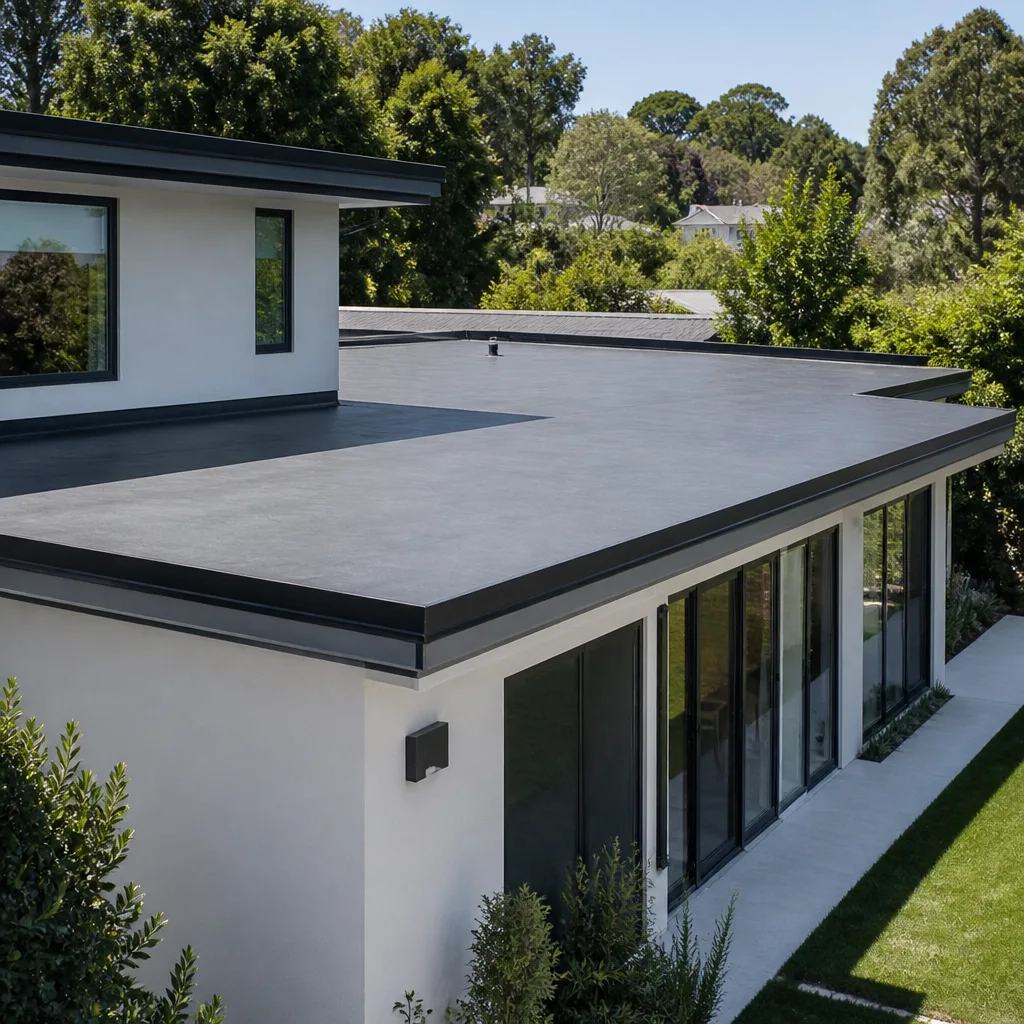 Flat & low-slope
Free roof inspection with deck photos before we talk money - GAF and Owens Corning certified installation
Roofing Emergency Preparedness Guide for Henderson Homes
The wind warning most Henderson homeowners remember isn’t the one they prepared for. It’s the one that arrived while they were asleep, shoved a neighbor’s pine onto the ridge, and left a stain spreading across a bedroom ceiling by morning. The National Weather Service zone that covers Henderson issues flash flood and high-wind warnings an average of 18 times a year. Most of us have never once looked up our roofer’s after-hours number before that warning hits. This guide fixes that. It’s a pre-event plan for Henderson homes: what to photograph now, what to check in the first half hour after a storm, how to tarp a ridge without sabotaging a claim, and how to tell a local contractor from a stranger who drove in overnight.
Quick Answer
Preparing a Henderson home for a roofing emergency means three things, in order: document your roof’s current condition with dated photos before any storm touches it, learn the 30-minute interior check that catches a leak before it reaches your walls, and have a local contractor’s number on hand before you need it. The last point matters most. When a monsoon microburst hits the Henderson valley, the homeowners who get help first are the ones who already knew who to call.
Styles & brands we work with
- Architectural shingles
- Metal roofing
- Tile roofing
- GAF
- Owens Corning
- Flat & low-slope
Table of Contents
- Why Henderson Homeowners Underestimate Roofing Risk
- The Pre-Season Photo File That Wins Insurance Claims
- The 30-Minute Post-Storm Check: Attic First
- Emergency Tarping: When It Helps and When It Hurts
- What to Tell Your Insurance Adjuster (and What to Wait For)
- How to Vet an Emergency Roofer After a Storm
- Henderson’s Two Storm Seasons and What Each One Does to Roofs
Why Henderson Homeowners Underestimate Roofing Risk
The refrain we hear most is that Henderson weather “isn’t that bad.” It’s an easy thing to believe when you’ve spent twenty summers under clear desert sky. But the same climate that makes Henderson pleasant for nine months a year concentrates its violence into short, sharp events. A monsoon microburst can push 60-mile-per-hour gusts through a single neighborhood while the next block over stays calm. Hail that lasts six minutes can bruise a shingle field you’ll be paying to fix for the next fifteen years.
There’s a second reason preparedness slips: desert roofs age differently than roofs in wet climates. Henderson sun bakes asphalt shingles through thousands of full-sun hours, which dries out the mat and makes sealant strips brittle. When wind finally arrives, those strips fail faster than they would on a roof in a milder zone. A shingle field that looks fine from the street can be one gust away from losing tabs in a strip.
The homeowners who avoid the worst outcomes aren’t the ones with the newest roofs. They’re the ones who made a plan during calm weather. That’s what this guide covers. It’s not a panic checklist you read with a bucket in your hand. It’s the plan you build now, while the sky is blue over Henderson. If you want a professional set of eyes on the roof before storm season turns, Ridgeline Roofing Co. Henderson home is where that conversation starts.
The Pre-Season Photo File That Wins Insurance Claims
The single most useful thing you can do this month takes about forty minutes and costs nothing. Build a dated photo record of your roof in its current condition. Not because you expect damage, but because an insurance adjuster cannot argue with a photo that shows your roof before the event.
Here’s the sequence that catches the most:
- Ridge and hips from four corners. Stand back on each side of the house and shoot the full ridge line. These photos show whether the roof was straight before wind bent anything.
- Every roof penetration. Chimneys, vents, skylights, and pipe boots. Shoot each one close enough to read its condition.
- Gutter runs, end to end. Gutters show age and prior damage, and they’re the first thing a storm rips loose.
- Close-ups of any wear you already know about. A curled tab or a granule-bare patch photographed today cannot be blamed on tomorrow’s wind.
- Interior ceiling and attic shots. Clean, dry ceilings photographed before the storm make a fresh water stain after it undeniable.
Date every photo, back them up to the cloud, and keep the folder where you’ll find it at midnight. When you file a claim, you’ll send these early. The adjuster sees a documented baseline, your pre-loss condition is established, and the conversation shifts from argue to approve. We’ve watched this file make the difference between a clean claim and a months-long fight. If you’re not comfortable climbing or photographing your own roof, that’s a job worth handing to a professional. Roof Repair in Henderson starts with a photo-documented inspection for exactly this reason.
The 30-Minute Post-Storm Check: Attic First
The order in which you check after a storm matters more than most people realize. Inspect in the wrong sequence and a leak can travel from the attic into a wall cavity and go undiscovered for days. Inspect in the right sequence and you catch active intrusion the same afternoon.
Do this in the first half hour after a high-wind or heavy-rain event, and always before you sleep again:
- Attic first, and specifically the underside of the roof deck. Use a flashlight and look for fresh water trails, dark rings, or damp insulation. Water reaches the deck before it reaches your ceiling.
- Top-floor ceilings second. Walk every room and check ceiling edges, corners, and anywhere a ceiling meets a wall for stains, bubbling paint, or drips.
- Exterior last, and from the ground. Stand back and look for missing tabs, lifted shingles, granule piles in gutters, bent gutters, and anything on the roof that shouldn’t be there. Binoculars save you the climb.
A specific warning worth passing on: in Henderson neighborhoods with mature trees, debris that stays on the roof after wind causes more damage than the wind itself. A branch sitting on the deck holds moisture against shingles and starts rot months later. If your attic check is clean but you can see debris resting on the roof, treat that as a repair call, not a wait-and-see.
Insulation that got wet is the sneakiest part of a post-storm leak. It dries from the top down, so insulation that feels dry can still be feeding mold in a sealed cavity. When water travels in a Henderson attic, it moves fast. Our technicians document inspections with photos taken from your actual roof, so you know what’s up there before a leak turns into a wall.
Emergency Tarping: When It Helps and When It Hurts
A tarp can keep a storm from turning a bad night into a ruined house. A tarp can also trap moisture, void an insurance claim, and hide damage that needed attention. The difference is in how and when it goes up.
It helps when:
- Wind has opened a section of shingles to the deck and more rain is coming within the hour.
- A ridge section has failed and water is running straight into the attic.
- You have an active leak and the next storm is 24 hours out.
It can cause additional damage when:
- It sits tight against wet decking with no air behind it for days, trapping moisture and starting rot.
- It’s screwed or stapled through the shingle field, which can create new penetrations.
- It covers damage before an adjuster or contractor has documented it, which can complicate your claim.
Here’s the nuance that matters: securing a tarp over a ridge without putting new holes through the shingles takes a specific method, and done wrong it can affect how an adjuster treats the whole repair. The safest sequence in Henderson is to document the damage first, then tarp under a contractor’s guidance, then leave it in place only until a permanent repair is scheduled. If a leak is active after a storm, a brief call gets us to your roof and a tarp on it with the damage already photographed. Roof Replacement & Installation in Henderson begins with the same discipline: no work until the existing roof is fully documented.
What to Tell Your Insurance Adjuster (and What to Wait For)
The first call to your insurer is not the moment to describe every detail of the damage. It’s the moment to report the event and open the claim. The reason is simple: anything you say on that first call becomes part of the record, and a homeowner’s guess about a damaged area or a dollar figure can end up contradicting a contractor’s documentation later.
What to tell your adjuster first:
- The date and time of the storm and the weather event (high wind, hail, flooding).
- Where water is entering the house and whether it’s active.
- That you have documented the pre-loss condition of your roof and will send photos.
- That a licensed local contractor will inspect and provide a written assessment.
What to wait for a contractor to document:
- Which shingles, flashing, and deck sections are actually compromised.
- The scope of the repair and the line-item cost.
- Whether the damage is storm-caused or pre-existing.
Sequence matters because a documented contractor assessment gives the adjuster something concrete to work from. When a homeowner guesses the scope first, the guess gets locked in and the claim can end up smaller than the real repair. In our experience, a written, photo-documented assessment reviewed before the first adjuster conversation is the single best way to keep a claim on track. If you’re unsure how to sequence your own, a free second opinion on any written estimate helps you compare what the adjuster has against what the roof actually needs.
How to Vet an Emergency Roofer After a Storm
After a major storm in Henderson, the trucks that appear overnight are not all local. Some are legitimate, and some are gone by the time the first repair fails. You can separate them with three questions, and you can ask all three on the phone before anyone comes to your house.
Question 1: Who answers your phone, and when?
A local operation answers with a live person, day or night, and can tell you who’s coming and when. A storm chaser’s number often routes to voicemail or a call center in another state. If you reach a person who can’t tell you the name of the technician or when they’ll arrive, that’s your answer.
Question 2: Can you show me a written workmanship guarantee?
Ask for it in writing, before any work starts. A real contractor puts the promise on paper: what’s covered, for how long, and what happens if something isn’t right. A roofer who hesitates or says the guarantee is “standard” without showing it is telling you something.
Question 3: Which manufacturer lines can you install, and are you authorized?
An authorized installer carries credentials with the manufacturers whose products they install. Ask which brands, and whether they’re authorized to install them. A contractor who can name their manufacturer lines and back it up is in business for the long haul. One who says “whatever’s available” is substituting, and you’ll be the one living with the substitute.
After a storm, the pressure to act fast is real, but these three questions take ten minutes and protect a fifteen-year investment. Ridgeline Roofing Co. is an authorized installer of GAF, CertainTeed, Owens Corning, and other leading lines, and every job we do is backed by a written 90-Day Done Right Promise. If it’s not right, we come back and make it right, no paperwork and no arguing. Specialty Roofing in Henderson is built on the same standard.
Henderson’s Two Storm Seasons and What Each One Does to Roofs
Henderson has two distinct storm windows, and they stress a roof in different ways. Knowing which one is coming helps you check the right things.
Monsoon season, roughly June through September. Microbursts and short, intense rain. Wind is the main threat here: it lifts shingle tabs, strips sealant, and drives rain sideways into the places flashing is supposed to protect. The failure you find after a monsoon is usually a lift at the ridge, tabs missing from one strip, or a flashing joint that’s now letting water under the shingles.
Winter and early spring, roughly November through March. Rain that arrives slower and lingers. This season exposes the slow failures: worn sealant around pipe boots, granule loss on older shingles, gutters that can’t handle sustained flow. A roof that survived the summer can still leak in winter because the failure is a small, steady one that a short summer storm never reached.
One more Henderson-specific reality: the desert transition between hot and cold cycles shingles through expansion and contraction hard. A roof that spent twenty summers in the valley is on the far side of its useful life. In our experience, homes near the older parts of town where roofs have been through many seasons show it first at the ridge and hips, where two planes meet. That’s why the annual tune-up matters here more than in places with a single storm season. Ridge, hips, and flashing are what you check before winter; shingle tabs and sealant are what you check before summer.
Common Mistakes to Avoid
- Waiting for visible damage before building the photo file. A roof that looks fine from the ground can already have lifted tabs. The baseline is only valuable if you build it before the storm.
- Calling the first number on a sticker after the storm. The trucks that arrive fastest are often the ones that leave fastest. Vet the after-hours number now, in calm weather, and store it where you’ll find it at 11 p.m.
- Tarping before documenting. In Henderson, covering damage before someone photographs it can make an insurance claim harder to settle. Document, then tarp.
- Reading the attic as proof the roof is fine. A clean attic after a storm means the water hasn’t reached the deck yet, not that the roof survived. Missing shingles don’t always leak immediately; they leak at the next rain.
- Assuming dry insulation means no water. Wet insulation beneath a visibly dry surface can hold moisture for weeks. If the attic check found any water source, have it inspected regardless of how it feels.
- Letting a roofer substitute materials without telling you. If your estimate names a brand and the install uses another, the warranty and the manufacturer’s coverage can be void. Insist on the named product line.
- Skipping the seasonal check before the season. A 10-minute look at the ridge, the flashing, and the gutters before the season starts catches the small failures before they become emergencies.
See the difference
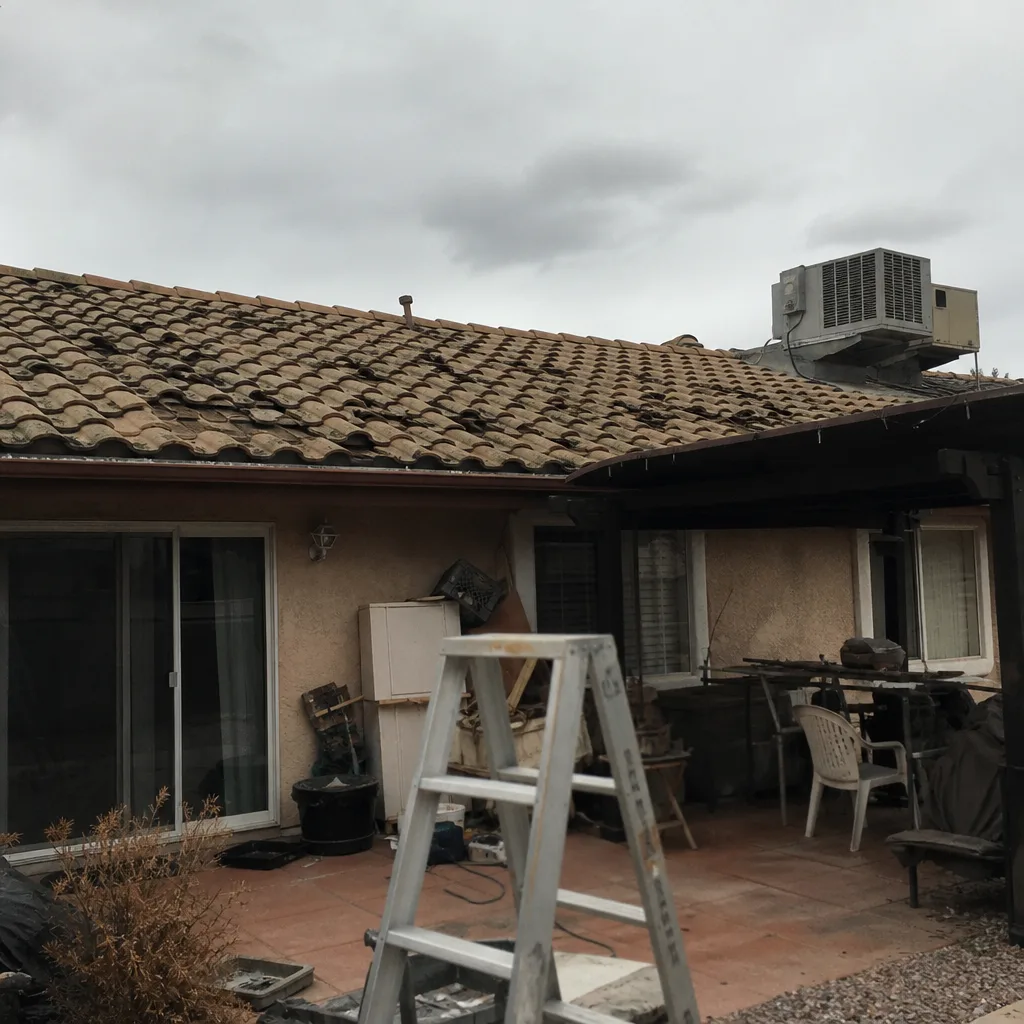 Before
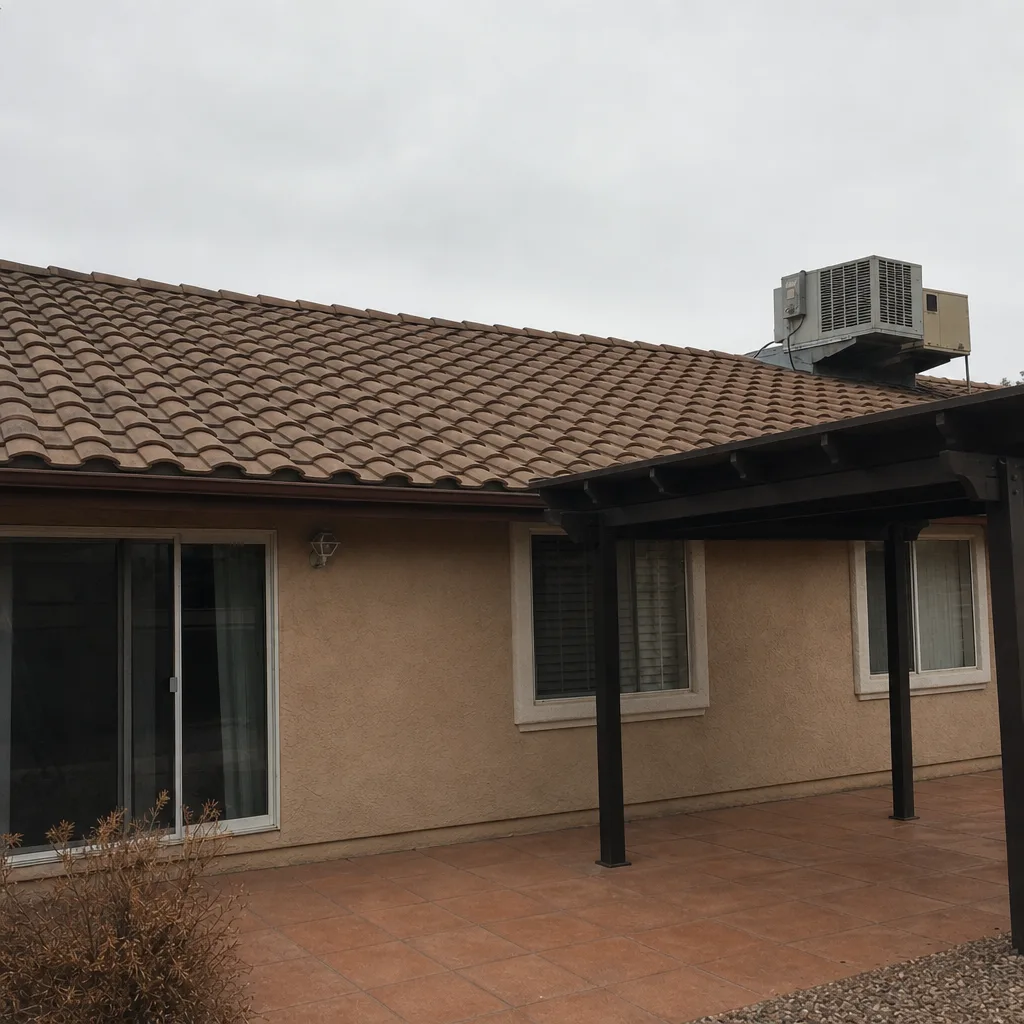 After
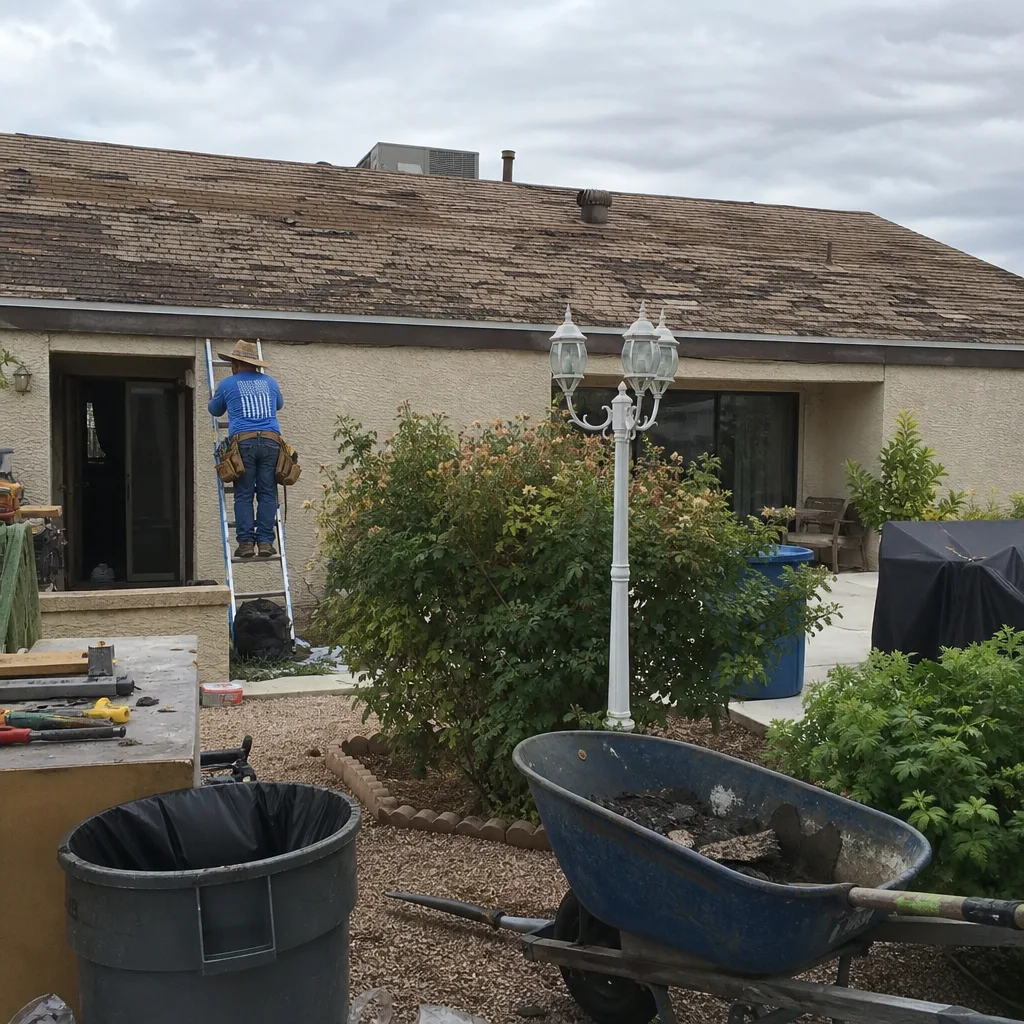 Before
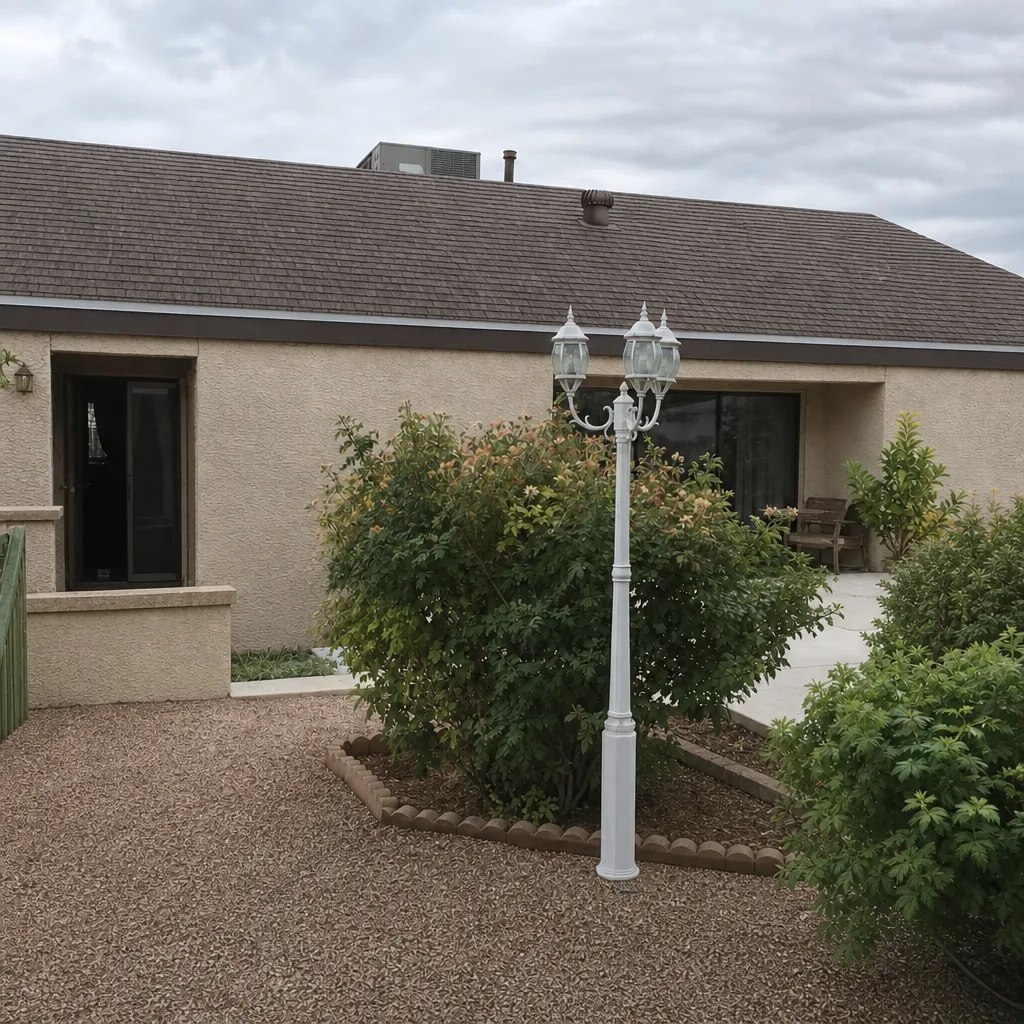 After
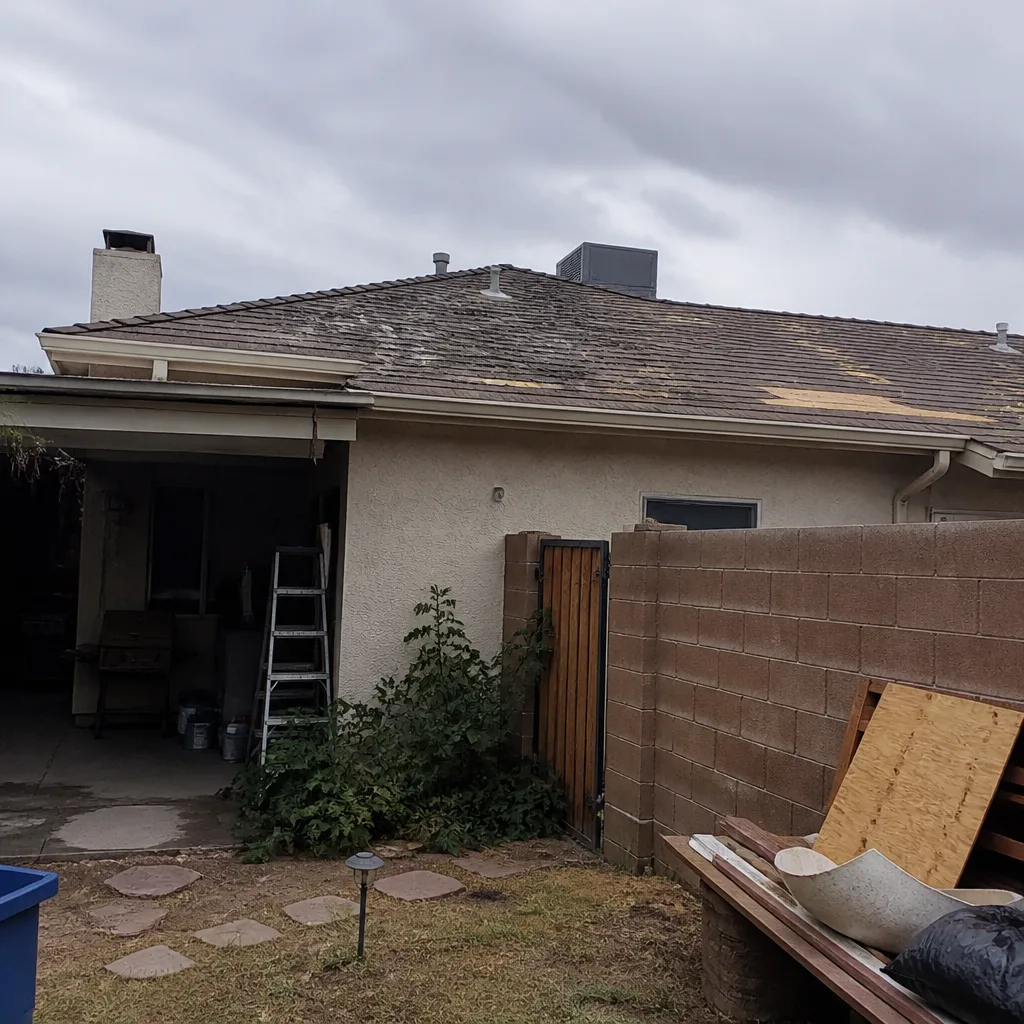 Before
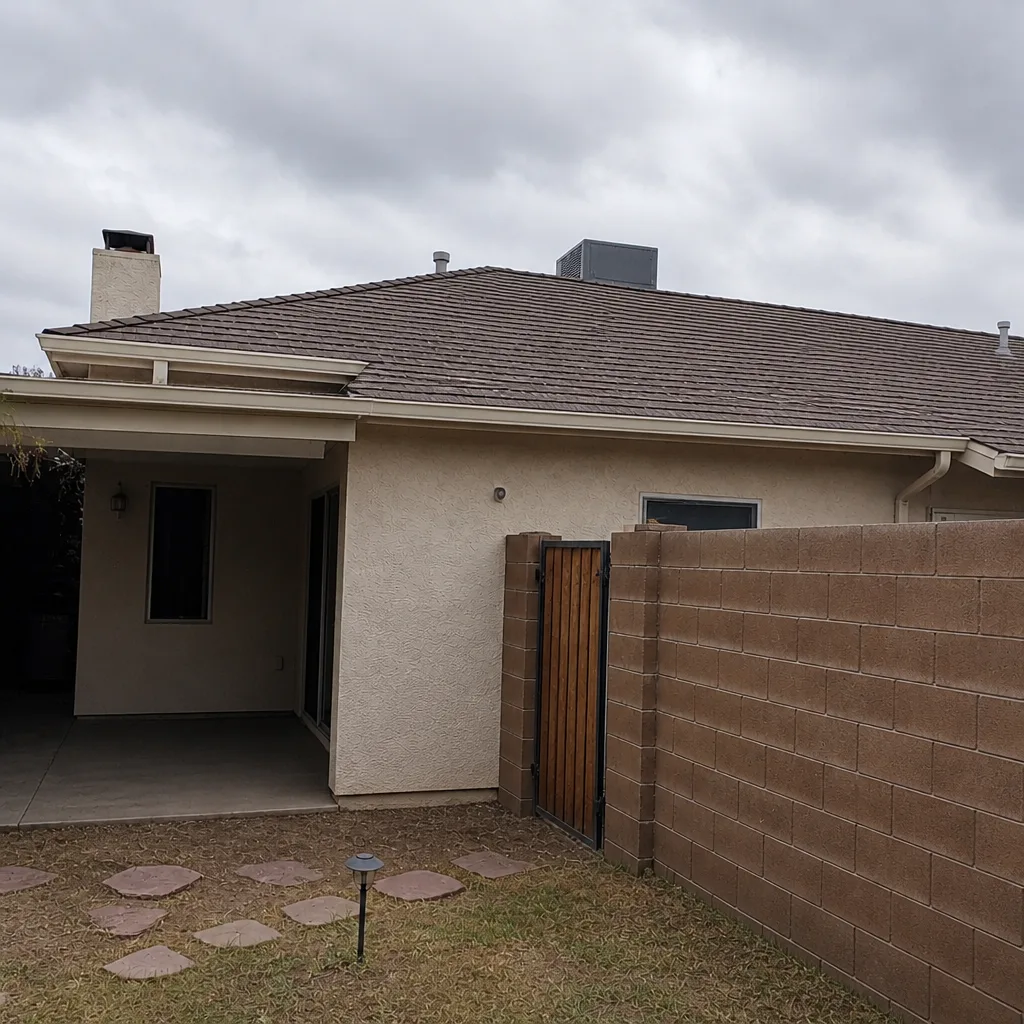 After
When to Call a Professional
Call a professional when you find active water intrusion in the attic, ceiling stains after a storm, missing or lifted shingles, granule piles in the gutters, or debris resting on the deck. Call when you’ve had a high-wind event and your roof is more than a few years old, even if nothing is leaking yet. Call when a storm is 24 hours out and you’ve got an active leak. And call when an insurance adjuster’s assessment doesn’t match what a contractor says the roof needs. Ridgeline Roofing Co. Henderson offers free estimates in Henderson. Call (833) 691-6717, and a live person will answer. Our technicians have up to 10 years of experience, arrive in uniform, and are background-checked before they set foot on your roof.
Frequently Asked Questions
Move belongings out of the way and put a bucket under the drip, then call a roofer with a number you already have. Don’t climb the roof during the storm to investigate. The active leak is the roofer’s problem to document and stop; the interior is yours to protect from water. Call (833) 691-6717, and a live person will take the call and get a technician out to assess the roof.
Tarp only when there’s an active leak or exposed deck and more rain is coming within the day. If the next storm is days away, a documented repair is the right call, and a tarp left too long traps moisture and can affect your claim. When in doubt, call and describe what you see. Call (833) 691-6717 for an honest answer on whether the roof needs a tarp tonight or a repair this week.
Storm damage from wind, hail, or wind-driven rain is generally covered under most homeowners policies, while wear and tear and neglect usually aren’t. That distinction is why the pre-season photo file matters: it separates storm damage from pre-existing wear. Call (833) 691-6717 for a documented inspection, and we’ll put the evidence in writing for your adjuster.
Ask for a written, line-item estimate that names each product and its brand, then compare it to a second written estimate on the same scope. A square deal shows you what you’re paying for. Avoid estimates without product names or estimates that change scope midway. Call (833) 691-6717 for a free second opinion on any written estimate you’ve already received.
Most storm repairs can be completed in a single visit once the damage is documented and materials are on hand. Full replacement after major damage takes longer, and we’ll give you a written timeline before work starts. Call (833) 691-6717 to schedule a free estimate and get a clear date for the work.
Call for a second look before the next storm. A repair that fails quickly usually points to an underlying problem that wasn’t addressed: a flashing joint, a deck section, or a sealant line that was fixed over rather than corrected. Call (833) 691-6717 for a documented inspection so you know what’s actually happening on the roof.
The Bottom Line
Roofing emergency preparedness in Henderson comes down to a few habits built in calm weather: a dated photo file of your roof, a 30-minute interior check sequence you know by heart, a clear idea of when to tarp and when to document instead, and a local contractor’s number already saved, not searched for at midnight. Add the three vetting questions and you’ll be ready when the next monsoon warning lands. Ridgeline Roofing Co. has been standing behind local roofs since 1984, with a live person on every call and a written 90-Day Done Right Promise on every job. Keep the phone number where you can find it, and if the storm has already passed, call us now.
Ridgeline Roofing Co. Henderson home | Roof Repair in Henderson | Roof Replacement & Installation in Henderson | Specialty Roofing in Henderson
Call (833) 691-6717 for a free estimate and a photo-documented inspection of your Henderson roof.
Written by the team at Ridgeline Roofing Co. Henderson.