
Last updated November 18, 2026
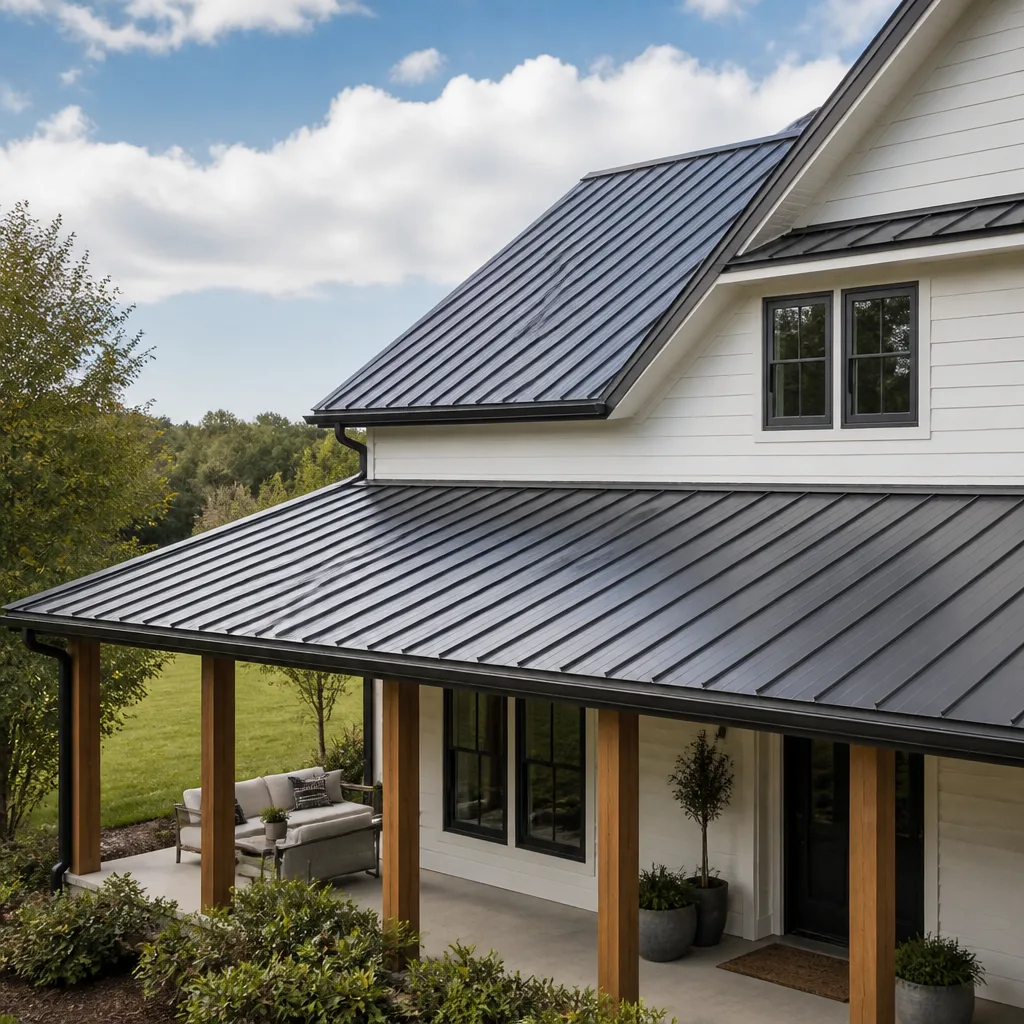 Metal roofing
 Architectural shingles
 Tile roofing
 GAF
 Owens Corning
 Flat & low-slope
Free roof inspection with deck photos before we talk money - GAF and Owens Corning certified installation
Seasonal Roofing Care for Henderson: Year-Round Homeowner’s Guide
Henderson’s monsoon season delivers more roofing damage per storm-hour than any other weather event in the valley, and most homeowners walk into it having done nothing since the previous October. That’s the strange truth about roofing here: we get roughly four months of real risk, four months of recovery, and four months of mild, forgiving weather that most people spend on busywork instead of the work that actually matters. This guide reorganizes the calendar around Henderson’s real weather curve, not a generic four-season checklist. You’ll learn what to clear, seal, and inspect before the June storms open, what September’s walkthrough should catch, why winter in Henderson stresses your roof differently than it does in cold-country climates, and the one twenty-minute task each season that prevents most of the interior water intrusion calls we see.
Quick Answer
Roof care in Henderson works best organized around two critical windows rather than four equal seasons: a pre-monsoon prep pass in late May and early June, and a post-summer inspection in September once peak heat has finished opening cracks. Winter and early spring are for targeted repairs that need moderate temperatures to cure properly. The single best habit is a seasonal attic and ceiling check from inside the house, which catches most water intrusion before it becomes a repair.
Styles & brands we work with
- Architectural shingles
- Metal roofing
- Tile roofing
- GAF
- Owens Corning
- Flat & low-slope
Table of Contents
- Why Henderson Has Two Roofing Seasons, Not Four
- The Late May and June Pre-Monsoon Window
- What September’s Post-Summer Walkthrough Should Catch
- Winter in Henderson: Thermal Shock and Flashing
- Using the Mild February and March Window for Real Repairs
- The Twenty-Minute Task Each Season That Prevents Most Leaks
- Keeping a Simple Roof Log for Your Henderson Home
- Common Mistakes to Avoid
Why Henderson Has Two Roofing Seasons, Not Four
Most seasonal roof care advice was written for the Midwest or the Northeast, where freeze-thaw cycles and heavy snow load drive the calendar. Henderson doesn’t work that way. Our actual risk curve is shaped by three forces that peak at different times: extreme summer UV, a concentrated July-through-September monsoon, and wide day-to-night temperature swings that show up hardest from November into February.
What that means in practice is that spring and fall, the two seasons most checklists emphasize, are actually the least eventful months for a Henderson roof. February and March are mild and dry. October is quiet and cooling. The damage happens in the gap between those calm stretches.
Here’s the rough shape of the year:
- May and early June: The prep window. Afternoon storms are building, and any loose material, dried sealant, or clogged drainage will announce itself the first time a monsoon cell parks over the valley.
- July through September: Peak risk. UV and heat open seams and crack sealant; storms drive water into anything that opened.
- Late September and October: The inspection window. Heat damage is fully visible, and you still have weeks before cooler weather makes some repairs harder to cure.
- November through April: The repair window. Mild, dry, and stable enough for sealants and adhesives to form properly.
That reframing matters because it tells you where to spend your effort. If you do nothing else all year, spend your attention in two places: late May and late September. Everything else is maintenance that can wait for a quiet weekend. If you’d rather hand the whole calendar to a crew that already knows it, our Ridgeline Roofing Co. Henderson home page is the place to start.
The Late May and June Pre-Monsoon Window
The pre-monsoon window is the one that pays for itself. Between late May and the first real monsoon push in early July, you have a stretch of dry, hot, stable weather that’s ideal for clearing, sealing, and inspecting. Once afternoon storms settle in, anything you didn’t address gets tested.
Here’s the order that makes sense, from the ground up:
- Clear every drainage path. Gutters, downspouts, valley flashing, and scuppers on flat sections. Henderson’s spring dust and cottonwood debris collect in valleys and behind chimneys, and a clogged valley during a monsoon turns into water backing up under shingles within a single storm.
- Walk the perimeter and look up. From the ground with binoculars, check for lifted or curling shingle edges, granules accumulating at downspout outlets, and any displaced ridge or hip caps. Ridge caps lift first in wind, and Henderson’s pre-storm gusts are the usual culprit.
- Look at the penetrations. Vents, flues, satellite mounts, and skylight frames are where most monsoon leaks begin. Sealant around these areas dries and shrinks in our summer heat; a pre-monsoon seal check catches it before it’s tested.
- Trim back overhanging branches. A limb that’s touching or scraping the roof is an abrasion problem waiting for a wind event. This is the kind of thing that’s easy to defer and expensive to ignore.
- Document with photos. Take dated photos from the same spots each year. This is how you spot a slow change, like a flashing that’s been gradually pulling loose, before it becomes a call.
Homeowners in Green Valley and Anthem have told us the same thing: the roof looked fine in May, and the first big storm found the one weak spot. That’s exactly why the pre-monsoon pass matters. It’s not about fixing what’s broken. It’s about finding what’s about to break. If anything in that list turns up damage that needs real work, our Roof Repair in Henderson service is built for exactly this kind of pre-storm repair.
What September’s Post-Summer Walkthrough Should Catch
September is the most underused month on the Henderson roofing calendar. The monsoon is tapering, the peak heat has done its work, and the damage it caused is now visible. If you only inspect once a year, do it now.
The specific things to look for in early fall, in our experience:
- UV-accelerated cracking. Henderson summers are brutal on asphalt shingles. Granule loss, hairline cracks, and shingles that have gone brittle and stiff show up most clearly once the worst heat has passed. A shingle that felt flexible in May can be brittle by September.
- Sealant that failed at penetrations. The sealant around vents and flashing is where heat damage concentrates. Look for gaps, lifting, or a chalky crumbled texture.
- Storm debris in valleys and behind chimneys. Monsoon storms move grit, leaves, and shingle granules into the same channels you cleared in May.
- Interior water stains that appeared mid-summer. Check ceilings, especially in rooms below valleys, chimneys, and skylights. A faint ring that showed up after a July storm is telling you something.
- Flashing separation at walls and chimneys. Thermal movement over the summer can open the seal between roof and wall, which is often where a slow, invisible leak starts.
September is also the right time to get a professional eye on anything questionable. Heat damage is subtle from the ground and obvious from the deck. A photo-documented inspection shows you exactly what’s up there, which is a lot more useful than a verbal rundown. If the inspection points to a bigger picture, our Roof Replacement & Installation in Henderson page walks through what that decision looks like.
Winter in Henderson: Thermal Shock and Flashing
Henderson winters don’t bring snow load, and our freeze-thaw risk is a fraction of what colder climates deal with. But winter here has its own roofing stress, and it’s easy to overlook because the weather feels gentle.
The mechanism is thermal shock. A roofer’s flashing seal is a fairly rigid material bonded to surfaces that expand and contract at different rates. On a Henderson winter day, the roof surface can hit the mid-60s in the afternoon and drop into the low 30s overnight. That cycle repeats hundreds of times across a season. The flashing itself tolerates it. The sealant and the bond line around it are what gradually work loose.
Where this shows up most:
- Chimney flashing. The largest temperature differential on most Henderson roofs, because masonry and metal move differently.
- Skylight frames. Metal frames bond to shingles and expand at different rates, and the seal is the first thing to fail.
- Wall-to-roof transitions. Where a roofline meets a stucco wall, the counterflashing and its sealant take the daily swing head-on.
- Vent boots. The rubber collar on a plumbing vent hardens and cracks over time; winter movement finishes the job the summer heat started.
Winter itself isn’t the problem. The problem is that a flashing seal that’s been slowly failing for two summers will finally show its weakness in a winter rain event, and that’s when the interior stain shows up. Check flashing and penetrations in late fall and again in early spring, and you’ll catch it in the gap. If you’re seeing signs of trouble and want a second read on it, a free second opinion on any written estimate is one of the standing offers we keep.
Using the Mild February and March Window for Real Repairs
February and March are the best repair months of the Henderson year, and almost nobody uses them. The reason is technical: most roofing sealants and adhesives need moderate temperatures, roughly in the 50 to 80 degree range, to form a proper bond. Too cold, and the sealant skins over before it can grip. Too hot, and it cures too fast to set correctly. Henderson in February and March sits right in the sweet spot.
That matters for specific jobs:
- Re-sealing flashing and penetrations. A flashing seal set in March will last longer than the same seal applied in July, because it cures at a controlled rate and forms a stronger bond.
- Replacing damaged shingles. Individual shingle repairs lay flatter and seal better in moderate temperatures. In peak heat, the adhesive strip on new shingles can activate before the shingle is positioned correctly.
- Small patch repairs on flat sections. Low-slope roofs often use adhesive or membrane products that need moderate temperatures to cure.
- Gutter work and reattachment. February and March are ideal for re-hanging gutters and re-securing downspouts, which tend to loosen over a summer of thermal movement.
The other reason this window matters: it’s the last calm stretch before the pre-monsoon push. Any repair work that needs to happen before storm season gets easier and more durable in February and March than in late May. If your roof has a known weak spot that you’ve been meaning to deal with, this is the month to schedule it. Our Specialty Roofing in Henderson page covers some of the more specific systems where this timing matters most.
The Twenty-Minute Task Each Season That Prevents Most Leaks
Here’s the honest answer to the question nobody asks: the single most useful thing you can do for your Henderson roof takes under twenty minutes, requires no ladder, and prevents the majority of interior water intrusion calls we get.
It’s a seasonal attic and ceiling walkthrough from inside the house. Once each season, spend twenty minutes in the attic, then walk the rooms below the roof and look at the ceilings.
- In the attic, look up at the roof deck. You’re looking for water stains, dark streaks, or any discoloration on the underside of the sheathing. Daylight showing through is an open defect.
- Look at the framing around chimneys and vents. Water travels along wood before it shows on a ceiling, so a stain on framing near a penetration points to a leak above it.
- Check for moisture or rust on nails and fasteners. Rusty nails protruding through the sheathing are a classic sign of slow, intermittent water entry.
- Smell the air. A musty or damp smell in the attic in a season when it should be dry is worth investigating.
- Walk the interior ceilings below the roof and look for rings, brownish stains, or bubbling paint. Photograph anything you find, with a date.
Twenty minutes catches most problems while they’re still small, before a monsoon or a winter rain turns them into a real repair. It also means you have a dated record when you call a professional, which makes the conversation faster and the diagnosis cleaner. For the deeper repair work that a walkthrough might reveal, the roof repair page linked above is the natural next step.
Keeping a Simple Roof Log for Your Henderson Home
Most Henderson homeowners we talk to have no record of what’s been done to their roof, when it was done, or what issues came up. That’s a real problem when you need to make a decision about repair versus replacement, or when something fails and you want to know whether it was the same spot as two years ago.
Keeping a log costs almost nothing. It’s a notebook or a folder on your phone with a few standard entries: date, what you found, what was done, and a photo. Add an entry every time you do a seasonal walkthrough, even if the entry says “nothing found.” Add one when a contractor does any work.
What to include in each entry:
- The date. Non-negotiable. It’s the point of the log.
- What you looked at and where. “Attic above hallway, north side” is more useful than “checked the attic.”
- What you found, in plain language. A stain, a lifting shingle, a smell.
- What was done about it, and by whom. Even if the answer is “watched it, no action yet.”
- A photo from the same spot each time. Over a few years, side by side, photos reveal slow changes that a single inspection misses.
When you eventually need a professional opinion, that log is worth real money to you, because it shortens the diagnosis and reduces the guesswork. We install products from seven manufacturer lines, including GAF, CertainTeed, Owens Corning, IKO, Atlas, Tamko, and Boral, and a documented history makes it easier to choose the right materials for your specific roof when the time comes.
Common Mistakes to Avoid
- Treating spring and fall as peak inspection season. They’re the quietest months on a Henderson roof. The real checkpoints are late May and September, and that’s where your attention should go.
- Ignoring the pre-monsoon pass because the roof “looks fine.” From the ground, most monsoon leaks look invisible until the storm finds them. The May pass is about finding what’s about to fail, not what already has.
- Doing sealant work in peak July heat. Most sealants don’t form a proper bond above a certain temperature, and July in Henderson is well past it. February and March are the reliable months for adhesive work.
- Skipping the attic walkthrough. It’s twenty minutes and it catches most interior leaks early. Homeowners who do it consistently tend to find problems when they’re small repairs instead of full-section replacements.
- Relying on a storm-season contractor who isn’t local. Henderson gets storm-chasing crews every monsoon season. A truck that won’t be here next spring is a hard way to buy a workmanship guarantee. Local crews who plan to be in town for years are a different kind of accountability.
- Assuming a Henderson winter is too mild to matter. Thermal shock from warm afternoons and cold nights stresses flashing seals differently than cold-climate freeze-thaw, and it’s easy to overlook because the days feel gentle.
- Not keeping a record. Two years from now, you won’t remember which corner of the roof had that stain. A simple dated log turns a guess into a record.
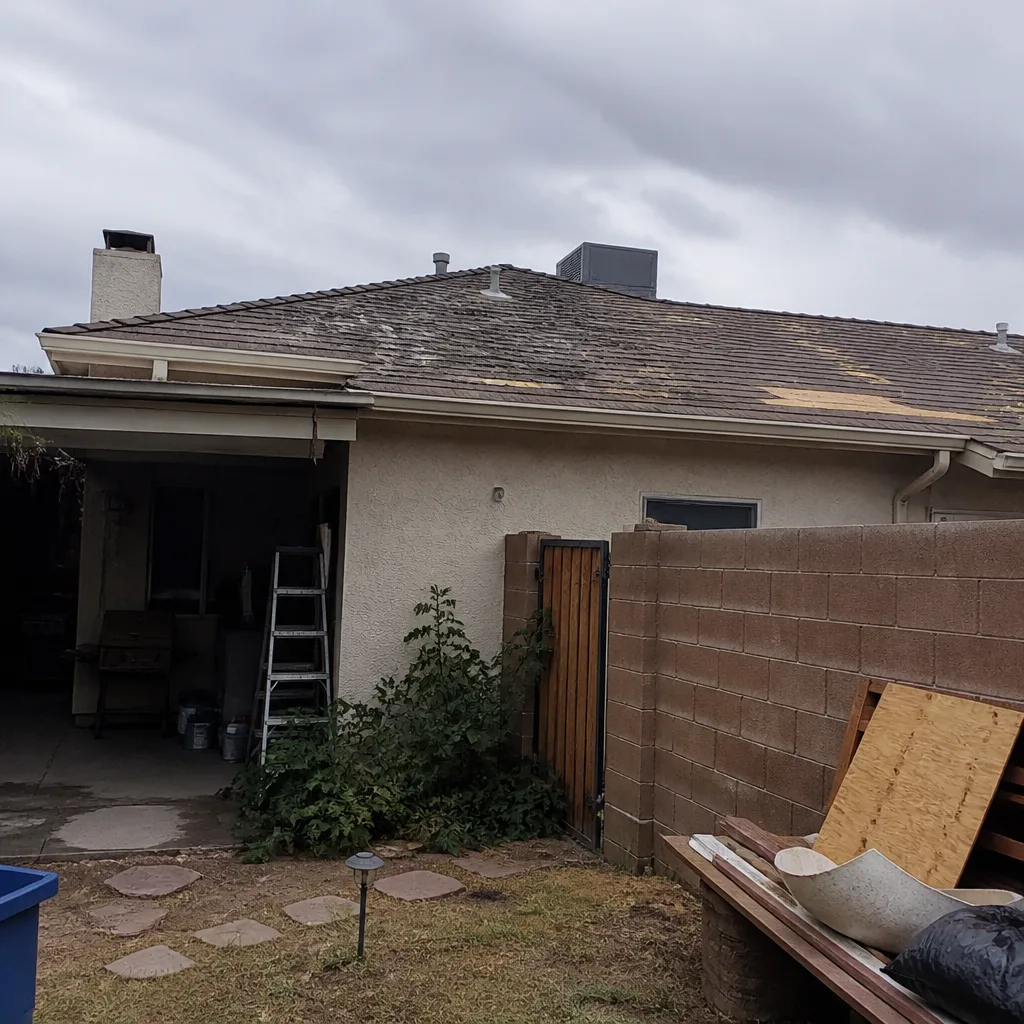
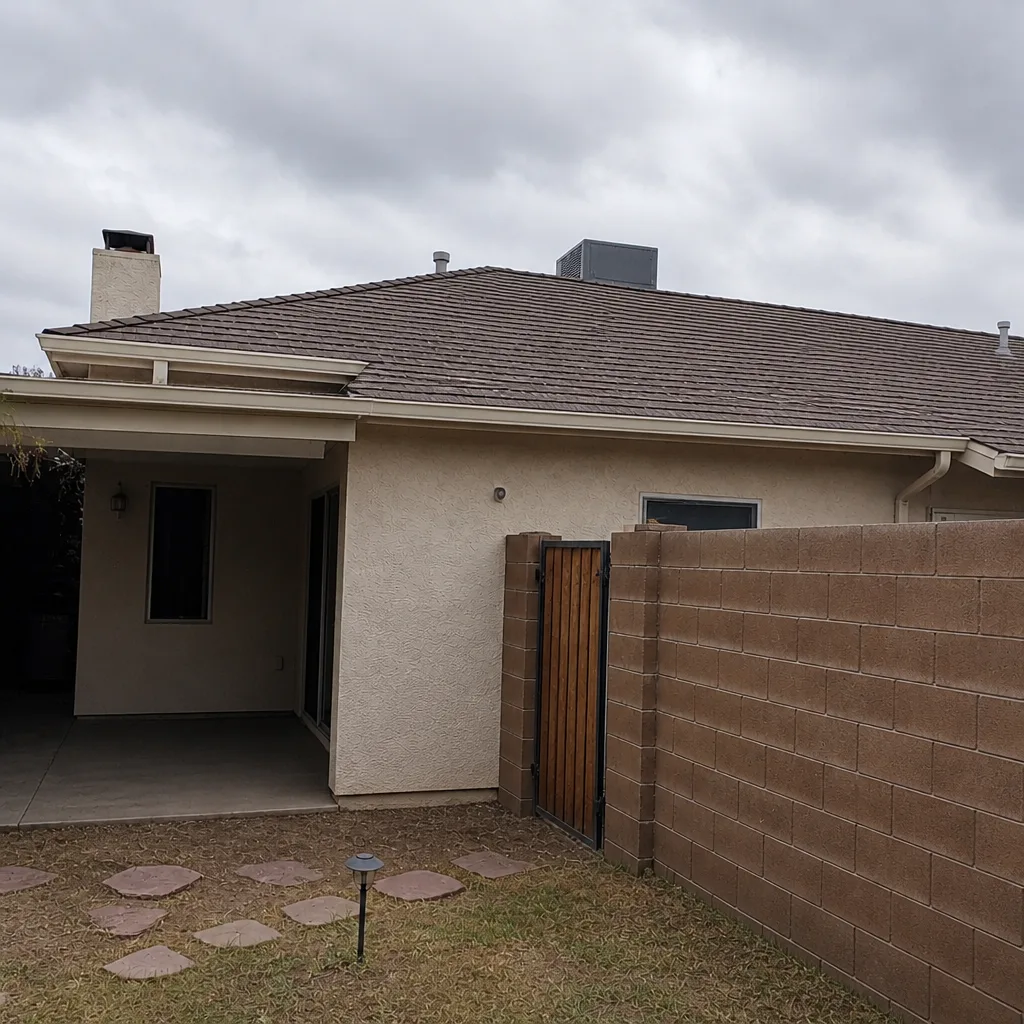
See the difference
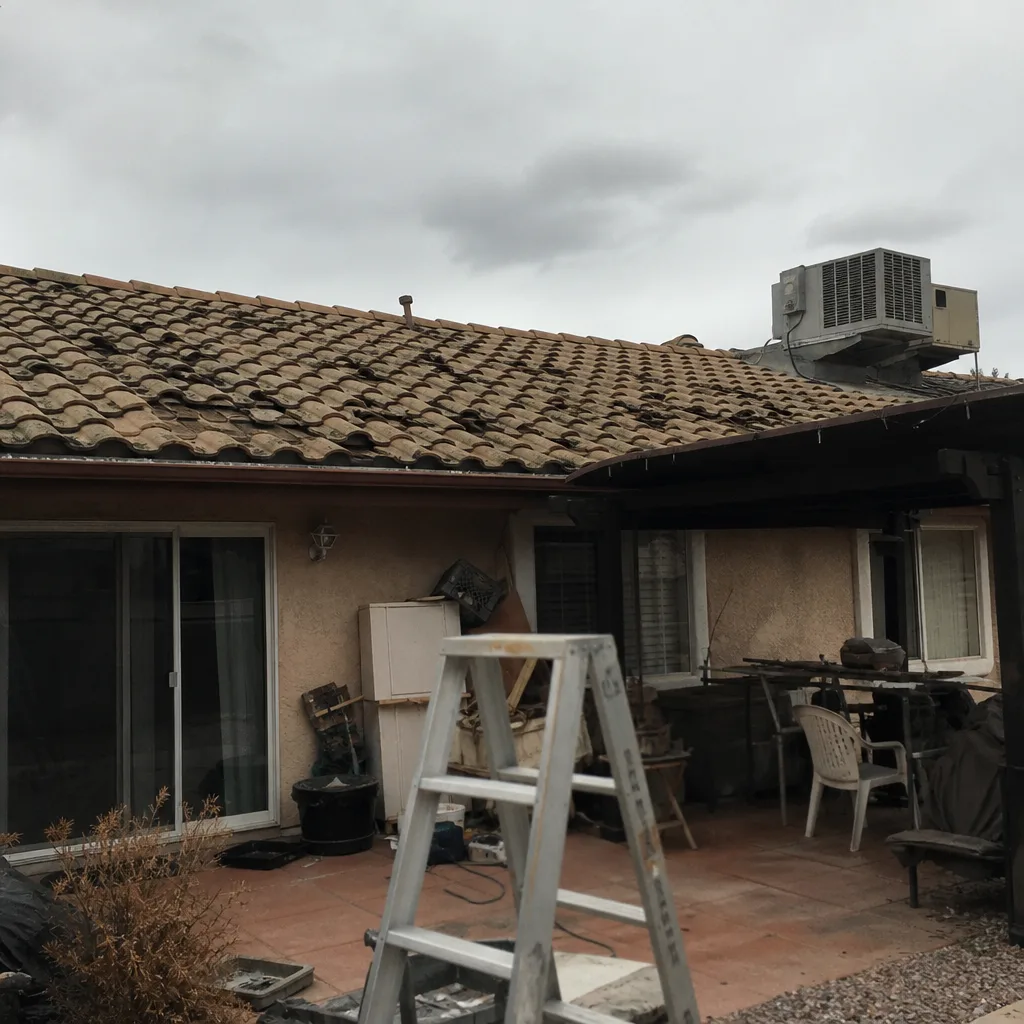 Before
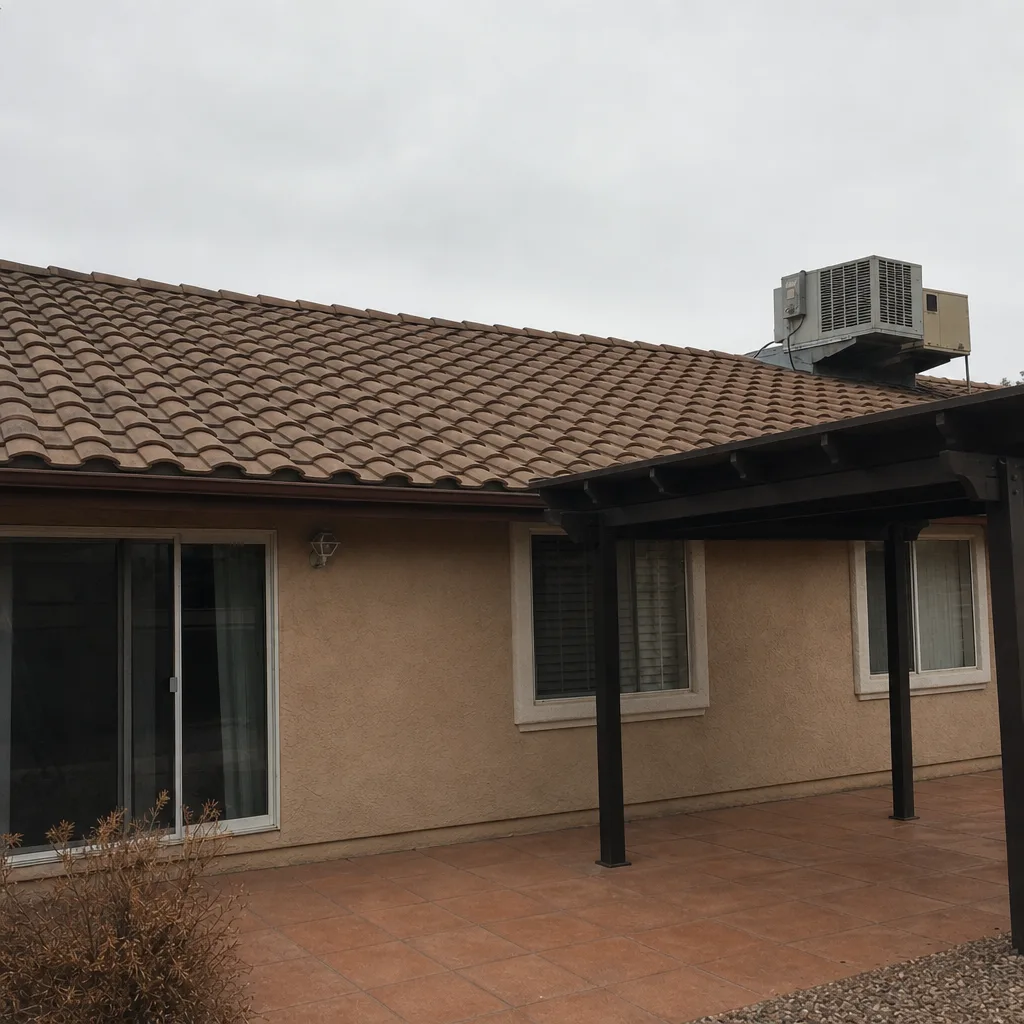 After
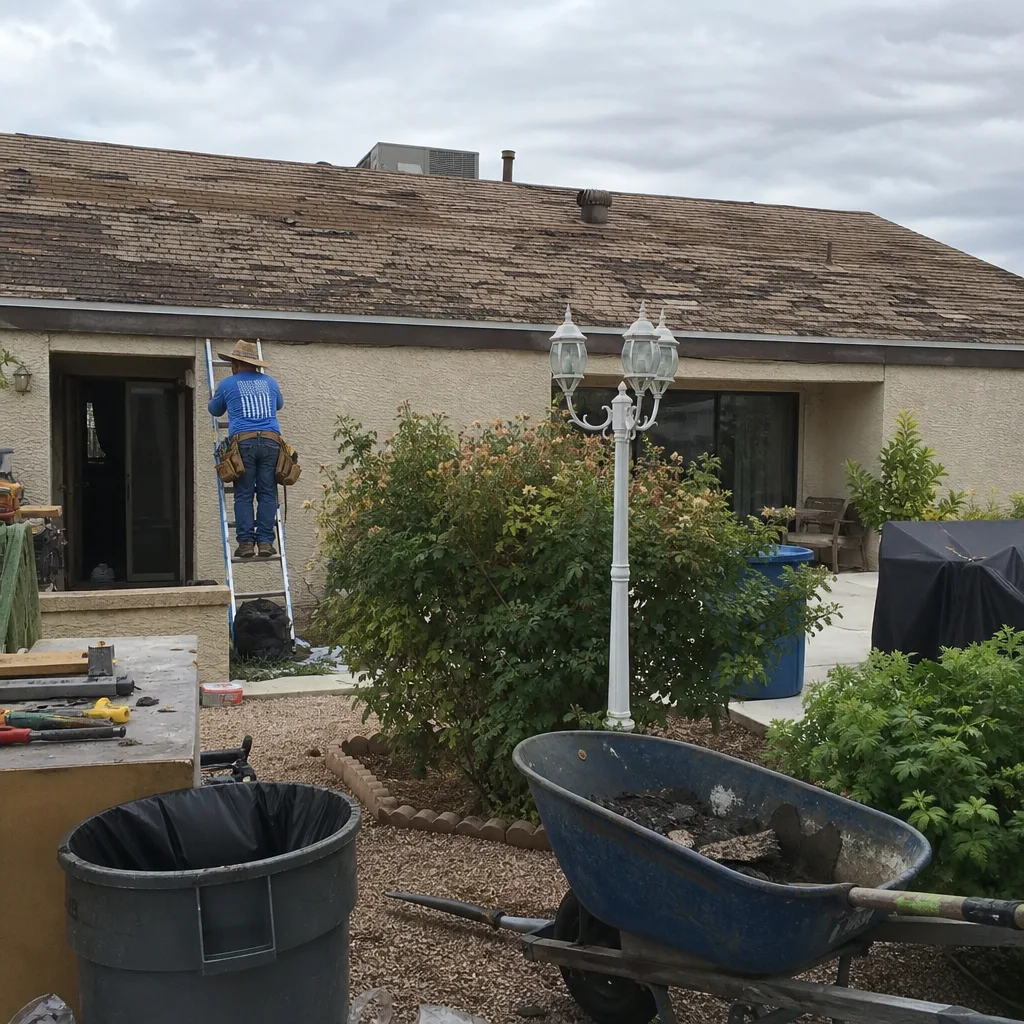 Before
 After
 Before
 After
When to Call a Professional
Some seasonal tasks are homeowner work. Others belong to a trained roofer, and treating the second like the first is how a small problem becomes an interior repair. Call a professional when you find water stains, dark streaks, or daylight in the attic. Call when shingle surfaces show widespread granule loss or brittleness. Call when flashing is lifting or when you see separation at a chimney or wall transition. Call after any storm that produced visible damage, even if you can’t reach the spot. And call if you’re not sure whether what you’re looking at is fine or not; that’s a sensible reason to call, not a wasteful one. Roof work involves height, and it involves enough genuine risk that a trained professional is the right answer for anything beyond ground-level observation.
Ridgeline Roofing Co. Henderson offers free estimates in Henderson. Our phones are answered by a live person every call, and our technicians document every inspection with photos from your actual roof. Call (833) 691-6717.
Frequently Asked Questions
Late May is the most important month, because it’s the last dry, stable window before monsoon season opens. Clearing drainage, checking penetrations, and addressing any known weak points in May prevents most of the interior water intrusion repairs we see in July and August. Call (833) 691-6717 for a free estimate if the May pass turns up anything that needs a professional.
Early fall, meaning late September into October, is the most informative inspection window in Henderson because peak summer heat has finished opening cracks and seams, and the damage is fully visible. A spring inspection happens before the UV damage of summer, so it tends to miss what the coming months will reveal. Both are useful, but the fall pass is where the real information is. Call (833) 691-6717 to schedule one.
A seasonal tune-up in Henderson typically runs in the range of a modest service call, and it’s usually priced as a fixed fee rather than a per-hour rate. It’s worth being clear about what’s included before you book, since a tune-up should include a documented inspection with photos, drainage clearing, and a written summary of anything found. Call (833) 691-6717 for current pricing and a free estimate.
You can do a ground-level and attic-level inspection safely, and you should. Binoculars from the yard, plus the twenty-minute attic walkthrough, will catch most of what matters. What you shouldn’t do is climb onto the roof, especially in Henderson’s summer heat or after a monsoon, because falls and heat illness are real risks and the view from above is not worth either one. Call (833) 691-6717 when you need a professional on the roof.
Henderson winters cause less damage than our summers, but they stress flashing seals through thermal shock, meaning warm afternoons and cold nights that make the sealant flex repeatedly. Chimney flashing, skylight frames, and wall transitions are the areas most affected. It’s easy to overlook because the days feel mild, but the daily temperature swing is doing steady work. Call (833) 691-6717 if winter rains produce an interior stain.
Age, extent of damage, and number of problem areas drive the answer. A roof with a few isolated issues is usually a repair candidate; widespread granule loss, multiple leaks, or shingles that are brittle across large sections point toward replacement. The honest answer requires an inspection. Our technicians document every inspection with photos from your actual roof, and we offer a free second opinion on any written estimate. Call (833) 691-6717 to talk it through.
The Bottom Line
Henderson’s roofing year has two checkpoints that matter: late May, before the monsoon opens, and late September, when the summer’s damage is fully visible. Those are the months to focus on. February and March are your repair window, when sealants and adhesives actually cure, and winter is where flashing gets quietly tested by thermal shock. If you do nothing else, do the twenty-minute seasonal attic and ceiling walkthrough, and keep a dated log of what you find. It’s the cheapest maintenance you’ll ever do. When a walkthrough turns up something that needs a trained eye, that’s a conversation worth having early rather than after the storm.
Ridgeline Roofing Co. Henderson is standing by for a free estimate. Every inspection comes with photos from your actual roof, every technician is background-checked and in uniform, every call is answered by a live person, and every job is backed by the 90-Day Done Right Promise. If it is not right, we make it right. Call (833) 691-6717.
Written by the team at Ridgeline Roofing Co. Henderson.