
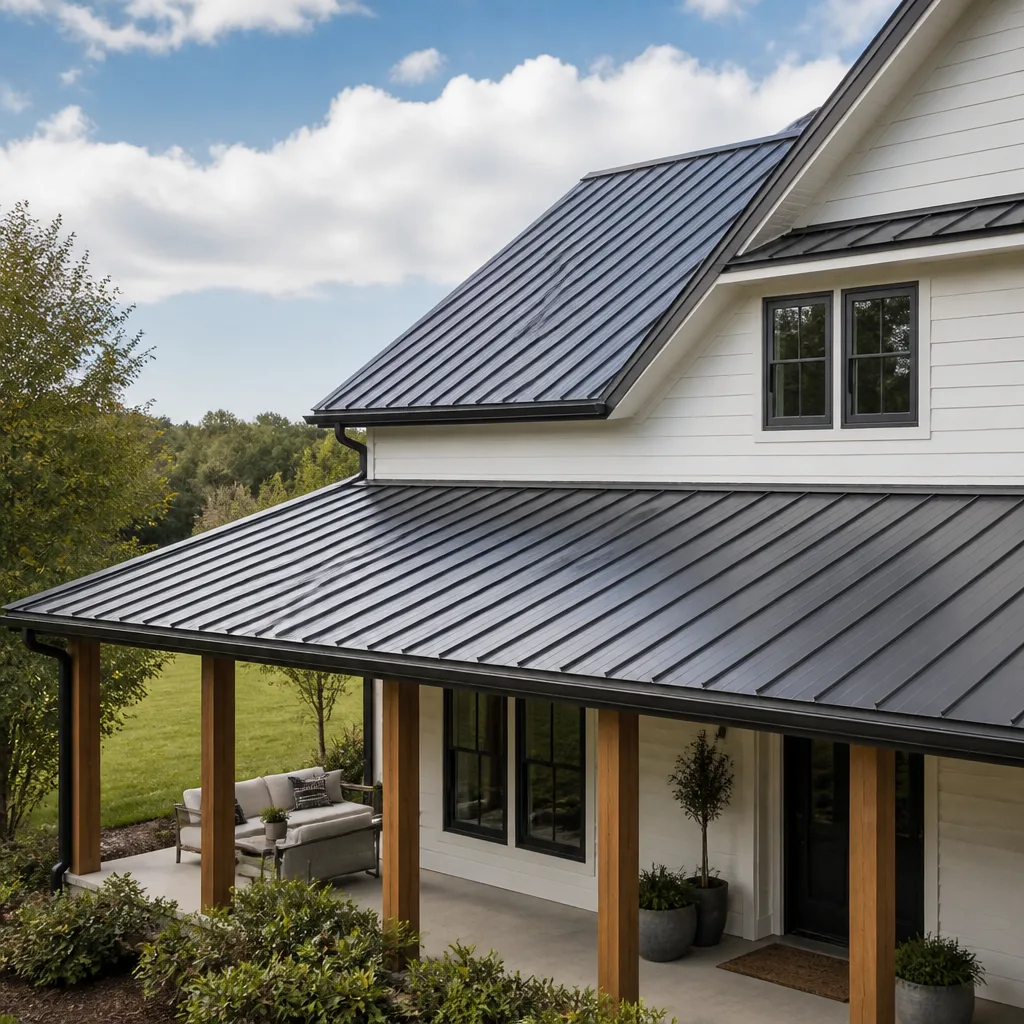
 Metal roofing
 Architectural shingles
 Tile roofing
 GAF
 Owens Corning
 Flat & low-slope
Free roof inspection with deck photos before we talk money - GAF and Owens Corning certified installation
Styles & brands we work with
- Architectural shingles
- Metal roofing
- Tile roofing
- GAF
- Owens Corning
- Flat & low-slope
See the difference
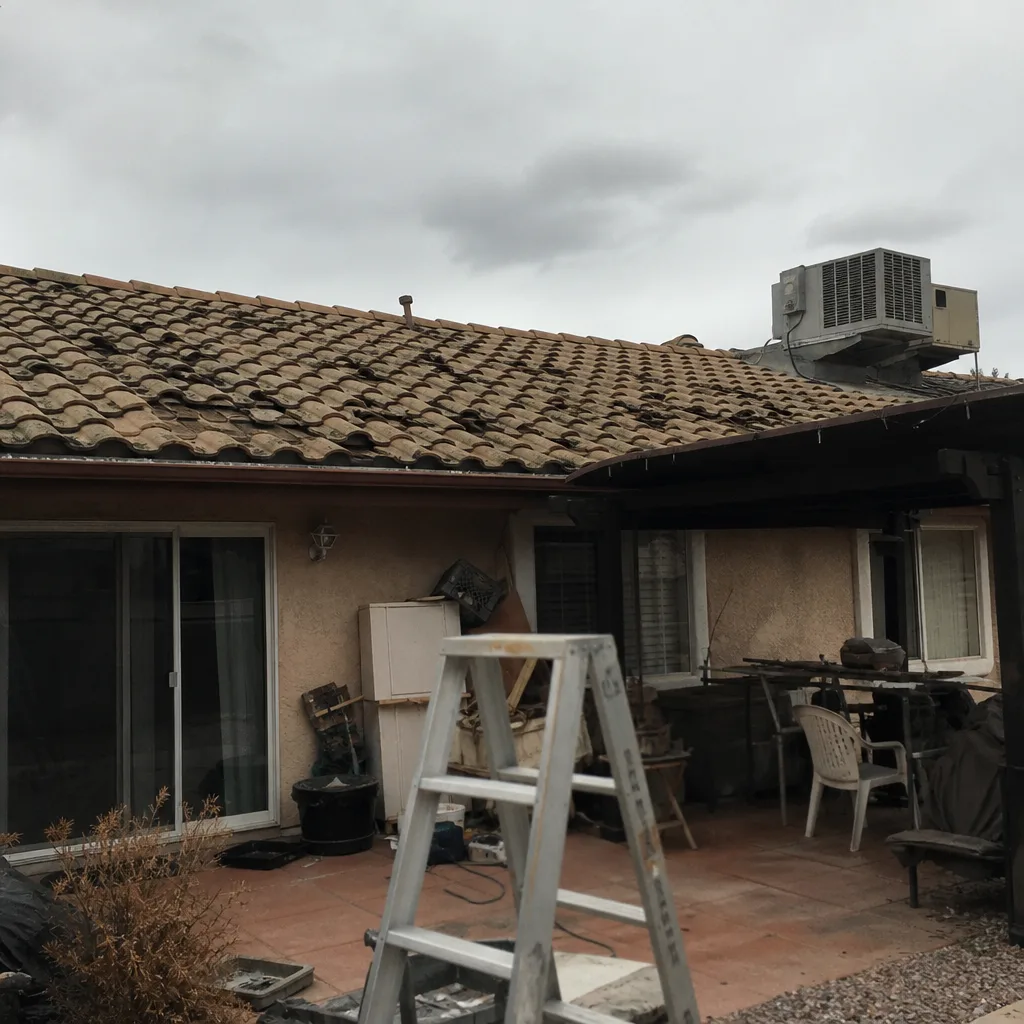 Before
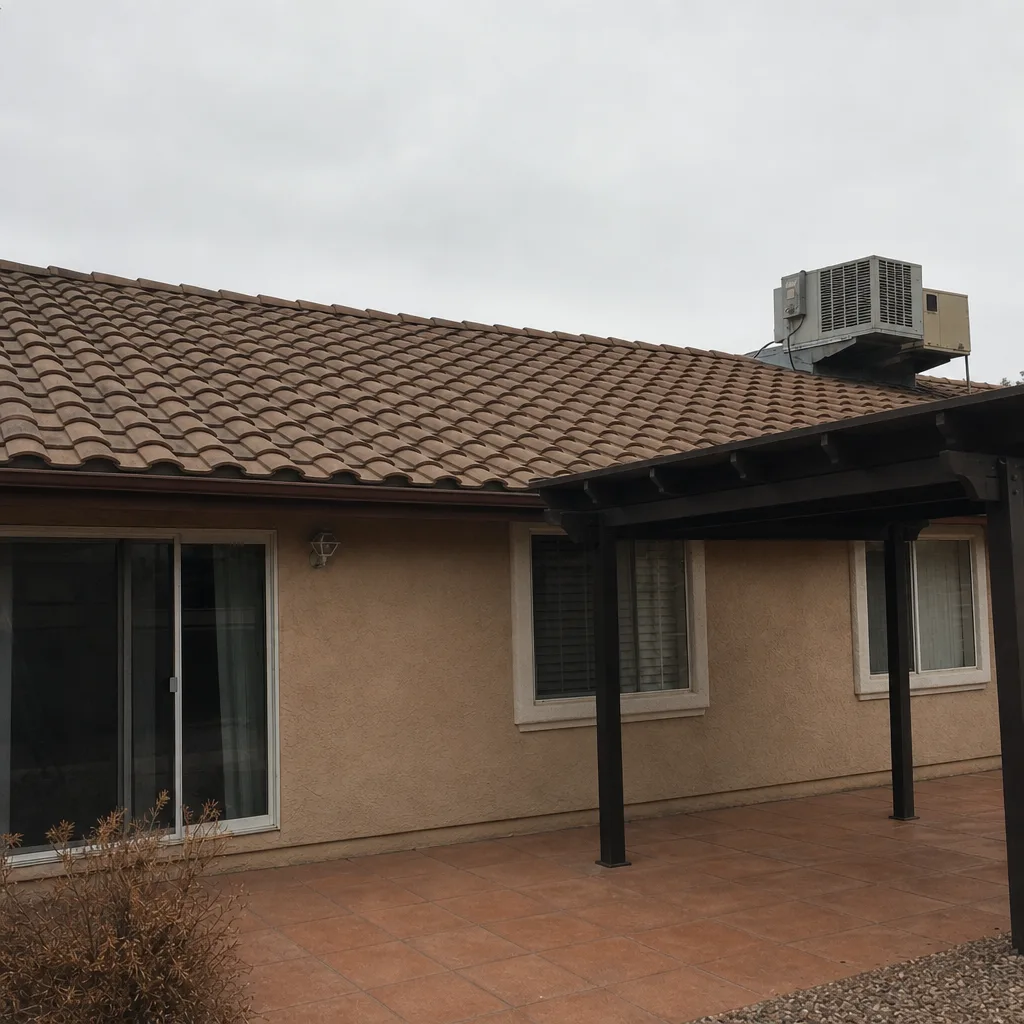 After
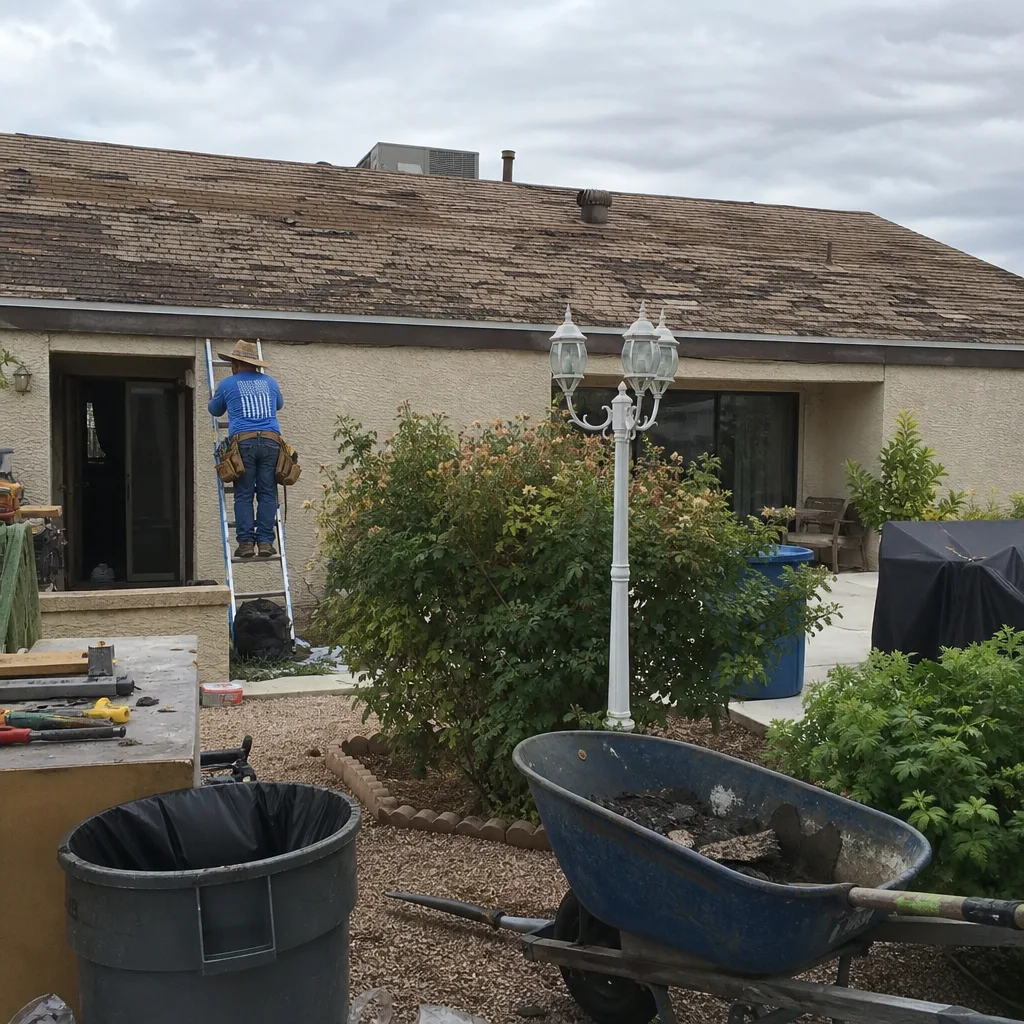 Before
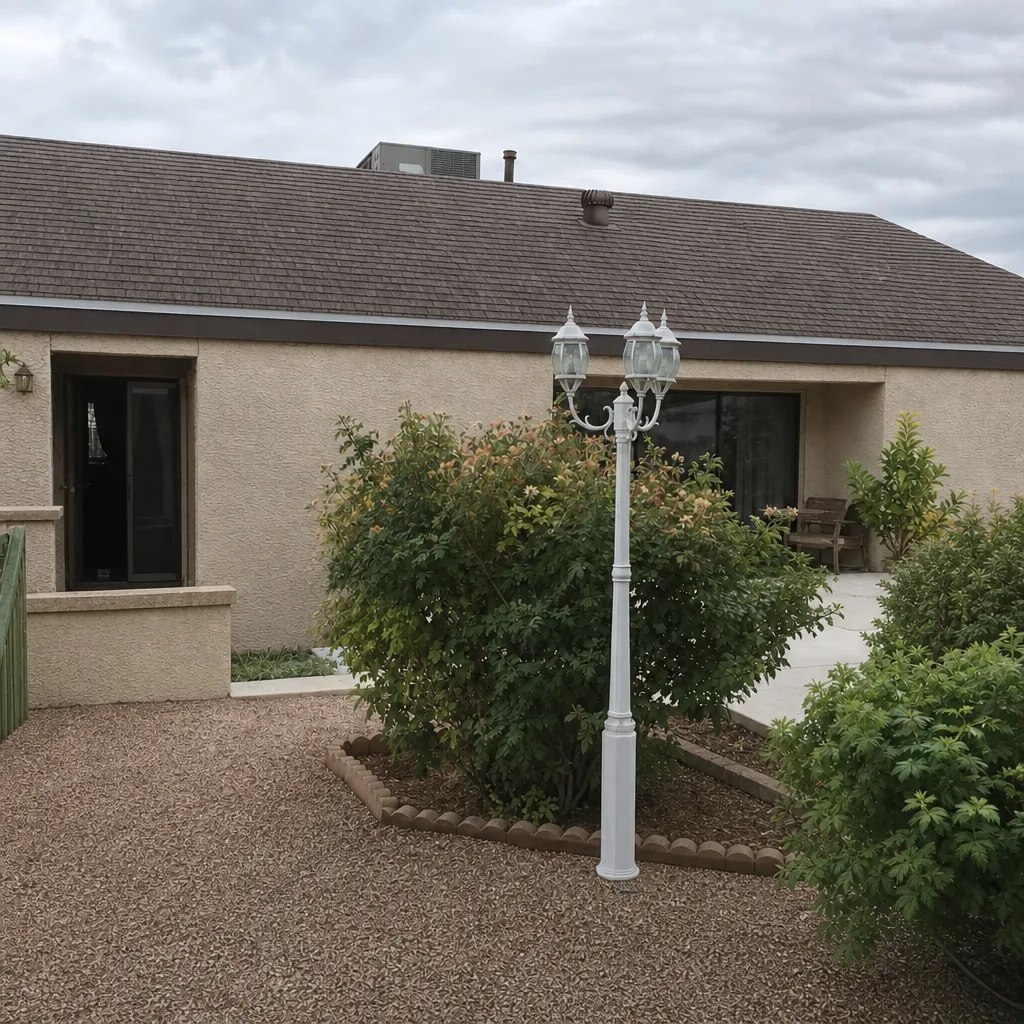 After
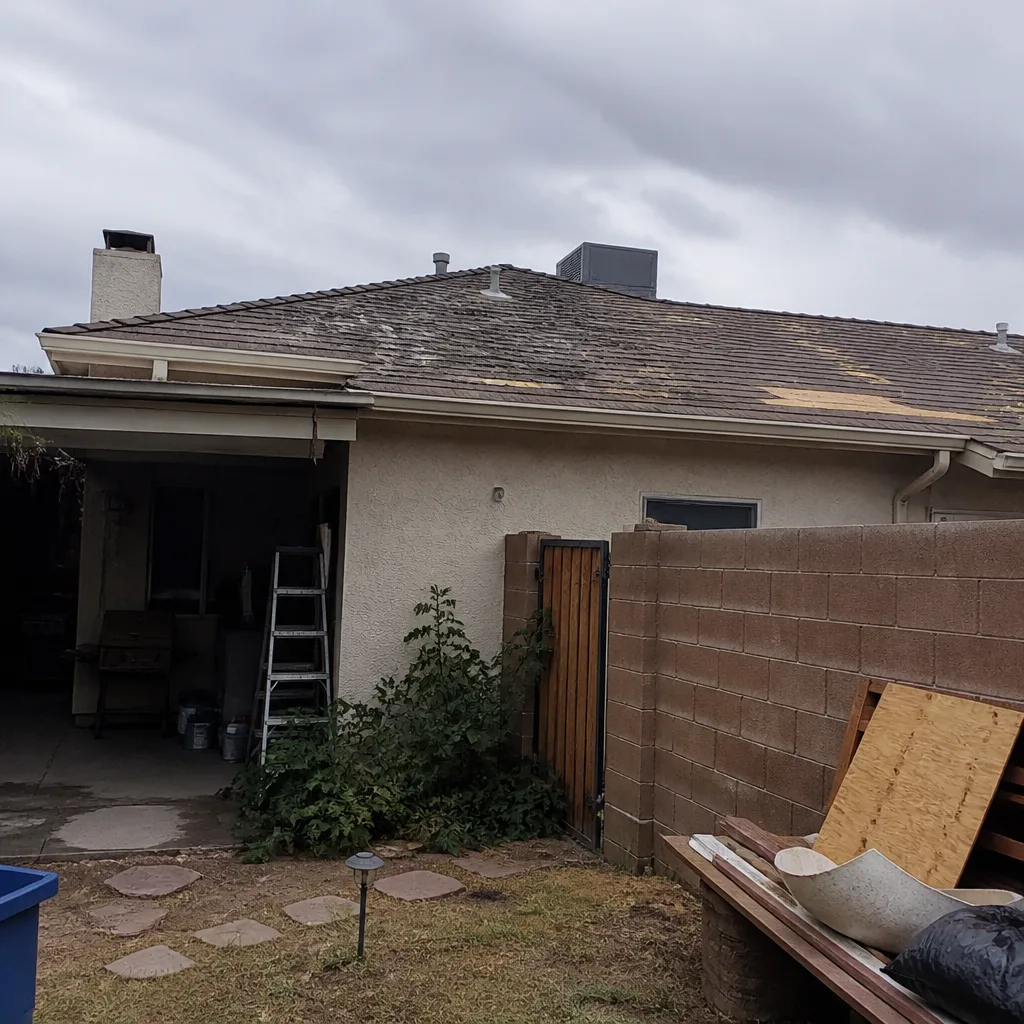 Before
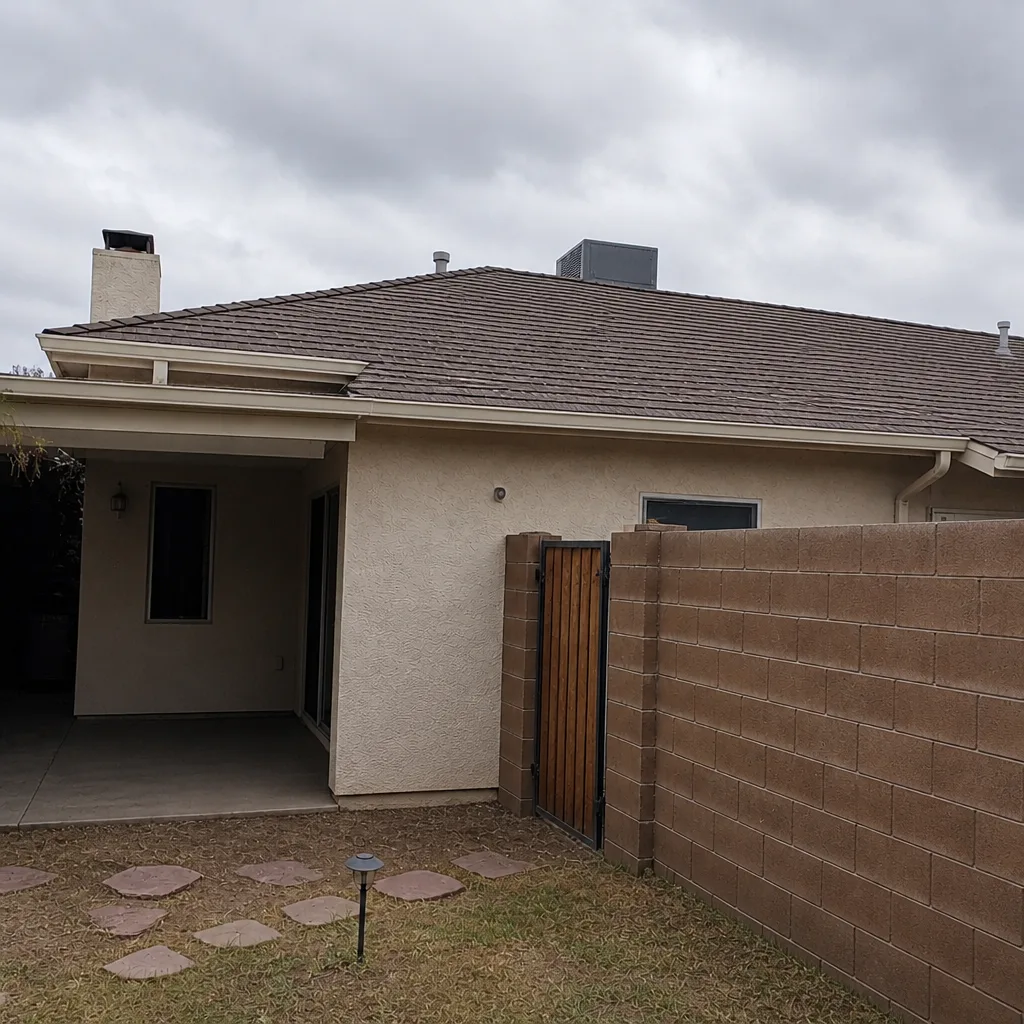 After
How to Find a Roof Leak in Henderson, NV
To find a roof leak in Henderson, start high and work down: inspect the ridge, pipe boots, and chimney flashing first, look for open laps and gaps facing the northwest, and trace water back along the rafters from where it drips. The stain on your ceiling is almost never under the entry point. Wind-driven monsoon rain enters sideways, travels 8 to 15 feet along a rafter, and finds its own low spot. If you’d rather not climb anything, Ridgeline Roofing Co. Henderson handles the on-roof diagnosis and documents every step with photos. Call (833) 691-6717 and a live person answers, even mid-storm.
You can run a garden hose over your Anthem roof for twenty minutes and find nothing. Then a July microburst hits at 50 mph out of the northwest and you’ve got a wet ceiling in ten. That’s the part most leak advice misses. Water doesn’t enter vertically in a Henderson storm. It gets pushed horizontally under a tile lap or through a flashing gap that only opens when the wind presses against it. A hose test from below the ridge never recreates that condition, which is why so many homeowners spend an afternoon soaking the roof and come inside to a dry stain that doesn’t move.
Why the Hose Test Fails Here
Henderson’s roofing reality is a collision between two extremes. Summer UV index runs above 11 and tile surface temps reach 160°F, which bakes the underlayment brittle and hardens every sealant bead until it cracks. Then monsoon season arrives in July through September and throws brief, violent rain at the same roof from an angle the sun never touched. Seams that held fine for eleven months open up under that load.
The homes make it worse. Most of this city was built between the 1990s and 2010s, which means thousands of concrete tile and asphalt shingle roofs are reaching their first real failure window at the same time. That underlayment underneath the tile is the actual waterproof layer, and when it embrittles, a single slipped tile becomes a direct path to your attic. After a microburst rolls off the McCullough Range, we see a cluster of calls from Green Valley and Anthem for slipped tiles and blown ridge caps. The sheltered streets closer to downtown rarely see the same damage from the same storm.
The Wind-Driven Leak Diagnostic, Start to Finish
Here’s the sequence a trained eye follows on a Henderson roof, and it runs top-down on purpose. Water obeys gravity once it’s inside the assembly, so the highest probable entry wins.
- Ridge and ridge caps. Check for lifted or cracked caps and open laps on the windward face. Monsoon gusts hit foothill neighborhoods from the northwest to southwest, so a cap that faces that direction takes the first punch.
- Pipe boots. The rubber collar around plumbing vents dries out and splits under UV long before the surrounding roof fails. A split boot leaks sideways in wind and straight down in a downpour.
- Chimney and wall flashing. This is the most common hidden culprit. Look for gaps, lifted counter-flashing, and failed sealant on the face that meets the prevailing wind.
- Valleys and tile laps. Walk the valleys checking for open laps and raised tiles. A lap that looks tight from the ground can be a half-inch open from the ridge.
- Field tiles and shingles, working downward. Cracked tiles, missing shingle tabs, exposed fasteners. By now you’ve followed the likely path from top to bottom.
None of this happens from the ground or the attic stairs. It’s an on-roof inspection, and it’s the only way to see a flashing gap that faces away from you. If you want the repair side of this handled once it’s found, our Roof Repair page covers what a fix actually involves.
The Stain Isn’t Where the Leak Is
This is the single most useful thing to understand before you go hunting. In concrete tile and shingle roofs, water that enters at a flashing gap doesn’t drop straight down. It rides the top of a rafter, sometimes 8 to 15 feet, until it hits a low point or a nail and finally drips onto your drywall. The ceiling stain in the back bedroom can trace back to a chimney gap on the far side of the house.
So searching directly above the stain is usually the wrong first move. Instead, use the stain as the end of the trail and follow it backward. That’s why a technician who photographs the roof surface matters: those photos map the actual entry points so you’re not guessing at the relationship between a wet ceiling and a distant flashing joint.
Two Things You Can Safely Check From Inside
You don’t need to get on the roof to gather real information. Both of these are observable from below, and both help a pro pinpoint the source faster.
- Attic inspection with a flashlight, right after a rain. Look for dark water trails running along the rafters, wet or matted insulation, and any daylight showing at penetration points like vents and pipe boots. Follow the trail uphill with your eyes; it points toward the entry.
- A moisture meter on suspect drywall. An inexpensive pin meter lets you map the wet zone and see how far it spreads. The shape and edge of that zone often tells you which direction the water traveled, which triangulates back toward the entry point.
Both give you a starting line. Neither tells you what’s happening at the flashing, which is where most Henderson leaks actually begin.
When Not to Climb Up There
Concrete tile is slick when it’s dry and worse when it’s wet, and the fall risk on a two-story foothill home is genuine. But the bigger reason to stay off is damage. Walking a tile roof on a section whose underlayment has already failed can crack additional tiles and widen the exact breach you’re trying to find, turning a small flashing repair into a much larger job.
This is where we earn our keep. Ridgeline sends a background-checked, uniformed technician who documents the diagnostic with photos taken from your actual roof, not a speech delivered in your driveway. Our technicians carry up to 10 years of experience reading exactly these conditions, and we’re an authorized installer of CertainTeed, Owens Corning, IKO, and Atlas products, so any material we recommend is the right one for a Henderson roof, no substitutions.
Calling During the Storm Cuts the Damage
You don’t have to wait for the rain to stop to get help. Our phones are answered by a live person 24 hours a day, including nights, weekends, and the middle of a storm. That call gets you real-time guidance on interior mitigation while the source is still being located: where to set buckets, what furniture and electronics to move, and whether this is a tarp situation. It’s the difference between a wet ceiling and a wet ceiling plus ruined drywall and flooring.
Once the weather clears, we do the on-roof inspection and give you a written estimate. The number on that estimate is the number on the invoice. And if a repair ever isn’t right, the 90-Day Done Right Promise means we come back and make it right, no arguing, no paperwork runaround.
Frequently Asked Questions
Check your attic with a flashlight right after a rain for water trails on the rafters and wet insulation, then use a moisture meter to map the wet zone on the ceiling. Trace both back uphill toward the likely entry, which is almost always at a flashing joint, pipe boot, or the ridge, not directly above the stain.
Because the leak needs wind-driven rain to open up. A flashing gap or tile lap can sit tight in a straight-down drizzle but get pushed open when 50 mph gusts drive rain horizontally under the lap. That’s why a hose test often finds nothing while a July microburst floods the ceiling in ten minutes.
A professional leak diagnosis typically runs in the range of a service call, and most small flashing or pipe-boot repairs land in the low-to-mid hundreds once the source is found. We give you the exact number upfront in a written estimate, and we’ll also honor $50 Off Any Repair Over $250 or a Free Second Opinion on any written estimate you already have. Call (833) 691-6717 for a real quote, no pressure.
Yes. Our line is staffed by a live person around the clock, so you can call mid-storm for guidance on protecting your interior, and we’ll get an inspection scheduled as soon as it’s safe to be on the roof. Call (833) 691-6717 and you’ll reach a person, not a voicemail tree.
Chasing a leak from the ground is a frustrating way to spend a Saturday. If you’d rather have it looked at properly, Ridgeline Roofing Co. Henderson offers a no-pressure assessment anywhere in Henderson. We’ll photograph what we find and tell you straight what it takes to fix it. Call (833) 691-6717 for a free estimate.
Written by the team at Ridgeline Roofing Co. Henderson, serving Henderson, NV.