
Last updated November 18, 2026
 Architectural shingles
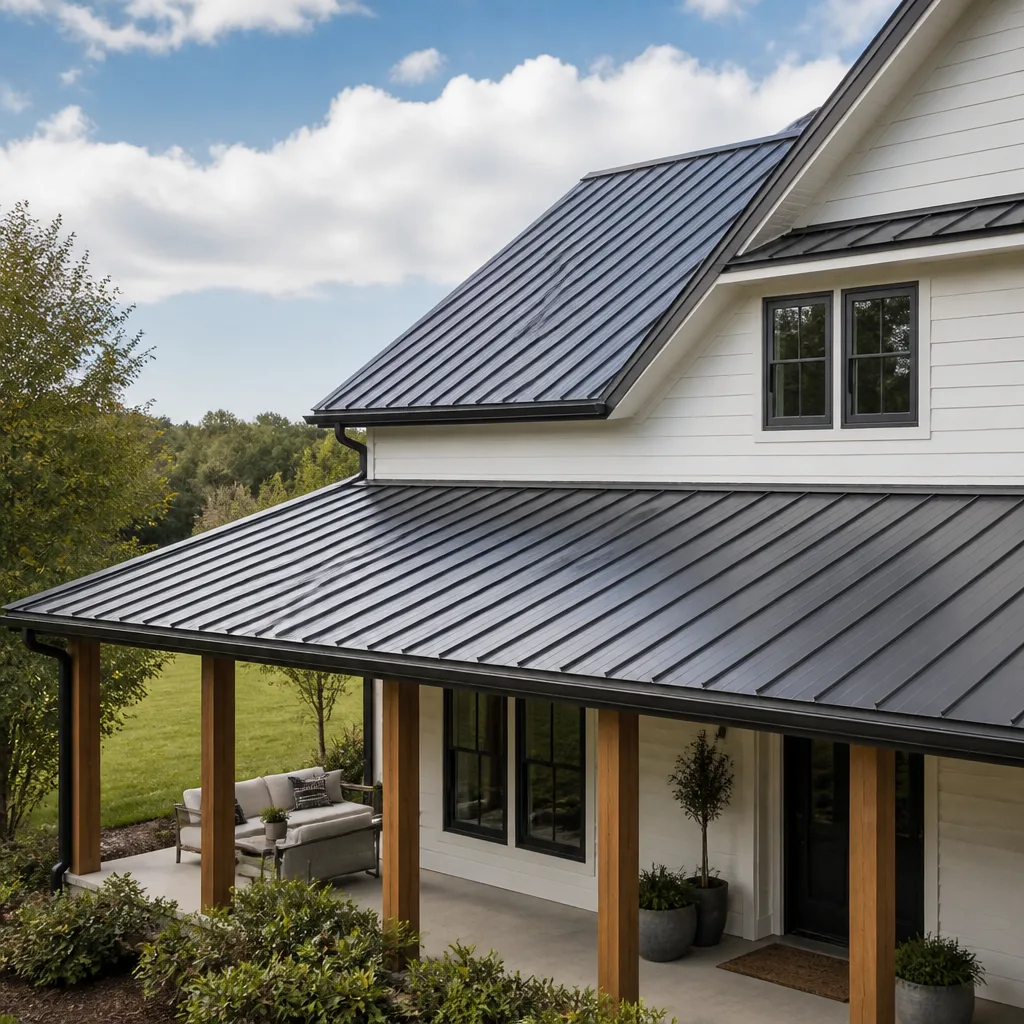 Metal roofing
 Tile roofing
 GAF
 Owens Corning
 Flat & low-slope
Free roof inspection with deck photos before we talk money - GAF and Owens Corning certified installation
Emergency & Storm Damage Maintenance Schedule: What to Do and When
The word “emergency” implies you couldn’t have seen it coming. Around Henderson, that’s rarely true. The conditions that cause the most expensive storm damage – exposed fasteners, lifted flashing, stressed tile mortar – develop slowly across the dry season, and they’re visible to anyone who knows where to look in April. We’ve walked Henderson roofs in May that were already telling the story of what October would bring. This guide lays out a full-year maintenance calendar for storm readiness: what to inspect, what to stockpile, how to document after a storm, and how to close out the season so next year starts ahead instead of behind. You’ll finish with a checklist you can actually use.
Quick Answer
Storm damage readiness in Henderson runs on two anchor inspections a year: a pre-monsoon inspection in April or May that catches the slow-developing vulnerabilities before summer storms arrive, and a post-monsoon close-out inspection in October that catches damage missed while conditions were wet or dark. Homeowners who keep this schedule and a simple documentation log spend far less per storm event than those who start from zero each time. Between the two inspections, the work is mostly small: clearing debris, checking fasteners, and keeping a stocked repair kit on hand.
Styles & brands we work with
- Architectural shingles
- Metal roofing
- Tile roofing
- GAF
- Owens Corning
- Flat & low-slope
Table of Contents
- Why Henderson Roofs Fail on a Schedule, Not by Surprise
- The April/May Pre-Monsoon Inspection: What to Check and How
- What to Stockpile Before Monsoon Season
- During and Right After a Storm: The First 24 Hours
- The 30-Minute Post-Storm Documentation Routine
- October Close-Out: The Follow-Up Inspection That Catches What the Storm Hid
- Your Maintenance Log and the 90-Day Done Right Promise
- The Full-Year Calendar at a Glance
Why Henderson Roofs Fail on a Schedule, Not by Surprise
Henderson’s climate sets up a specific pattern. The dry season bakes roofing materials for months – tile mortar cures and cracks, sealant around flashing shrinks, and fasteners work slightly loose from daily thermal expansion and contraction. None of that shows up as a leak while it’s dry. Then the monsoon arrives: a short, intense burst of wind-driven rain, the kind that finds every lifted edge and failed seal on the roof at once.
The damage isn’t the storm’s fault. The storm just reveals what the dry season left behind. We see this most often in the older neighborhoods east of downtown and in the established tracts around Green Valley, where roofs are fifteen to twenty-five years old and original sealants are past their service life. Homes near the foothills on the west side catch more wind exposure, and roof edges there take a harder beating than roofs tucked into interior streets.
That’s why this guide treats storm damage as a maintenance category with its own calendar. The math is simple: an April inspection costs a fraction of an emergency repair, and it’s a lot less stressful than a wet ceiling in August. If you’re already dealing with a leak, our Roof Repair in Henderson page covers how we handle active problems.
The April/May Pre-Monsoon Inspection: What to Check and How
This is the inspection that matters most, and it’s the one most homeowners skip. Do it in April or early May, before the first monsoon systems roll in. You can check several items from the ground with binoculars; others need someone safely on the roof. For anything involving height or a steep pitch, hire a professional rather than climbing up yourself – falls cause serious injuries every year, and a roof inspection isn’t worth the risk.
Here’s what to check, in priority order:
- Mortar condition at ridge caps and hips. That cracked mortar along the ridge and hip lines is the classic pre-storm failure point. Small hairline cracks in April become lifted caps after the first big wind. Tap-testing from a ladder where safe, and a visual scan for missing or loose mortar, tells you plenty.
- Flashing seat depth at penetrations. Look at where vents, chimneys, and skylights meet the roof. The flashing should sit with a proper seat against the roof surface, not lifted or back-sealed with caulk. A flashing edge that’s riding above the surface is a direct path for wind-driven rain.
- Gutter fastener count per linear foot. Count the hangers. In our experience, most gutter failures on Henderson homes come from fasteners that worked loose over the dry season, not from the gutters themselves. A short fastener count per run means a sagging gutter is already in your future.
- Exposed or backed-out fasteners. A scan of the field shows any nails or screws that have worked upward. These are the weak points where the next wind event starts.
- Debris on the roof surface and in valleys. Dry-season dust, leaves, and grit collect in valleys and behind penetrations. That trapped moisture and weight is what starts the slow damage.
If you want a full photo-documented inspection done by a trained technician, our Specialty Roofing in Henderson page describes how we approach tricky roof types and profiles.
What to Stockpile Before Monsoon Season
Here’s a scenario we hear often: a storm hits at 9 PM, a few shingles lift or a downspout pulls free, and the homeowner is driving to a hardware store that’s already closed. That’s how a small problem becomes a wet wall by morning. The fix is simple – stock a modest repair kit before the season, so a temporary patch at 10 PM is a fifteen-minute job, not a crisis.
Store these in a garage or shed, clearly labeled:
- Roofing-grade sealant or flashing cement and a caulk gun – for temporary sealing around lifted flashing or small openings.
- A roll of flashing tape or peel-and-stick membrane for quick patches over a failed seam.
- Heavy-duty tarps and rope or bungee cord to cover a damaged section if a leak is active.
- A box of roofing nails or screws matched to your roof type, plus a hammer or driver.
- Work gloves, safety glasses, and a headlamp for evening emergencies.
- A printed copy of your roof documentation – inspection photos, warranty paperwork, and your maintenance log – kept in a waterproof sleeve.
Don’t use the kit as a substitute for a proper repair. Temporary patches are exactly that. The kit buys you time and prevents secondary water damage until a professional can get up there safely. That’s the whole point. We keep materials from lines like Owens Corning and IKO available because a temporary fix should hold with the right product, not whatever’s in the drawer.
During and Right After a Storm: The First 24 Hours
Once a storm hits, the instinct is to get up on the roof immediately and see what happened. Don’t. Wind, wet surfaces, and uncertain footing make this the most dangerous time to be on a roof. Do these things instead, in order:
- Stay inside and watch. Look for water stains on ceilings, drips near recessed lights, or wet spots at wall intersections. Note the time and location of anything you see.
- Contain any active leak. Move furniture, place buckets, and if water is entering near an electrical fixture, turn off the circuit at the breaker and call a professional.
- Wait for the storm to pass, then do a safe ground-level walk-around. Use binoculars. Look for missing shingles, lifted flashing, sagging gutters, and debris against the house. Photograph what you can from the ground.
- Document the roof from a safe vantage. If you have a second-story window with a view of the roof, take photos through the glass. These help with any insurance or warranty conversation later.
- Call for a professional inspection before touching anything. A trained eye will know what’s storm damage and what was already failing. Our team has up to 10 years of technician experience and answers the phone live, around the clock and through the middle of a storm.
If the storm left you with an active leak or visible damage, the fastest path forward is a professional assessment. Call us at (833) 691-6717 and we’ll get a technician scheduled to document what happened.
The 30-Minute Post-Storm Documentation Routine
Documentation is where most homeowners leave money on the table. A thirty-minute routine, done every time a storm passes, builds a year-over-year record that pays for itself in insurance claims and warranty conversations. Here’s the routine:
- Log the date, time, and weather conditions – wind direction, rain intensity, and any hail. This is your baseline for the claim.
- Photograph the roof and exterior from any safe vantage: ground-level with binoculars, second-story windows, or a phone zoomed in on problem areas. Note the location of every photo.
- Photograph the interior – ceilings, walls, attic sheathing if you can safely access it. Any water staining is worth recording.
- Note visible damage in plain language: “lifted shingle at northwest corner,” “downspout separated from gutter run on the east side.”
- Save the record in a dated file – a folder on your computer or a notebook in the waterproof sleeve. Keep every storm’s record.
That record becomes invaluable. When we inspect a roof, we compare our photos against what the homeowner has logged, and the picture is far clearer than any one-time assessment. It’s also what turns “the storm caused this” from a guess into a documented timeline.
October Close-Out: The Follow-Up Inspection That Catches What the Storm Hid
The first inspection after a storm happens fast, in the dark or while things are still wet, and it misses things. That’s not a failure – it’s physics. Wet surfaces hide cracks, debris covers fasteners, and low light means dim corners go unchecked. The October close-out inspection is the quiet work that catches what the storm hid.
Schedule this one in October, once monsoon season has ebbed and the roof has fully dried out. What the close-out looks for:
- Slow leaks that started under wet conditions and haven’t yet shown up as a stain. These are caught by a trained eye and a photo comparison, not by a homeowner who’s already forgotten about the storm.
- Damage to the underlayment under lifted or missing shingles. This is the expensive failure that starts invisibly.
- Debris and moisture trapped behind penetrations from the season’s storms.
- Gutter and downspout integrity after a season of collecting debris, which is the leading cause of fascia and soffit rot in Henderson homes.
The close-out is also the right time to plan any winter and spring work, before the next cycle starts. If your close-out reveals damage, our Roof Replacement & Installation in Henderson page covers what a full replacement involves when repairs are no longer the answer.
Your Maintenance Log and the 90-Day Done Right Promise
We back every job with the 90-Day Done Right Promise – a written workmanship guarantee. If something we touched isn’t right, we come back and make it right, with no arguing and no paperwork runaround. Here’s how your own maintenance log strengthens that promise: it gives us a clear record of what was repaired, when, and under what conditions, so if the same spot has an issue, we can trace the cause quickly and honestly.
Keep the log simple. For each entry: date, what was inspected or repaired, weather conditions, and photos. When you call us under the promise, you hand us a record instead of a story, and we can make good faster. That’s the whole point of a workmanship guarantee – it works best when both sides are keeping track.
When you do bring us out, our technicians are background-checked and arrive in uniform, and every inspection is documented with photos taken from your actual roof. We work with seven manufacturer lines, including Owens Corning, CertainTeed, and GAF, so proper materials aren’t a question. If you want a second read on an estimate before signing anything, we offer a free second opinion on any written estimate.
The Full-Year Calendar at a Glance
Print this and keep it where you’ll see it. The whole schedule, compressed:
- March – early April: Pre-season gear check. Confirm your stockpile kit is complete. Review last year’s documentation log.
- April – May: Pre-monsoon inspection. Check mortar at ridge caps and hips, flashing seat depth at penetrations, gutter fastener count per linear foot, and exposed fasteners. Hire a professional for anything requiring roof access.
- June – September (monsoon season): After every significant storm, do the first-24-hours walk-around and the 30-minute documentation routine. Temporary patches only where needed; call for an inspection.
- October: Post-monsoon close-out inspection. Catch the damage the storm hid. Plan any repairs before winter.
- November – February: Clear debris, schedule any work identified in October, and check gutters after the last leaves fall.
For broader storm-ready guidance, our Ridgeline Roofing Co. Henderson home page is a good starting point if you’re new to the schedule.
Common Mistakes to Avoid
- Skipping the April inspection. Most Henderson homeowners think the dry season means nothing to worry about. It’s exactly when the failure conditions develop.
- Going on the roof right after a storm. Wet shingles and gusting wind are how people get hurt. Wait, watch, and call a professional.
- Waiting to patch a small problem. A lifted shingle caught early is a quick repair. A lifted shingle that sits through another dry season can take the underlayment with it.
- Not documenting anything. Without a photo log, an insurance adjuster and a warranty rep have only your memory to work from.
- Assuming the first inspection caught everything. Storm conditions hide damage. The October close-out exists for a reason.
- Hiring a truck that won’t be around next spring. Storm-chasers appear after big weather and disappear before the work fails. A local crew that stands behind the job is worth more than a lower bid.
- Treating the maintenance log as paperwork to skip. It’s the record that makes the 90-Day Done Right Promise and any claim stronger.
See the difference
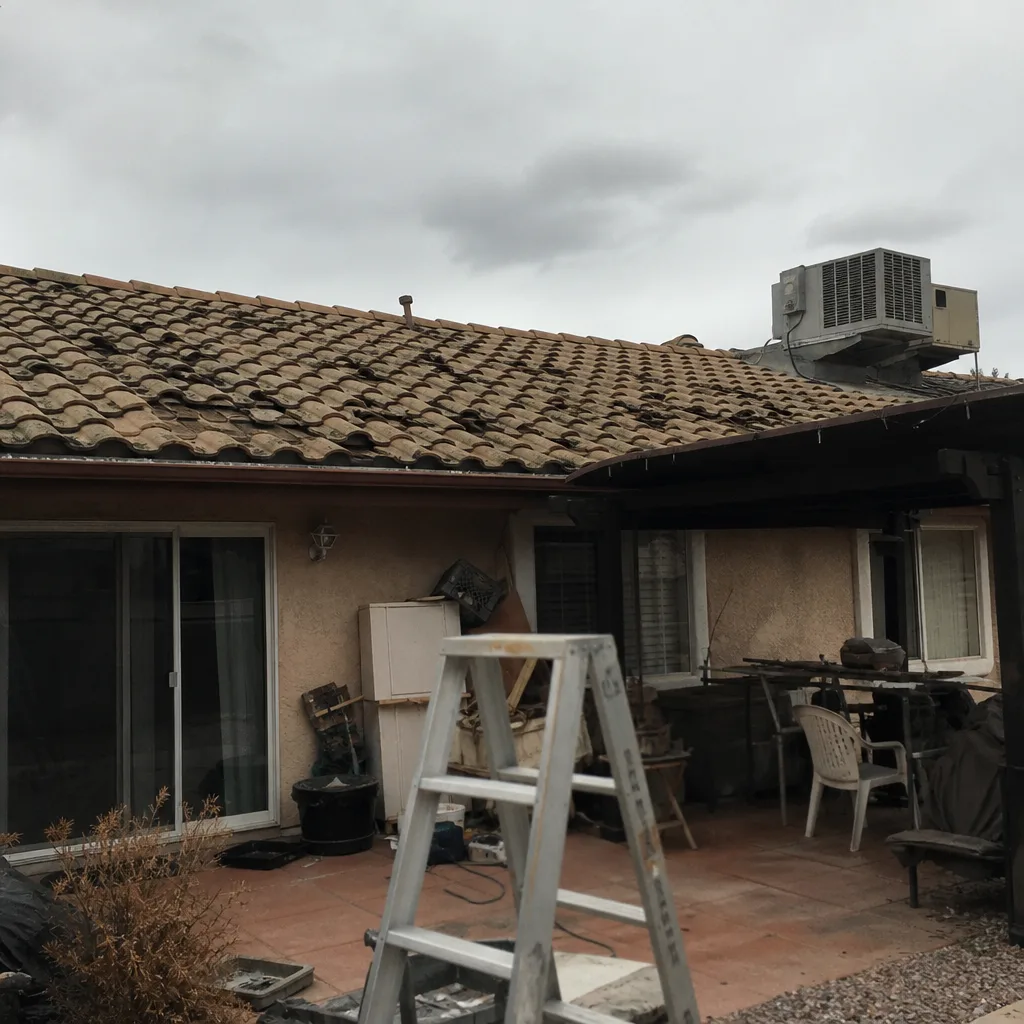 Before
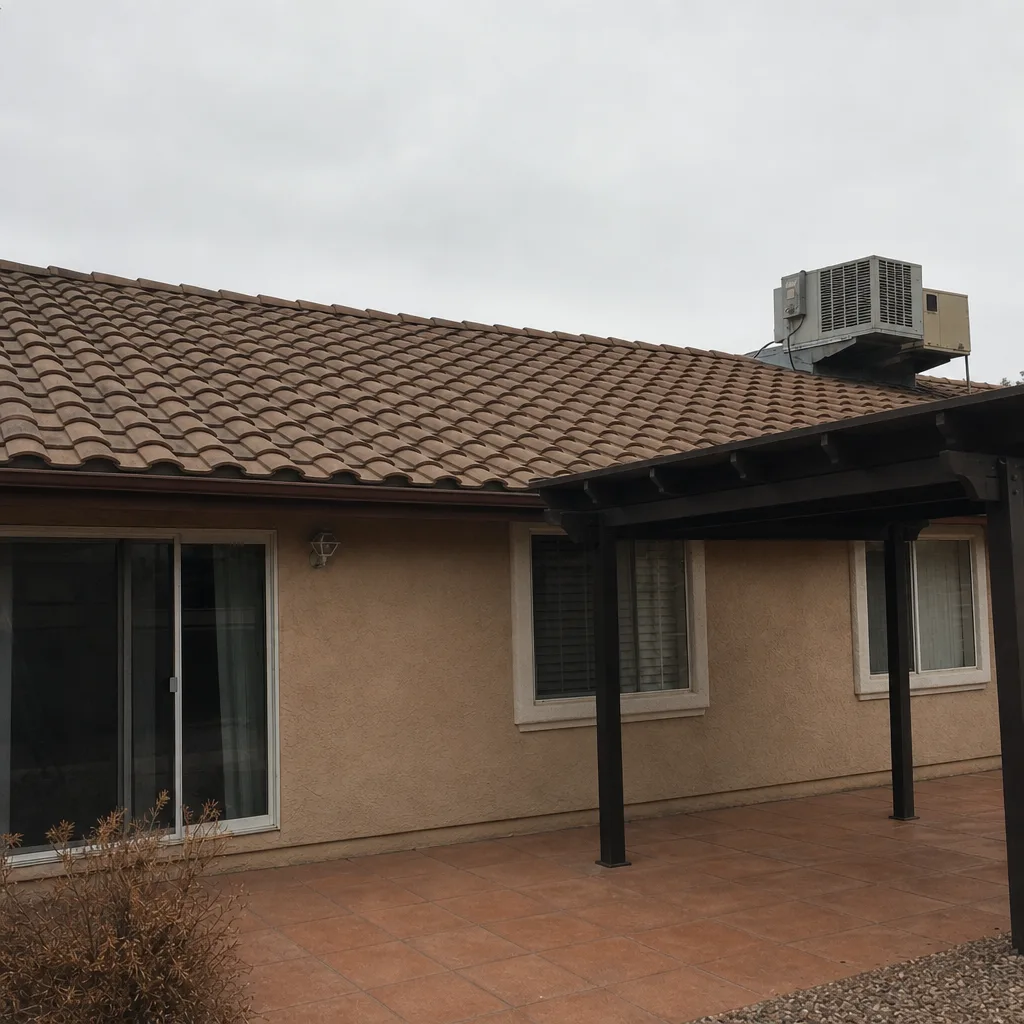 After
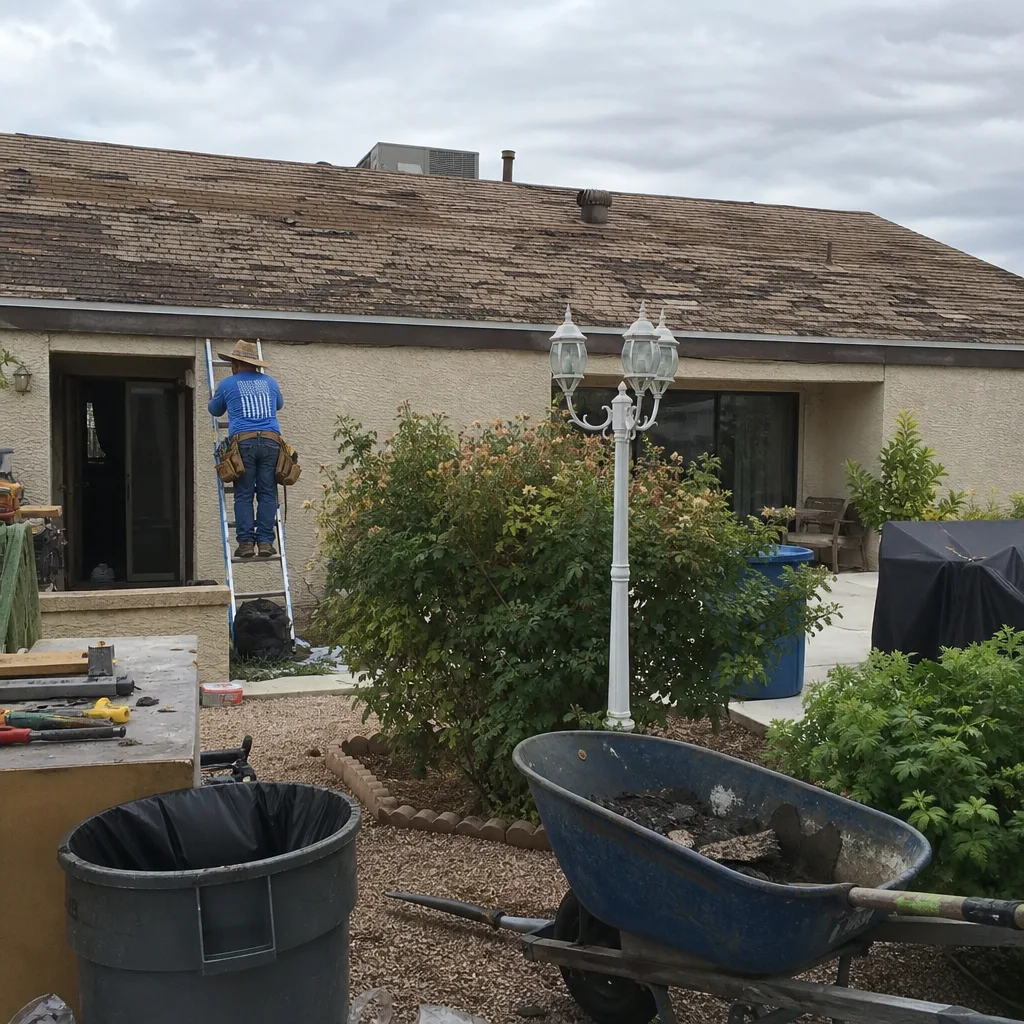 Before
 After
 Before
 After
When to Call a Professional
Some checks are homeowner work. Others need a trained technician and a safe harness. Call us if you see any of the following: an active leak or water staining on ceilings or walls; lifted, missing, or curled shingles visible from the ground; cracked or missing mortar at ridge caps and hips; flashing that has pulled away from a chimney, vent, or skylight; sagging gutters or separated downspouts; or any damage after a storm that you can’t safely assess from the ground. Ridgeline Roofing Co. Henderson offers free estimates in Henderson – call (833) 691-6717 and we’ll get a technician out to document what’s happening from your actual roof. No scary speech in the driveway, no surprise numbers. Just a written assessment and a square deal.
Frequently Asked Questions
Most pre-monsoon inspections in Henderson run a modest fixed fee, and many homeowners combine the inspection with scheduled maintenance or a repair to bring the total down. Ridgeline offers a free second opinion on any written estimate, and our standing seasonal tune-up offer is $89. Call (833) 691-6717 for an exact quote – estimates are free.
April or early May, before monsoon season, is the best window, with a second close-out inspection in October after the season ends. The April inspection catches the slow-developing vulnerabilities, and the October one catches damage missed in the dark or under wet conditions.
You can check from the ground with binoculars and from inside the house for ceiling stains, and that’s where it should stop. Never walk on a wet or unfamiliar roof. A trained technician with proper safety equipment is the right call for anything on the roof surface.
It builds a year-over-year record that supports insurance claims, strengthens your warranty position, and gives any contractor a clear baseline to work from. Without it, a claim rests on memory. With it, you have dates, photos, and a timeline.
Most storm damage repairs are completed in a single visit, though larger jobs involving underlayment or multiple sections can take longer. We give you a clear timeline with the written estimate before any work starts, and the number on the estimate is the number on the invoice.
No. We price each job upfront with a written estimate, and that’s the number you pay. If we find something unexpected while we’re up there, we document it with photos and talk it through with you before any additional work is added.
The Bottom Line
Emergency storm damage is almost never truly sudden. In Henderson, the conditions that make a roof vulnerable build slowly through the dry season and can be caught with a good April inspection. Keep two anchor points each year, pre-monsoon and October close-out, and stock a simple repair kit before the season starts. Document every storm in under thirty minutes. Keep the log with your warranty paperwork. The homeowners who follow this calendar spend less, sleep better, and stop treating storms as emergencies. Done right – and if it isn’t, we make it right.
Call (833) 691-6717 to schedule your free estimate with Ridgeline Roofing Co. Henderson. We answer live, around the clock, and we’ll be there when we say.
Written by the team at Ridgeline Roofing Co. Henderson.