
Last updated November 18, 2026
 Architectural shingles
 Metal roofing
 Tile roofing
 GAF
 Owens Corning
 Flat & low-slope
Free roof inspection with deck photos before we talk money - GAF and Owens Corning certified installation
Emergency & Storm Damage Warning Signs Every Homeowner Should Know
A tile can lift off a Henderson roof during a monsoon gust, blow back into the same gap on the next pass, and leave the house looking untouched from the street. Underneath, an exposed 4-inch strip of decking has now soaked up two storms and is quietly feeding mold into the insulation below it. That gap between what a roof looks like and what it actually is happens here every summer. What follows is a field guide to the warning signs that live inside your house and at ground level, written for Henderson homeowners who intend to stay put and want to read their own roof before a small failure becomes a ceiling on the floor.
Quick Answer
The most reliable storm damage warning signs are interior and structural, not cosmetic: a musty attic odor, daylight visible from inside the attic at unexpected angles, insulation that has compressed or clumped, ceiling paint bubbling between joists instead of at seams, and HVAC filters loading faster than usual. Ground-level clues like fascia gaps, separated soffit panels, and gutters pulling away at corners point to the same underlying decking stress. If you notice any of these after a storm in Henderson, get a documented inspection before the next rain.
Styles & brands we work with
- Architectural shingles
- Metal roofing
- Tile roofing
- GAF
- Owens Corning
- Flat & low-slope
Table of Contents
- Five Interior Warning Signs That Mean Roof Damage With No Exterior Trace
- What Percussive Roof Sounds After a Storm Actually Mean
- Why Low-Slope and Flat Sections Hide Damage Long After the Storm
- Exterior Clues You Can Read From the Ground Without a Ladder
- How to Baseline Your Roof Before Monsoon Season
- The Henderson Monsoon Cycle and What Each Season Leaves Behind
- Common Mistakes to Avoid
Five Interior Warning Signs That Mean Roof Damage With No Exterior Trace
These are the signs we’ve learned to trust most in Henderson, because they show up whether or not a single shingle looks out of place from the driveway. Check them after every significant storm. You don’t need to climb anything to notice most of them.
- An attic odor that reads sharp and earthy, not dusty. A healthy attic smells like dry wood and hot dust. Storm damage smells different: a wet, sour, almost mushroom-like note that lingers near the eaves. That smell is moisture feeding microbial growth in the decking or insulation. It tends to be strongest on the shaded north slope and after a humid monsoon week.
- Daylight visible from inside the attic at angles that aren’t vents. Some light at the ridge vent and gable vents is normal. Light coming through the field of the roof, especially low near the eaves or along a valley, means the decking or a flashing joint has opened. Check during mid-afternoon when the sun is directly overhead.
- Insulation compression patterns. Blown-in insulation should sit fluffy and even. When you see trenches or matted, darkened patches, water has run through and collapsed it. Dark staining on the top of the insulation means water traveled down the underside of the decking before dripping.
- Ceiling paint bubbling between joists, not at the seams. Most people expect a leak to show at a drywall seam or a corner. Damage that comes from a compromised decking panel often bulges in the middle of a bay, between the joists. That pattern points upward to the roof surface, not to plumbing.
- HVAC filters loading faster than usual. After a storm loosens sheathing or opens a gap, the air handler in your attic pulls from a dirtier, damper space. If your filter clogs in three weeks instead of three months, look up before you replace it again.
If two or more of these show up together, treat it as a positive finding, not a scare tactic. A documented inspection with photos taken from the actual roof is how you confirm what the signs are telling you. Ridgeline Roofing Co. Henderson builds that photo record on every visit so you’re reading evidence, not a speech.
What Percussive Roof Sounds After a Storm Actually Mean
Homeowners in Henderson consistently misread roof sound. The first rain after a dry spell produces a chorus of ticks, pops, and creaks. Most of it is thermal expansion, and it’s harmless. Some of it isn’t, and the difference is easy to learn once you know what you’re hearing.
- Normal thermal expansion: a slow series of clicks and creaks as the roof heats up in the morning or cools at dusk. It’s rhythmic, it tapers off, and it happens on dry days too.
- Normal first-rain sounds: a brief rattle at the gutters and downspouts as debris and dust wash loose. It settles within minutes.
- Not normal: a sharp, repeating tap or tick in a specific spot, arriving with each gust during the storm. That’s a loose tile, shingle, or flashing piece vibrating against the decking. It won’t self-repair, and the fastener holding it is usually the one that failed.
- Not normal: a dull thump or groan from the ceiling area during the first hour of rain, especially if it repeats. That suggests water hitting a soft spot in the decking or ponding on a low-slope section.
Here’s the practical rule: sound that repeats in one location after the storm has passed is worth an inspection. Sound that moves around and fades is weather. If you hear the same tick on the next windy afternoon, write down which side of the house it’s on and mention it when you call. Our technicians use that clue to know where to look first.
A roof that needs repair is not a job for a homeowner with a ladder. Fall injuries are among the most common home-repair accidents in the country, and a wet or heat-damaged roof is the worst possible surface to test that. Reading the signs from the ground and calling for a pro is the right move every time.
Why Low-Slope and Flat Sections Hide Damage Long After the Storm
Many Henderson homes have a low-slope section somewhere: a flat roof over an attached garage, a small addition, a covered patio, or a transition where a tile field meets a lower pitch. These sections don’t behave like the steep slope most people picture when they think about their roof. They hold water, and they hold evidence.
On a low-slope roof, water doesn’t drain like it should on a properly pitched field. It ponds where the membrane has sagged or where a drain scupper is blocked by monsoon debris. The ponding itself may evaporate within a day or two, and from the ground you’ll see no sign of it. But the seam it sat against has been working loose, and the decking beneath it is holding moisture that the sun can’t reach. That damage can sit for weeks after a storm has passed through Henderson without a single interior drip.
Signs to watch on a low-slope section, all checkable without climbing:
- Dark staining at the base of the wall where the low roof meets the main structure, often reading as a faint waterline.
- Peeling paint or blistering stucco just below the junction, which appears after the storm, not before.
- A sagging gutter line along the low edge, which tells you the fascia behind it is wet and heavy.
- Water stains on the garage ceiling that appear days or weeks after the storm, not during it.
Because low-slope damage is so easy to miss, it’s one of the main reasons we recommend a photo-documented inspection after any significant storm in Henderson, even if the rest of the roof looks fine. If you’d rather plan a proper repair before the next season, our Roof Repair in Henderson page covers what we do on these transition sections.
Exterior Clues You Can Read From the Ground Without a Ladder
You don’t need to climb a ladder to spot structural decking stress. Stand at a comfortable distance and look at the edges of the roof. The clues that matter are usually at the perimeter, where the roof hands off to the walls.
Here’s a sequence worth walking at least twice a year, and always within a week of a big storm in Henderson:
- Look up at the fascia boards along the gable ends. Gaps between the fascia and the wall, or a fascia that reads slightly proud of where it sat last year, suggest the decking has shifted or the fasteners have backed out.
- Scan the soffit panels along the eaves. Seams that have opened, a panel that’s dropped a fraction, or a visibly loose piece mean the structure supporting it has moved. That’s often water-driven.
- Check the gutters at the corners. A gutter pulling away at the corner, with a visible gap between the gutter and the fascia, is usually a sign the fascia is saturated or the decking at the corner has softened. Corners take the most wind, and they fail first.
- Look at the roof edge for waviness. A ridge line or eave line that has a gentle dip where it used to be straight is telling you what you can’t see from below.
- Note any staining on the exterior walls just under the eaves. Faint vertical streaks or a waterline high on the wall line up with water running down the back of the gutter or off a lifted edge.
Each of these is a signal, not a diagnosis. Together they give a technician a starting point and give you a specific thing to describe on the phone. If you’d like a full inspection done right, our Ridgeline Roofing Co. Henderson home page is where to start.
How to Baseline Your Roof Before Monsoon Season
Most homeowners can’t tell you what their roof looked like last June, which makes post-storm comparison almost impossible. That’s why we encourage Henderson homeowners to get a documented baseline inspection done before monsoon season, usually in late May or early June. Done before the storms, the photos become the reference point. Without them, “I think that patch is new” is the best you can do.
A proper baseline does a few things:
- Records each slope, each valley, each transition to a low-slope section, and each penetration with a dated photo taken from the actual roof surface.
- Notes existing conditions, so small pre-storm wear doesn’t get misread as new damage after a storm.
- Gives you a written record that’s useful for insurance if you ever need it, and useful for you regardless.
- Sets a before-and-after reference your technician can compare in a single visit, which lets the diagnosis be objective rather than a guess.
The inspection is done by background-checked, uniformed technicians who use the same standard we’d want for work on our own mother’s home. Pricing is upfront: the number on the estimate is the number on the invoice, and you get a Roof Replacement & Installation in Henderson estimate in writing if it comes to that. If a repair will do, we’ll tell you so. Every job we do is backed by the 90-Day Done Right Promise, so if anything isn’t right, we come back and make it right.
Want to get on the calendar before the season? We’re at (833) 691-6717, and a live person answers every call, day or night.
The Henderson Monsoon Cycle and What Each Season Leaves Behind
Henderson’s weather hands you a predictable calendar of risk, and the damage from each season leaves a different signature on your roof. Reading the season is part of reading the signs.
Late spring (May – June). Dry heat, intense UV, and the start of the dust season. Tile and shingle fasteners work loose from the daily expansion. You’ll notice small ticks that started this year and don’t go away.
Monsoon (July – September). Sudden wind gusts from fast-moving cells, then heavy rain driven sideways. This is when tiles lift and reset, and when a “clean” roof after the storm can hide a damaged decking strip. It’s also when low-slope sections pond and hold water against seams. Watch for interior signs within a week of each storm event.
Fall (October – November). The clearest reading window. Dry weather and moderate temperatures let you compare the roof’s condition against its pre-monsoon baseline with fewer variables. Any interior warning sign that survived into fall is now a finding, not a coincidence.
Winter (December – February). Cooler nights and occasional rain. This is when the moisture damage from summer shows its worst: mold growth in the attic reaches visible levels, insulation compression gets obvious, and ceiling paint bulges appear. Don’t wait for spring.
For homes with specialty roof systems, tile-to-metal transitions, or unusual pitch profiles, we put together a different look during baseline inspections. That’s part of our Specialty Roofing in Henderson work, and it’s worth asking about if your roof has been changed or added onto since it was built.
Common Mistakes to Avoid
We’ve seen Henderson homeowners fall into the same traps after a storm. Each of these costs time, money, or both.
- Judging the roof from the street alone. The best-hidden damage in Henderson is the interior kind. A clean-looking roof after a storm tells you very little; the pictures taken from on top tell the real story.
- Climbing up to “just check.” A wet or heat-stressed roof is one of the most dangerous surfaces a homeowner can step onto. Every year we hear about a fall that turned a $300 repair into a hospital visit. Leave the ladder on the ground.
- Waiting for a drip before calling. By the time water reaches the ceiling, it has already soaked the decking, the insulation, and possibly the framing. The earlier the call, the smaller the repair.
- Skipping the baseline year after year. Without a pre-monsoon photo record, every post-storm inspection starts from scratch. A single baseline is the most useful thing you can do for your roof’s long-term outlook.
- Hiring whoever shows up first after a storm. Fast-moving storm crews land in Henderson every summer, do the visible work, and are gone by fall. Ask who is coming back if it leaks in October.
- Signing a scope you don’t understand. A vague scope with no line items is how a repair becomes a replacement. Ask for a written estimate, and take advantage of our free second opinion on any written estimate you’ve already got.
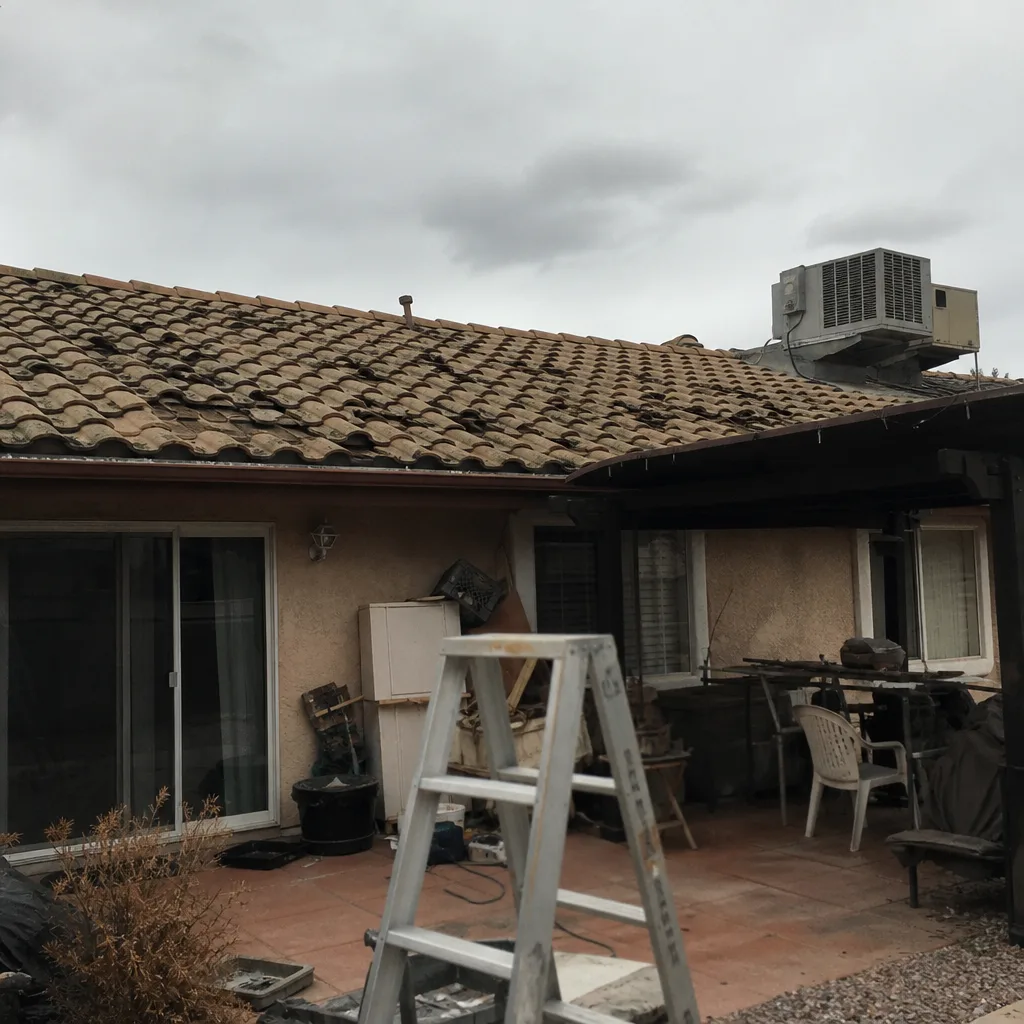
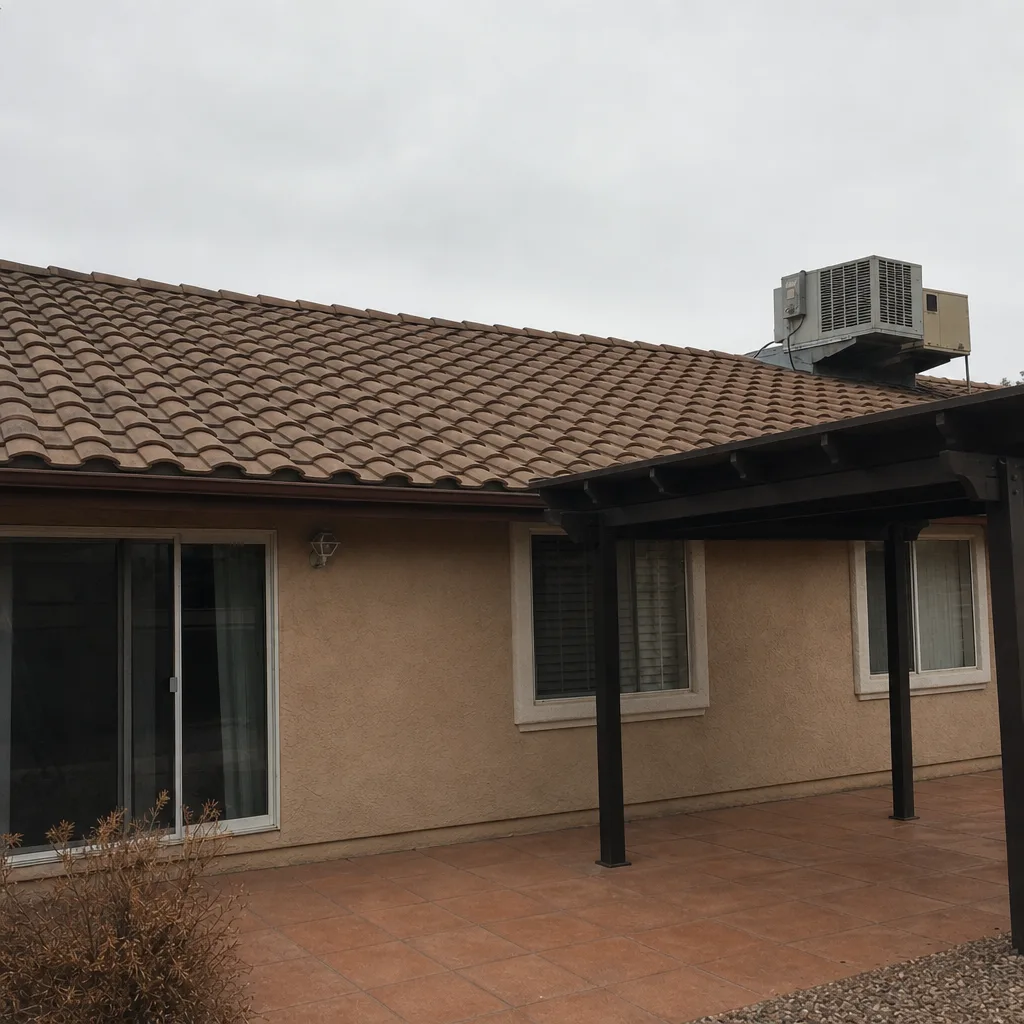
- Assuming the tile that blew back is the tile that belongs there. A replaced tile that doesn’t match is fine on the surface. What matters is whether the decking behind the gap got sealed and dried before the next rain.
See the difference
 Before
 After
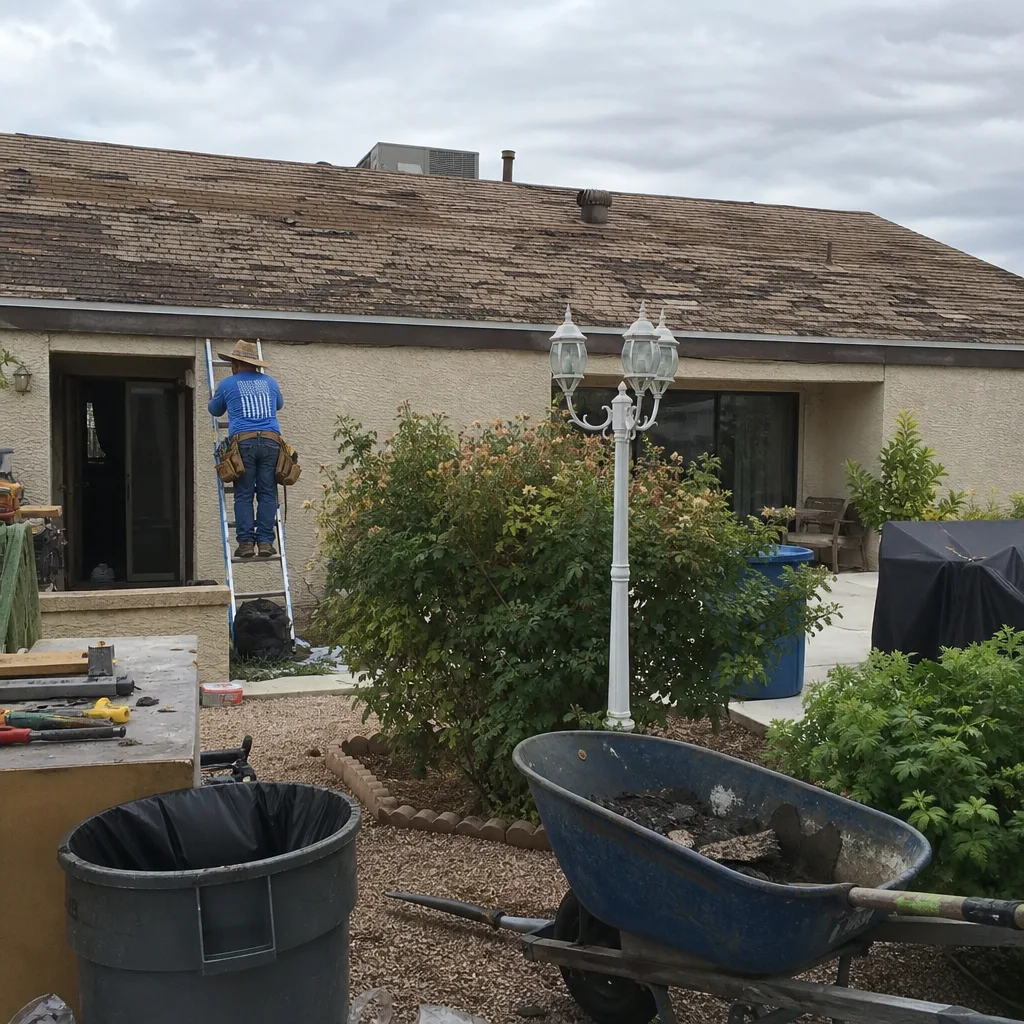 Before
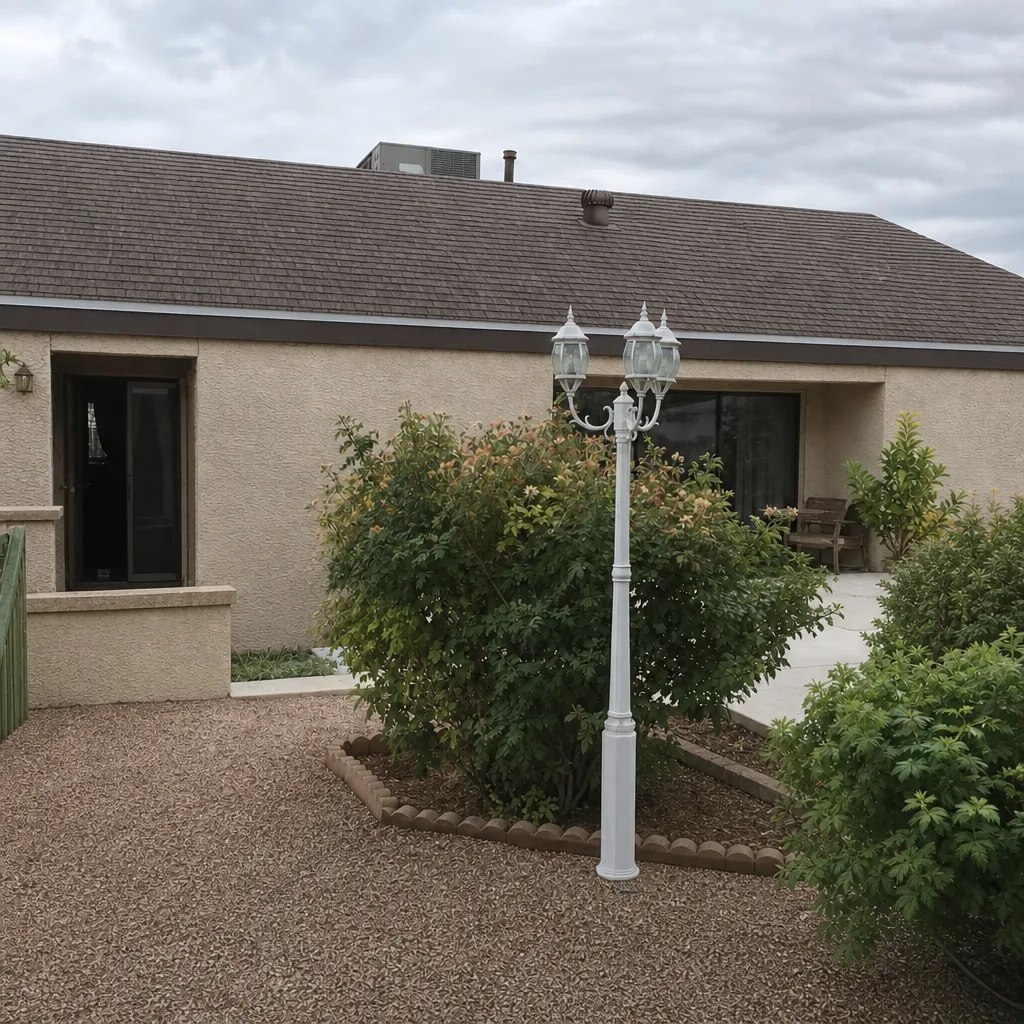 After
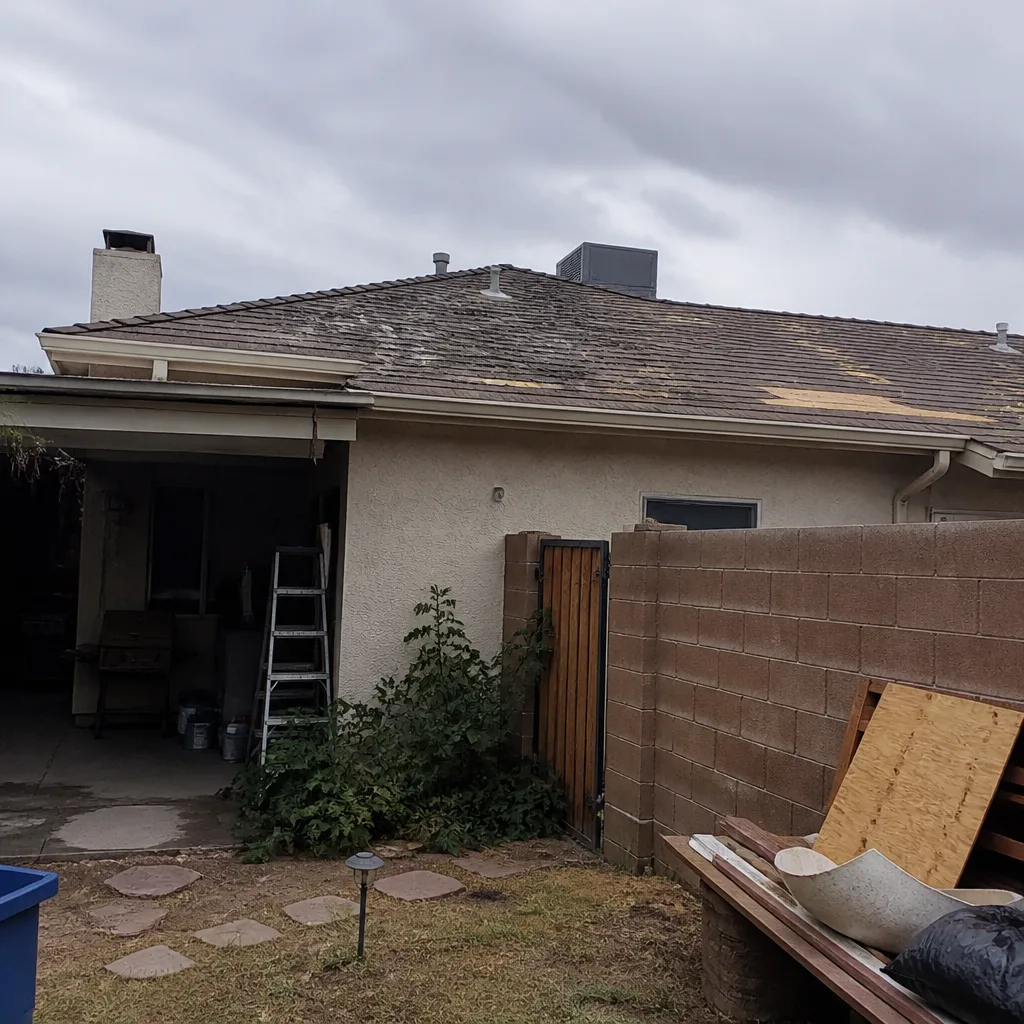 Before
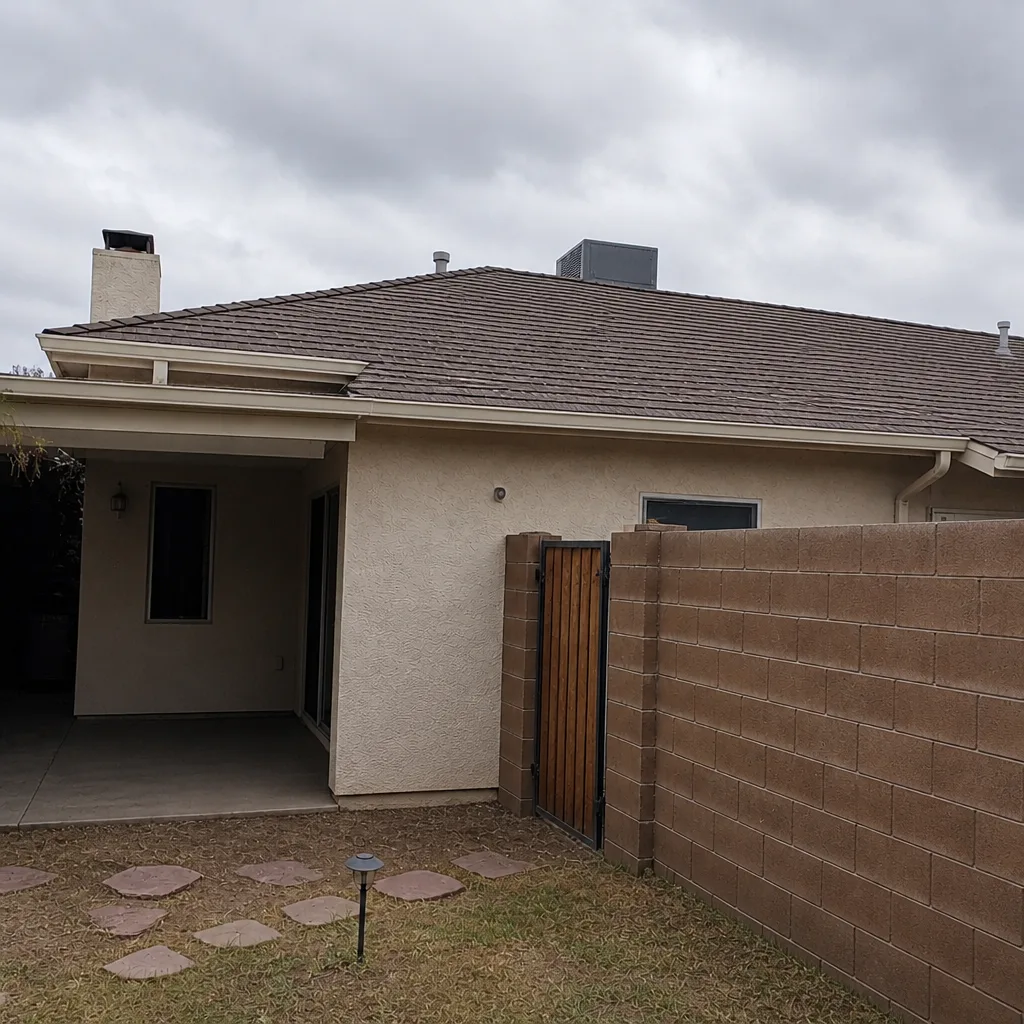 After
When to Call a Professional
Call for an inspection when you notice any of the following: an attic odor that’s sharper than usual, daylight visible inside the attic at an angle you can’t explain, insulation that’s visibly matted or darkened, ceiling paint bulging between joists, HVAC filters clogging in weeks, fascia gaps, soffit separation, gutters pulling away at corners, or a repeating tick or thump in one spot after a storm. Call also if the roof is over a low-slope or flat section and any interior sign has appeared. These are the patterns we look for on every Henderson roof, and we’ve had enough years to know which ones tend to grow. Ridgeline Roofing Co. Henderson offers free estimates in Henderson. Call (833) 691-6717 for a free estimate and a documented inspection, and we’ll show you what’s actually happening instead of telling you.
Frequently Asked Questions
The earliest signs are usually interior: a sharp, earthy attic odor, insulation that has compressed or darkened, and ceiling paint bubbling between joists rather than at seams. Ground-level signs like a fascia gap or a gutter pulling away at a corner often show up at the same time. If two or more appear together after a storm, get a documented inspection. Call (833) 691-6717 for a free estimate.
Yes, and that’s the most common pattern we see in Henderson. A tile can lift during a gust, blow back into the same gap, and leave the roof looking intact while an exposed strip of decking absorbs the rain from a second monsoon event. The visible surface and the concealed structure are two different stories, which is why a photo-documented inspection matters more than the street view. Call (833) 691-6717 to schedule one.
Normal thermal expansion is a slow series of clicks and creaks that fades. It happens on dry days too. A storm-damage sound is a sharp, repeating tick or tap in one specific spot, arriving with each gust and continuing after the storm. If the same sound repeats on the next windy afternoon, that’s an inspection item. Call (833) 691-6717 for a free estimate.
They do. Low-slope sections pond water, and the ponding often evaporates before anyone sees it from the ground, but it works the seams and the decking underneath for weeks after the visible storm passes. Interior signs like garage-ceiling stains weeks later are common. Any home with a low-slope section over a garage or addition is worth a documented inspection each season. Call (833) 691-6717 to book one.
Get a baseline inspection done before the storms arrive, usually in late May or early June. A good baseline includes dated photos taken from the actual roof surface, a written record of existing conditions, and a note of each transition and penetration. That record makes post-storm comparison objective, and it’s useful for insurance if you ever need it. Ridgeline Roofing Co. Henderson does this on every inspection. Call (833) 691-6717 for a free estimate.
No. We price upfront, the number on the estimate is the number on the invoice, and the scope is written out so you can read exactly what we’re doing. If the inspection finds something bigger than expected, we stop and talk to you before anything changes. Every job is backed by the 90-Day Done Right Promise. Call (833) 691-6717 for a free estimate.
The Bottom Line
The damage that matters most on a Henderson roof is the damage you can’t see from the curb. An attic odor, daylight in the wrong place, compressed insulation, ceiling paint bubbling between joists, a filter loading too fast, or a ground-level fascia gap all tell you what the surface won’t. Learn those signs, walk the perimeter twice a year, and get a baseline before monsoon season so your post-storm comparison is based on photos instead of memory. If anything reads wrong, call us. Ridgeline Roofing Co. Henderson stands behind every job with the 90-Day Done Right Promise, live phones answered around the clock, and photography taken from your actual roof. Call (833) 691-6717 for a free estimate.
Written by the team at Ridgeline Roofing Co. Henderson.