
Last updated November 18, 2026
 Architectural shingles
 Metal roofing
 Tile roofing
 GAF
 Owens Corning
 Flat & low-slope
Free roof inspection with deck photos before we talk money - GAF and Owens Corning certified installation
Roof Replacement & Installation Warning Signs Every Homeowner Should Know
By the time you see a water stain on your ceiling, the installation mistake that caused it is already buried under shingles. Here is the part almost nobody warns you about: a bad roof is rarely an accident of weather. It’s usually a decision made on day one by a crew that skipped a step, ran out of underlayment, or nailed a shingle four inches off the chalk line. Bad roofs get plenty of attention. Bad installs happening in real time do not. This guide covers what a Henderson homeowner can actually watch for during and just after a replacement job, before the truck leaves the driveway.
Quick Answer
The clearest signs of a bad roof installation are visible during the job, not years later: crooked horizontal lines, exposed nail heads, valleys that don’t line up, and crews who never show you underlayment photos before covering it. If a contractor can’t document those steps at close-out, the installation is a bet you’re making on the next ten years of your home.
Styles & brands we work with
- Architectural shingles
- Metal roofing
- Tile roofing
- GAF
- Owens Corning
- Flat & low-slope
Table of Contents
- Why the Install Matters More Than the Shingle Brand
- Ground-Level Checkpoints You Can See Without Climbing
- What Misaligned Courses and Exposed Nails Actually Signal
- Underlayment Failures in a Desert Climate
- The Documentation You Should Receive at Job Close
- The 90-Day Inspection Window and the First Henderson Rain
- Ten Red Flags That Appear On Install Day
Why the Install Matters More Than the Shingle Brand
A premium shingle nailed wrong is a budget roof. A mid-grade shingle installed to spec outperforms it every time. We’ve seen Henderson homes with GAF Timberline HDZ or CertainTeed Landmark shingles fail inside a decade because the underlayment was lapped the wrong way or the fasteners were overdriven. The materials were fine. The installation wasn’t. That’s the part homeowners rarely get to see, so it’s the part that gets skimmed.
Here’s what that means for you: an installer who can talk for twenty minutes about brands but goes quiet when you ask about ice-and-water shield placement, ventilation math, or how they handle a cricket on a wide chimney is telling you something. The brand conversation is easy. The install conversation is where the real answer lives.
Our crews train locally and stay local. Our technicians have up to 10 years of experience, and we’ve walked enough Henderson roofs to know the difference between a job that holds through a monsoon season and one that doesn’t. When work is backed by a written 90-Day Done Right Promise and a coast-to-coast manufacturer warranty, the installer has every reason to get the details right the first time. That’s not luck. That’s process.
If you want to see how a full replacement is scoped from start to finish, our Roof Replacement & Installation in Henderson page breaks it down line by line. But read on first – this guide is the one you’ll use while the crew is still on your roof.
Ground-Level Checkpoints You Can See Without Climbing
You don’t need to be on the roof to know whether the crew is doing careful work. Stand on your front lawn, take a slow walk to the back, and look up. What you see from the ground is a reliable clue to what’s happening up top.
- Horizontal lines. Step back twenty feet and follow the bottom edge of the shingle courses from the gutter to the peak. Those lines should run perfectly parallel. A wavy line means the crew didn’t snap and follow a chalk line, and the whole plane is drifting.
- Ridge line straightness. A ridge should read as a single clean edge from end to end. If you see a sag or a lump, the ridge cap was installed poorly or the underlying deck is uneven and nobody flagged it.
- Shingle edges. Walk the perimeter of the house and look at each rake edge. Staggered, uneven shingle ends or visible gaps along the rake are a workmanship tell.
- Nail heads on the ground. A clean job means the magnet sweep happened. Scattered roofing nails in your grass or driveway after the truck leaves is carelessness, and carelessness on clean-up usually means carelessness upstairs.
- Flashing at chimneys and vents. From the ground, look at how the metal flashing sits against your chimney. Copper or metal step flashing should be visible and clean, not buried sloppily under shingles.
- Valley alignment. Where two roof planes meet, the valley should look like one clean, continuous line. Sloppy valleys are one of the most common sources of leaks.
None of these require a ladder. A fifteen-minute walk around the house during the first two days of the install gives you more real information than any sales pitch.
What Misaligned Courses and Exposed Nails Actually Signal
Each visible flaw tells you something specific about the work behind it, and the answer is rarely good.
- Misaligned shingle courses mean the crew didn’t establish a starting line correctly. Once the first course drifts, every course above it drifts too. The shingles still shed water, but the exposure is uneven – some shingles show more of the sealing strip than others – and wind uplift resistance drops. In Henderson, the summer gusts and monsoon downbursts are enough to peel a drifted roof in one season.
- Exposed nail heads – nails that missed the shingle and lodged in the one below or poked through the face – are pinhole leaks waiting to happen. Each one gets a tiny bit of water and UV. Three years later it’s a drip, and the drip is inside the attic where you can’t see it. Standard practice is for every exposed fastener to be sealed, and never to fasten below the shingle’s nail line in the first place.
- Uneven ridge lines usually mean ridge venting was compromised. A roof that doesn’t vent correctly traps heat against the underside of the deck. In Henderson’s summers, deck temperatures can push well past 150 degrees. That dries out shingles from below and shortens their life.
- Lifted or curled shingle edges right after install mean the shingles weren’t sealed correctly, weren’t seated fully, or the crew worked in temperatures where the sealant strip couldn’t set. Shingles that don’t seal on day one usually don’t seal later.
If you spot any of these, ask the on-site lead about it while the crew is still there. A legitimate crew will pull the shingles and fix it. A crew that gets defensive or says you can’t see it from the ground that well is telling you the answer.
Underlayment Failures in a Desert Climate
This is the one homeowners most often miss, because it’s completely covered by the time they get up on the roof. Underlayment – the waterproof barrier between your deck and your shingles – is the second line of defense. If shingles fail, underlayment buys you months of protection. If underlayment fails, the shingles are the only thing between you and the ceiling drywall.
In Henderson, underlayment matters more than it does in most of the country, for two reasons.
UV exposure. Our sun is brutal. Standard felt underlayment degrades when it’s left exposed to direct sun. A crew that tears off an entire roof on Monday and doesn’t finish the underlayment until Thursday has left the deck and the laid paper exposed to three days of desert sun. Synthetic underlayment handles UV better than felt and is the correct choice for a Henderson roof. If your contractor is quoting felt because it’s cheaper, ask why.
Thermal cycling. Henderson roofs run hot by day and cool down at night – often 40 degrees of swing. That expansion and contraction works on every seam in the underlayment and every fastening point. A crew that laps underlayment the wrong way – water should always run over a lap, never into it – creates seams that open. If the underlayment is lapped so water flows into the seam, thermal cycling will find it. That’s a leak that shows up on the first hard rain, not a leak that develops over years.
Ask to see the underlayment course before the shingles go over it. A legitimate contractor will photograph that step for you. If you get a shrug or a “we’ve been doing this a long time,” that’s your answer. You can see more on our Roof Repair in Henderson page about what we look for when we’re diagnosing a failure after the fact.
The Documentation You Should Receive at Job Close
At the end of a proper replacement, you should get a package – not a handshake. What’s in that package tells you how serious the contractor is about standing behind their work.
- Photo documentation of the roof at each stage. A real inspection involves photos taken from your actual roof – deck, underlayment, flashing, valleys, ridge, final surface. Not stock photos. Not a phone shot from the driveway.
- A written workmanship guarantee. Ours is the 90-Day Done Right Promise: if it isn’t right, we come back and make it right – no paperwork, no arguing. Any contractor worth hiring should give you something equivalent in writing at close.
- Manufacturer warranty registration. If your roof is GAF, CertainTeed, Owens Corning, IKO, Atlas, Tamko, or Boral, the manufacturer’s warranty registration should be filed with your name and address and handed to you. If you don’t get it, you don’t have the warranty.
- Final line-item invoice matching the estimate. The number on the estimate should be the number on the invoice. If the invoice has new line items that appeared after the work began, that’s a red flag worth challenging.
- Permit paperwork and inspection sign-off. Any roof replacement in the Henderson area requires a building permit, and the permit is posted before work starts and closed out after inspection. Copies of those documents belong in your file. If the contractor never mentioned pulling a permit, that’s not a small thing – a permitted job gets an independent inspection your insurance company will accept.
- Material pickup or delivery slips. These verify what was actually installed. If your estimate specified a GAF system and the delivery slip shows something else, you need to know.
Absence of that package at close is the warning sign that comes after all the others. A contractor who disappears before the paperwork is a contractor who will disappear when you call about the leak.
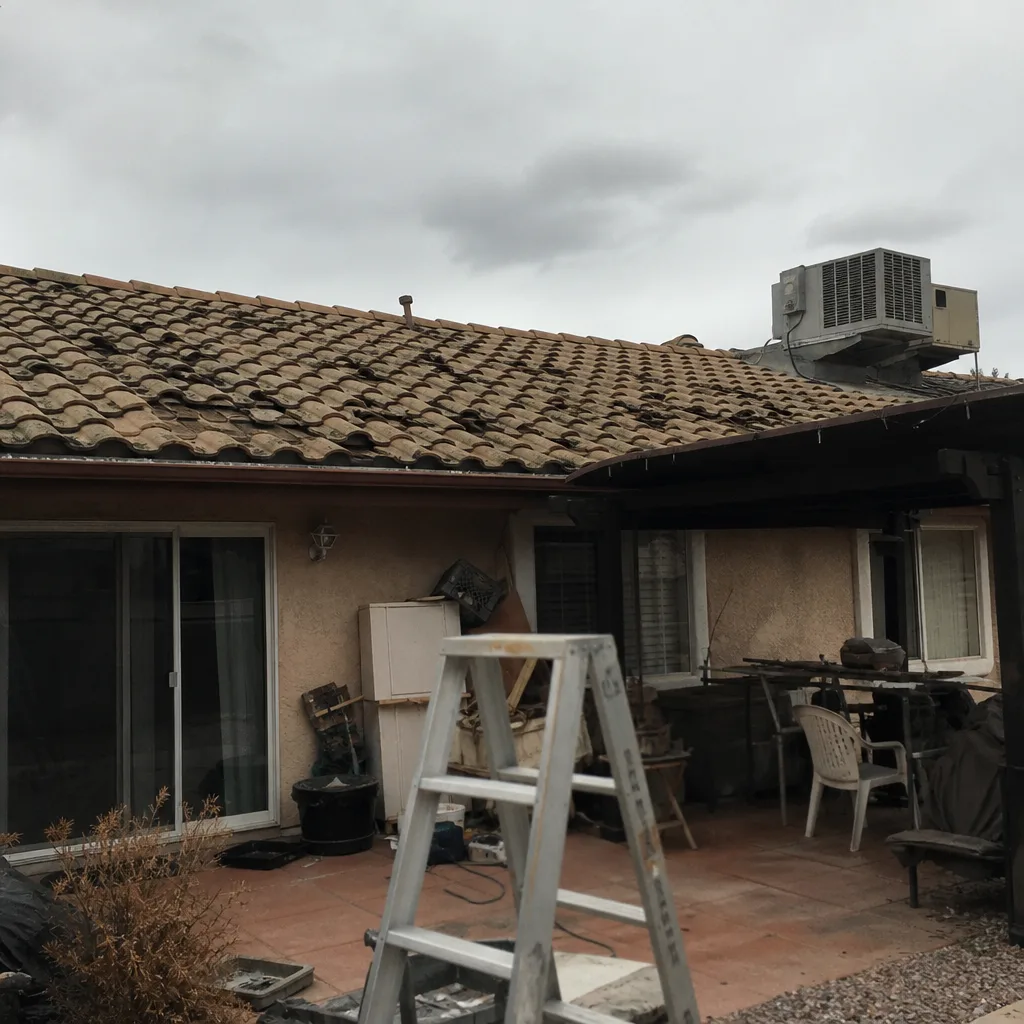
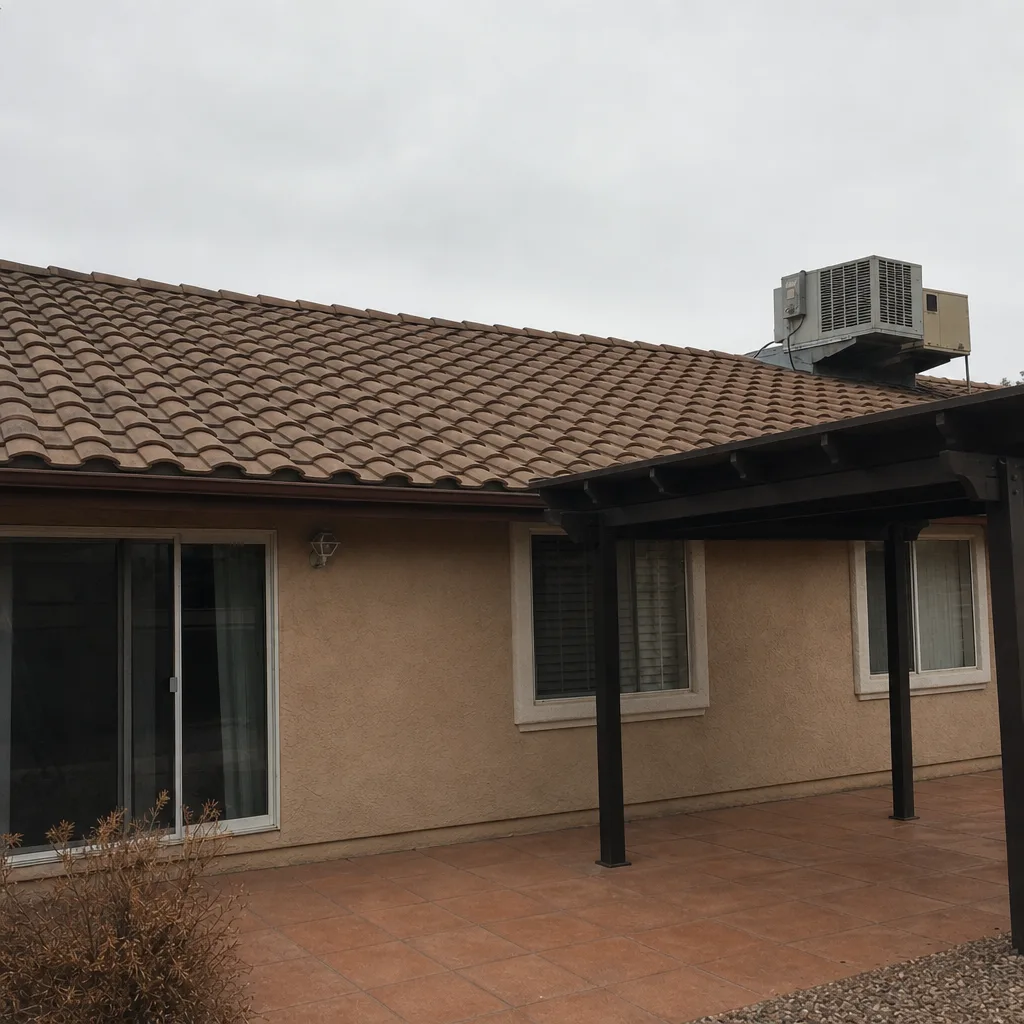
See the difference
 Before
 After
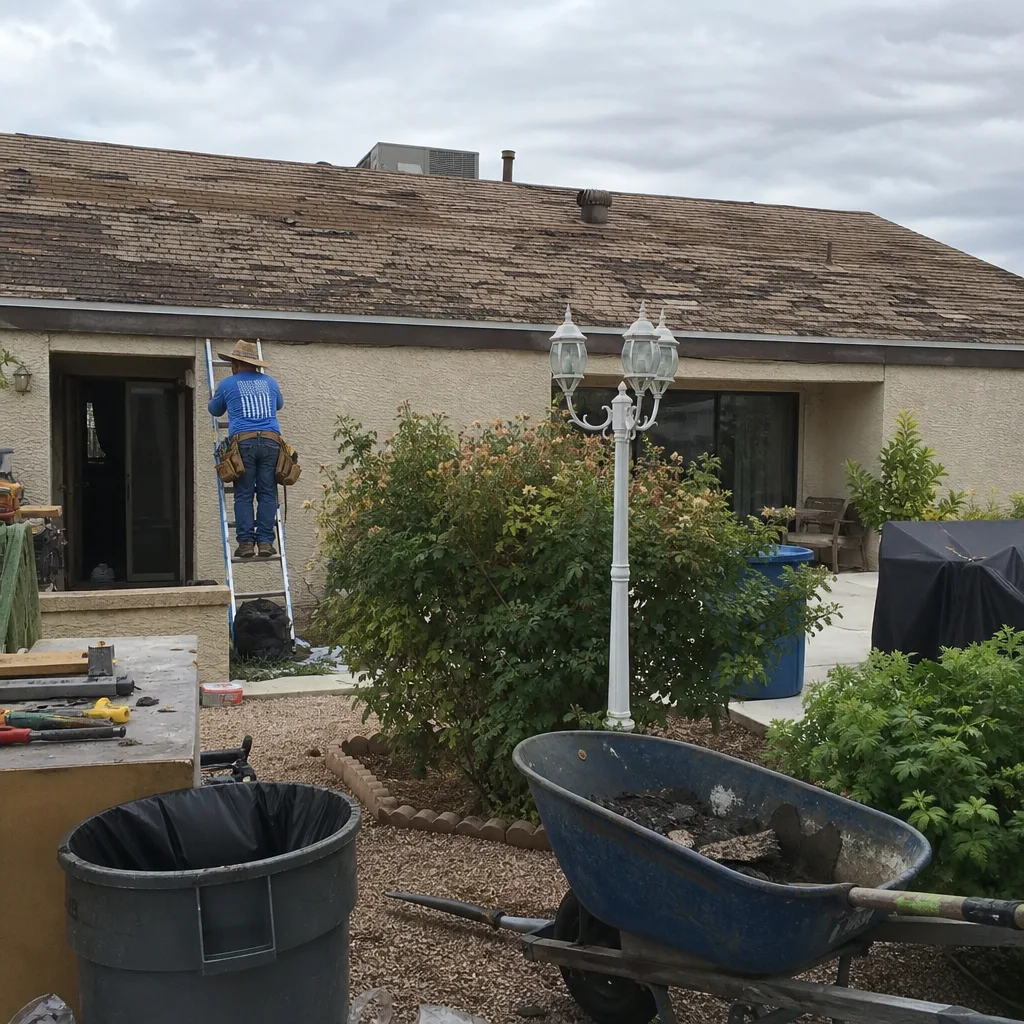 Before
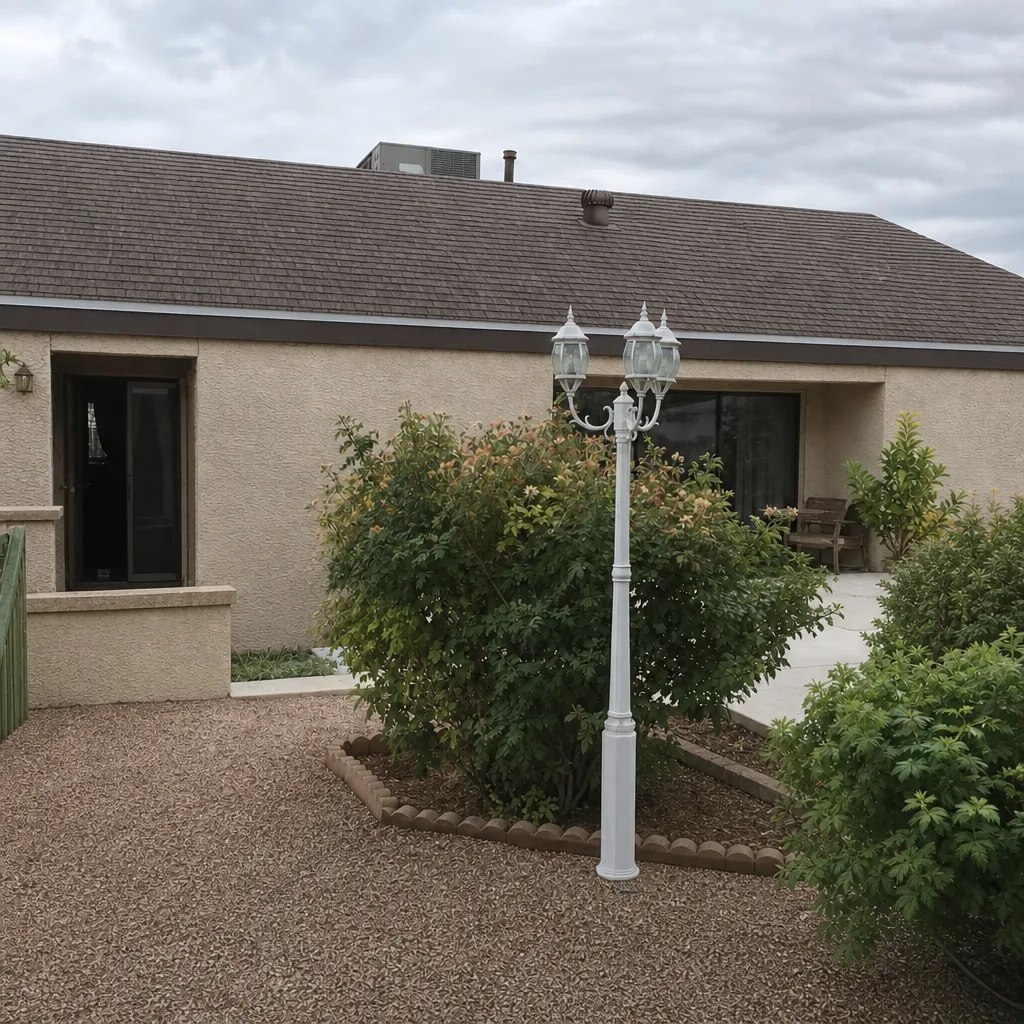 After
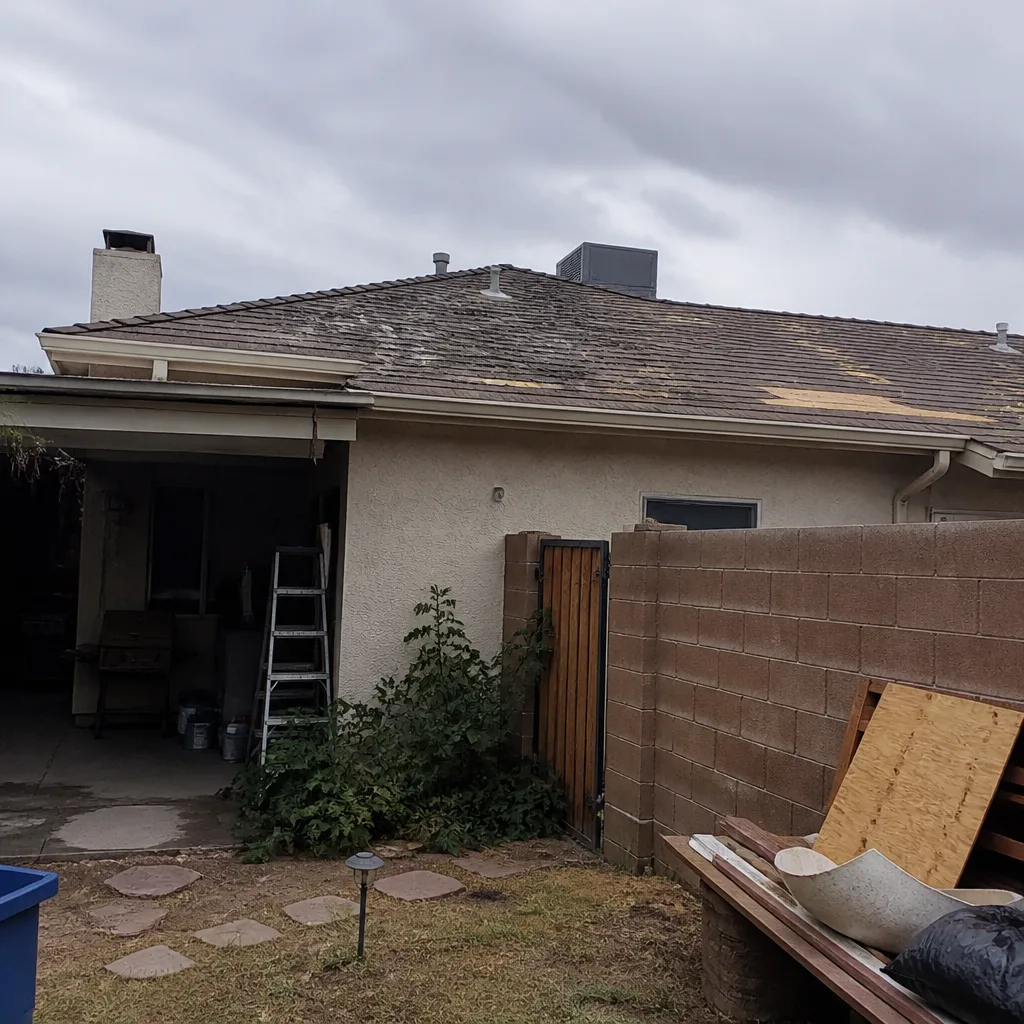 Before
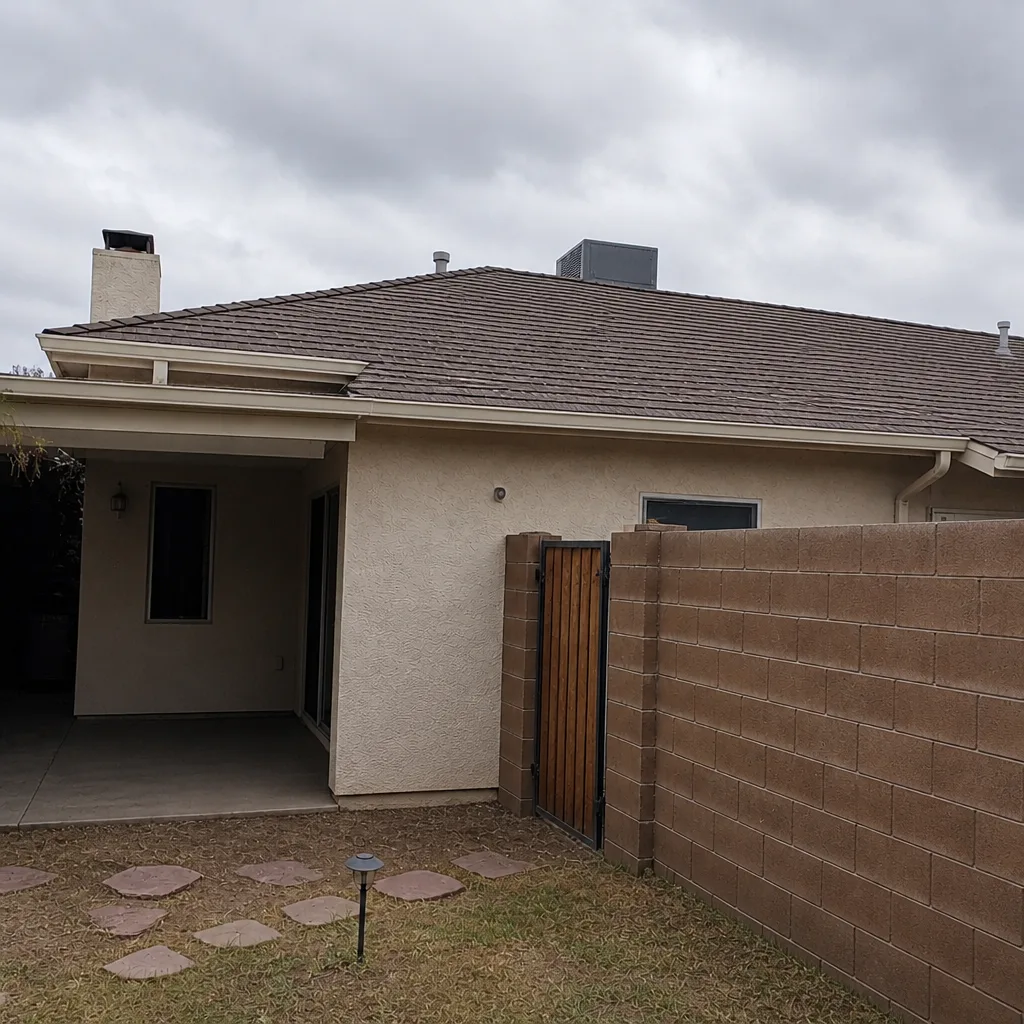 After
The 90-Day Inspection Window and the First Henderson Rain
The 90 days after a replacement are when most installation failures show themselves. That’s why we put our workmanship guarantee on that window: if something isn’t right, we want it found inside the window, by us, on our dime.
Here’s what to watch for during those 90 days.
The first real rain event. Henderson averages around 4 to 5 inches of rain a year, and it comes in bursts – usually a monsoon between July and September. That first good downpour is your test. Walk the interior of the house the day after and look for new staining on ceiling drywall, especially near exterior walls and under valleys. Get in the attic (with a flashlight) and look at the underside of the roof deck for damp spots or darkened sheathing. Have a look at the fascia and soffit on the outside for drips or discoloration.
Wind events. Desert wind will find a shingle that didn’t seal. Walk the yard after the first strong breezy day and look for loose shingles or grit. If you see any shingles lifted at the edges, that’s a callback.
Granule shedding. Some granule loss is normal in the first weeks – new shingles shed loose granules. If you see the shingles losing significant granules across a whole plane after a couple of months, that’s not normal, and it points to a defective batch or wrong installation.
Gutter and downspout flow. After the first rain, check that the water is reaching the downspouts and not sheeting past the gutters. Overshooting gutters after a replacement often means the drip edge wasn’t installed right. Our Specialty Roofing in Henderson page covers gutters, flashing, and the details around edges.
Do your inspection in the first 30 to 60 days. Anything you find is easier to fix before the shingles fully cure to the deck.
Ten Red Flags That Appear On Install Day
If you see more than one of these, it’s worth pausing the job and asking questions before the crew packs up.
- The crew doesn’t show you photos of your underlayment before covering it.
- Nobody mentions the permit or the permit isn’t posted.
- The crew works without an on-site lead who can answer your questions.
- Shingles are being laid without a visible chalk line.
- Nail heads are visible on the surface of finished courses.
- Crew size is dramatically smaller than what the contractor described.
- The dumpster isn’t scheduled, so torn-off material sits on your lawn or driveway.
- No magnetic sweep has happened by end of day.
- The contractor can’t tell you the specific manufacturer and product line going on your roof.
- There’s no written change order process when anything is modified on the fly.
You shouldn’t need to be a roofer to evaluate a roofing crew. You just need to know which questions to ask and what the honest answer sounds like. If you want a second set of eyes before you sign anything, we offer a free second opinion on any written estimate. See our Ridgeline Roofing Co. Henderson home page for how that works.
Common Mistakes to Avoid
- Choosing a bid with no mention of underlayment. In Henderson’s sun, underlayment thickness and UV resistance are the real numbers to compare, not the final total. A missing line item usually means it’s being skipped.
- Letting the crew work without a posted permit. Henderson’s monsoon season is unforgiving of shortcuts, and unpermitted work can be excluded by your homeowner’s policy when you file a claim.
- Agreeing to a verbal scope of work. Everything – materials, underlayment, ventilation, cleanup, warranty – belongs in writing before the dumpster arrives.
- Ignoring the first 90 days. If you don’t walk the attic and the exterior after the first rain, a small leak becomes a bigger repair. Use the inspection window.
- Accepting a finished job without photo documentation. Without photos of your actual roof at each stage, you have no record of what was installed under the shingles.
- Hiring on price and scheduling speed alone. A crew that’s available tomorrow for a job that should be quote-then-schedule isn’t a crew you want on your roof. A square deal takes a few days to arrange.
- Skipping the attic check after high winds. Wind damage shows up as weakened fasteners that leak months later. After any strong wind event, get up there with a flashlight.
When to Call a Professional
Call a professional if you see any of the following: new water staining on ceiling drywall, a shingle that’s lifted or gone, exposed nail heads anywhere on the surface, a valley that looks misaligned, a permit that wasn’t pulled, or a contractor who’s gone quiet mid-project. In Henderson, we also want to hear from you if a monsoon event left debris or damage you haven’t had inspected. And if you’re pre-signing an estimate and want an independent read on it, our free second opinion will tell you honestly whether the scope is complete. Ridgeline Roofing Co. Henderson offers free estimates in Henderson – call (833) 691-6717. Live person, day or night. If it’s storm-adjacent and you need eyes on it before the next rain, we’d rather see it now than hear about it later.
Frequently Asked Questions
Look for misaligned horizontal shingle lines, visible nail heads, uneven ridge lines, sloppy valleys, and gaps along the rake edges – all visible from the ground. If your contractor didn’t provide photo documentation of the underlayment and deck before shingles went on, the installation quality is unknown regardless of how the surface looks. In Henderson, also watch for the first rain event: interior staining after a monsoon is the most reliable test there is.
On a brand new roof, the signs are the same as on any roof: crooked courses, exposed fasteners, and uneven edges. What’s different is timing – a new roof should show no flaws on day one. If the crew left gaps, misalignments, or visible nails, the rest of the install warrants a close look, and you should raise it with the contractor before final payment. Call (833) 691-6717 if you want an independent read on a just-completed job in Henderson.
Yes, more than in most places. Henderson’s UV exposure degrades exposed underlayment fast, and our thermal cycling – hot days and cool nights – opens seams that aren’t lapped correctly. Felt underlayment left exposed to sun for even a few days during an install is a real risk. Synthetic underlayment that’s lapped so water runs over the edge, not into it, is the standard here. Ask to see the underlayment course photographed before it’s covered.
You should receive a package that includes photo documentation of your actual roof at each stage, a written workmanship guarantee, manufacturer warranty registration, a final line-item invoice matching the estimate, permit and inspection sign-off, and material delivery slips. If any of those are missing, the job isn’t finished. Call (833) 691-6717 for an exact quote on your own project – estimates are free.
You should start watching immediately, but the first 90 days are the critical window. Most installation failures show up during the first real rain event after a replacement – which in Henderson usually means the first monsoon of the season. Walk the attic and interior the day after any significant rain, and report staining, damp deck sheathing, or new drips right away. That’s what the 90-day window is for.
Yes, a roof replacement requires a building permit in and around Henderson. The permit gets posted before work begins and closed out after inspection. Reputable contractors pull it as part of the job, and the final inspection is your independent verification that the work meets code. If a contractor suggests skipping the permit to save time or money, walk away – that alone is disqualifying.
The Bottom Line
The warning signs that protect you happen during the install, not two years later. Watch the course lines from your lawn, ask to see underlayment photos before they go under the shingles, demand a permit, and get the photo package at close. Then use the 90-day window – the first monsoon will tell you a lot. If any of it looks off, call before you finalize. At Ridgeline Roofing Co., the 90-Day Done Right Promise is in writing because we mean it: done right – and if it’s not, we make it right.
Call (833) 691-6717 for a free estimate in Henderson. Live person on the line, any time.
Written by the team at Ridgeline Roofing Co. Henderson.